
Lygodactylus conraui
The Cameroon dwarf gecko (Lygodactylus conraui), also known as Conrau's dwarf gecko, is a small lizard found in forest, plantation, and garden habitats across West and Central Africa. This species is notable for its ability to adapt to human-modified environments.
Key Facts
- ›Found in forests, plantations, and gardens.
- ›Native to West and Central Africa, from Sierra Leone to Cameroon, Equatorial Guinea, and Gabon.
- ›Exhibits anthropochory, utilizing human activity and habitats.
- ›The specific name 'conraui' honors German collector Gustav Conrau.
- ›It is an oviparous species, meaning it reproduces by laying eggs.

Conrau's Dwarf Gecko, Cameroon Dwarf Gecko
Sierra Leone, Cameroon, Equatorial Guinea, Gabon
Forest, Plantations, Gardens, Edificarian Habitat
Small Gecko
Exhibits Anthropochory, Uses Edificarian Habitat
About Lygodactylus conraui
Lygodactylus conraui: The Cameroon Dwarf Gecko
The Cameroon dwarf gecko, scientifically known as Lygodactylus conraui and also called Conrau's dwarf gecko, is a small species of lizard belonging to the Gekkonidae family. This gecko is adapted to a variety of environments, being found in forests as well as in human-influenced areas like plantations and gardens. Its ability to thrive in these diverse settings highlights its adaptability.
Distribution and Habitat
Lygodactylus conraui is distributed across West and Central Africa, with its range extending from Sierra Leone eastward through Cameroon, Equatorial Guinea, and into Gabon. The species demonstrates a notable behavior known as anthropochory, which means it takes advantage of human activities and utilizes human-made habitats. This characteristic allows it to coexist with human populations in various settings, from natural forests to cultivated agricultural lands and domestic gardens.
Etymology and Reproduction
The specific epithet, conraui, was given in honor of Gustav Conrau, a German collector active in the late 19th century. In terms of reproduction, Lygodactylus conraui is oviparous, indicating that it reproduces by laying eggs. Further details regarding its breeding habits, such as clutch size or incubation periods, are not extensively documented in available records.
Source: Wikipedia ↗
Frequently Asked Questions
What is the scientific name for the Cameroon dwarf gecko?
The scientific name for the Cameroon dwarf gecko is Lygodactylus conraui. This binomial nomenclature is used to distinguish it within the scientific community.
Where can the Cameroon dwarf gecko be found?
Lygodactylus conraui has a geographic range that extends from Sierra Leone eastward to Cameroon, Equatorial Guinea, and Gabon. It inhabits various environments within these regions.
What kind of habitats does Lygodactylus conraui prefer?
This species is typically found in forests, but also thrives in human-modified areas such as plantations and gardens. It is known to take advantage of human activity and edificarian habitats.
How does the Cameroon dwarf gecko reproduce?
Lygodactylus conraui is oviparous, which means that females lay eggs as their method of reproduction. Specific details about nesting or egg-laying behavior are not extensively documented.
What does 'anthropochory' mean in relation to this gecko?
Anthropochory, in the context of Lygodactylus conraui, refers to its behavior of exploiting species that are associated with human activity. This includes using human-made structures and environments to its advantage.
Related Lizards
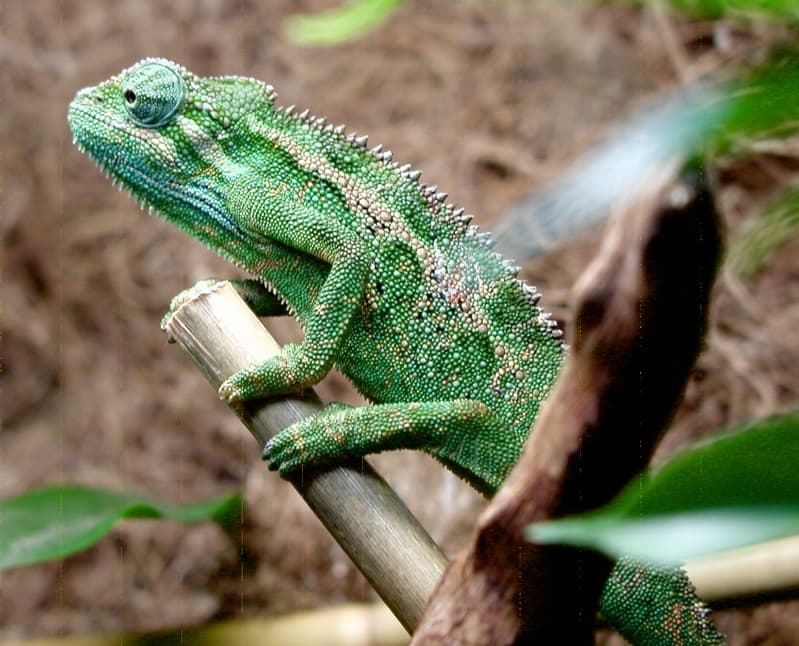
Trioceros ellioti
Trioceros ellioti, commonly known as Elliot's chameleon, is a species of lizard native to Africa. It inhabits diverse environments from forests to grasslands at moderate altitudes. This chameleon is characterized by its viviparous or ovoviviparous reproductive strategy.
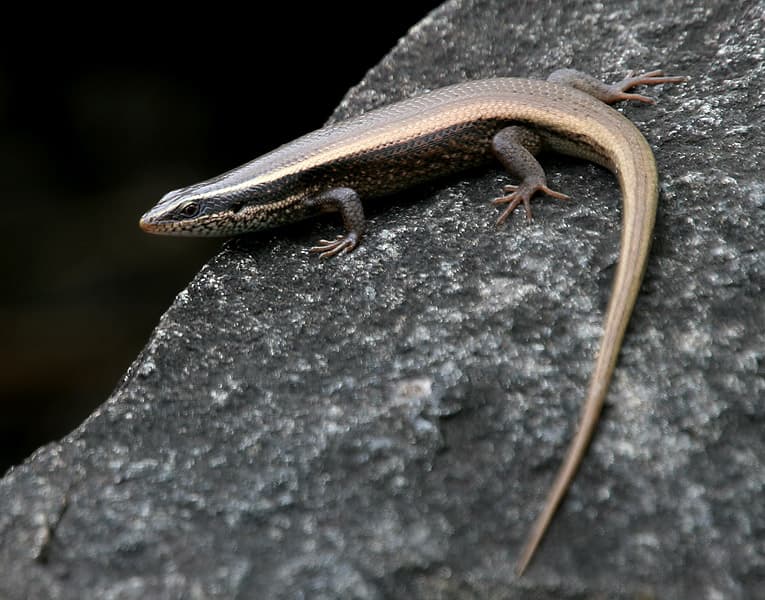
Bronze mabuya
The bronze grass skink, also known as the bronze mabuya or speckled forest skink, is a common but shy, ground-dwelling lizard found across South and Southeast Asia. It inhabits various environments including forests, grasslands, and rocky areas, and is characterized by its cylindrical body, keeled dorsal scales, and distinctive dorso-lateral bands. This skink is an insectivore, active both day and night, and plays a role in its ecosystem by consuming invertebrates.

Lygodactylus madagascariensis
The Madagascar dwarf gecko (Lygodactylus madagascariensis) is a small, diurnal gecko species endemic to Madagascar. It inhabits a variety of ecosystems, from rainforests to human-altered gardens, and is characterized by its agile bodies and specialized toe pads for climbing. Conservation efforts are ongoing due to threats like habitat loss and introduced species.