
Podarcis waglerianus
The Sicilian wall lizard (Podarcis waglerianus) is a species of lizard endemic to Sicily and the Aegadian Islands in Italy. It inhabits temperate forests, shrublands, grasslands, and cultivated areas, often found in gardens. This lizard is characterized by its green to olive or brownish dorsal surface, typically featuring dorsolateral stripes and a more uniform coloration in females, while males display more speckled markings and brighter underparts.
Key Facts
- ›Endemic to Sicily and the Aegadian Islands, Italy.
- ›Inhabits temperate forests, shrublands, grasslands, and cultivated land.
- ›Dorsal surface is typically green, with males often exhibiting speckled markings.
- ›Females lay clutches of 4-6 oval eggs, which hatch after approximately 8 weeks.
- ›Considered a species of 'least concern' by the IUCN due to its widespread distribution and tolerance of various habitats.

Sicilian Wall Lizard
Sicily, Aegadian Islands, Italy
- Adult Length Around 7.5 cm .
- Males Are Slightly Larger Than Females.
- Dorsal Surface Usually Green, Though Females May Be Olive Or Brownish.
- Typically Features A Well-Defined White Or Yellow Dorsolateral Stripe.
- Often Has A Brown Stripe Or Series of Dots Along the Spine.
- Males Exhibit Other Dark Spots In Rows On the Back and Flanks.
- Females Are Often More Uniform In Color.
- Underparts Are White With A Spotted Throat.
- Breeding Males May Have Underparts Suffused With Orange, Pink, Or Red.
- Deeper Head, More Slender Form, and More Speckled Markings Compared To Island Populations of the Italian Wall Lizard.
Unknown Based On Provided Text
- Occupies More Densely Vegetated Areas Compared To the Italian Wall Lizard.
- Does Not Climb Much.
Unknown Based On Provided Text
About Podarcis waglerianus
Sicilian Wall Lizard
The Sicilian wall lizard, scientifically known as Podarcis waglerianus, is a species of lizard belonging to the Lacertidae family. It is exclusively found in Italy, specifically on the island of Sicily and the surrounding Aegadian Islands. This species is well-adapted to a variety of temperate environments, including forests, shrublands, grasslands, and agricultural lands. It is also frequently observed in rural gardens, particularly those that are irrigated, indicating an adaptability to human-influenced landscapes.
Physical Characteristics and Distribution
Podarcis waglerianus typically reaches an adult length of approximately 7.5 centimeters (3 inches), with males generally being slightly larger than females. The dorsal coloration is usually green, though females may exhibit olive or brownish hues. A distinctive feature is often a well-defined white or yellow dorsolateral stripe, and many individuals possess a brown stripe or a series of dots running along the spine. While males often display additional dark spots on their backs and flanks, females tend to have a more uniform coloration. The underside of the lizard is white, often with a spotted throat, and breeding males may show suffusions of orange, pink, or red. Compared to island populations of the Italian wall lizard, the Sicilian wall lizard is characterized by a deeper head, a more slender build, and more speckled markings rather than reticulated patterns.
Biology and Conservation
Female Sicilian wall lizards lay between four and six oval eggs, typically concealed at the base of plants. The incubation period lasts for about eight weeks, after which newly hatched juveniles emerge, measuring around 5.5 centimeters (2.2 inches) in length. The species is widespread across Sicily and demonstrates tolerance for a range of habitats, leading to the assumption of a substantial total population. While populations are generally stable, minor declines may occur on certain islands. Consequently, the International Union for Conservation of Nature (IUCN) classifies Podarcis waglerianus as a species of 'least concern', indicating that it is not currently facing significant threats to its survival.
Source: Wikipedia ↗
Frequently Asked Questions
What is the scientific name for the Sicilian wall lizard?
The scientific name for the Sicilian wall lizard is Podarcis waglerianus. This binomial nomenclature follows the standard system for classifying species.
Where is the Sicilian wall lizard found?
The Sicilian wall lizard is endemic to Sicily and the Aegadian Islands, which are part of Italy. It is not found naturally in any other regions.
What kind of habitats does Podarcis waglerianus prefer?
Podarcis waglerianus thrives in a variety of temperate habitats, including forests, shrublands, grasslands, and agricultural areas. It is also commonly found in gardens, especially those that are irrigated.
How large does the Sicilian wall lizard grow?
The Sicilian wall lizard typically grows to a length of around 7.5 cm (3 inches). Males are generally slightly larger than females.
What is the conservation status of Podarcis waglerianus?
The International Union for Conservation of Nature (IUCN) has assessed the Sicilian wall lizard as being of 'least concern'. This indicates that the species is widespread, tolerant of different habitats, and has assumed to have a large population.
How do Sicilian wall lizards reproduce?
Female Sicilian wall lizards lay clutches of four to six oval eggs, usually hidden at the base of plants. These eggs typically hatch after approximately eight weeks.
Related Lizards

Chalcides striatus
The western three-toed skink (Chalcides striatus) is a lizard found in the Iberian Peninsula, southern France, and northwestern Italy. It superficially resembles a snake due to its tiny limbs, but possesses smooth, glossy skin with a silvery or bronze coloration marked by longitudinal dark lines. This secretive species inhabits damp, sunny areas with dense low vegetation and feeds on invertebrates.
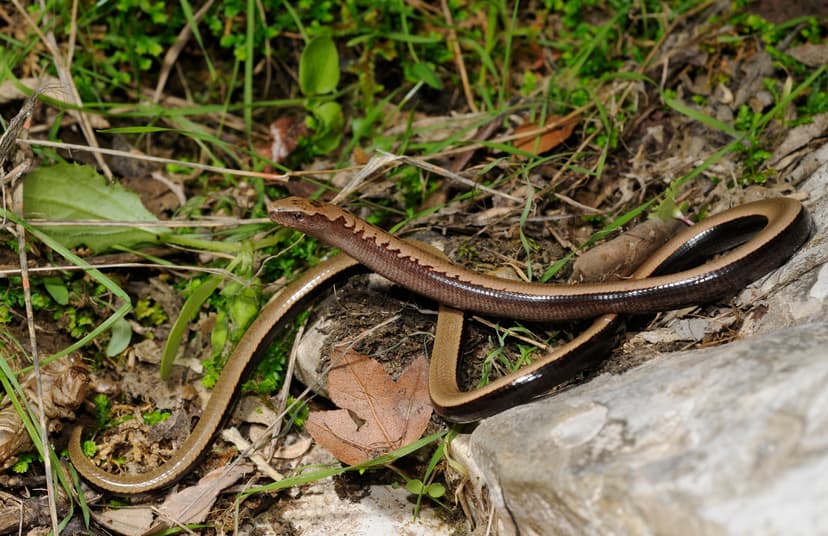
Peloponnese slowworm
The Peloponnese slow worm (Anguis cephallonica) is a legless lizard endemic to specific regions of Greece, including the Peloponnese peninsula and the Ionian islands of Cephalonia, Ithaca, and Zakynthos. This species is distinguished by a higher number of scale rows around its body and a unique chocolate-brown lateral stripe, and it gives birth to live young.
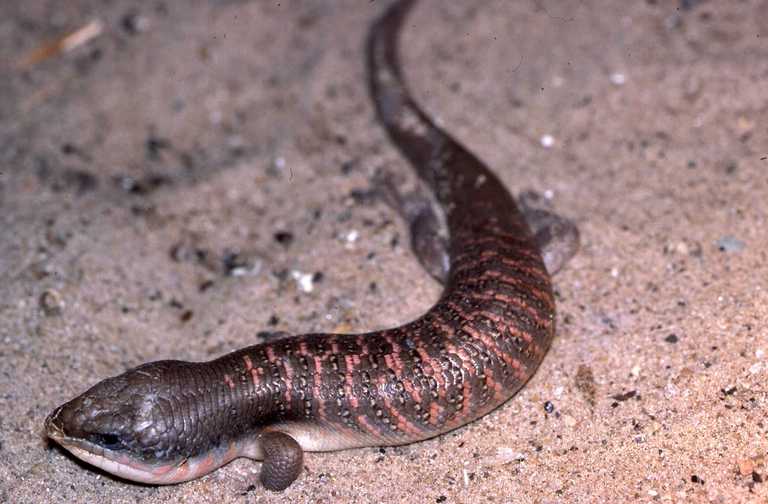
Eumeces algeriensis
Eumeces algeriensis, also known as the Algerian skink or Algerian orange-tailed skink, is a species of skink native to the Maghreb region of North Africa. It inhabits a variety of environments including temperate forests, shrublands, grasslands, and even rural gardens. This oviparous lizard is characterized by its endemic distribution within Algeria and Morocco.