
Phelsuma lineata
Phelsuma lineata, commonly known as the lined day gecko, is a species of diurnal gecko native to Madagascar, with introductions to Réunion. This species is characterized by its medium-green base coloration, often featuring red splotches and a lateral dark band, and can reach a total length of 4-6 inches. It inhabits humid subtropical zones in both mid- and low-elevated areas along the eastern coast of Madagascar.
Key Facts
- ›Native to Madagascar and introduced to Réunion.
- ›Diurnal gecko, active during the day.
- ›Measures 4-6 inches (10-15 cm) in total length.
- ›Males are more colorful with red markings and a dark lateral band.
- ›Inhabits humid subtropical zones in MID- and low-elevated areas.
- ›Oviparous, meaning they lay eggs.
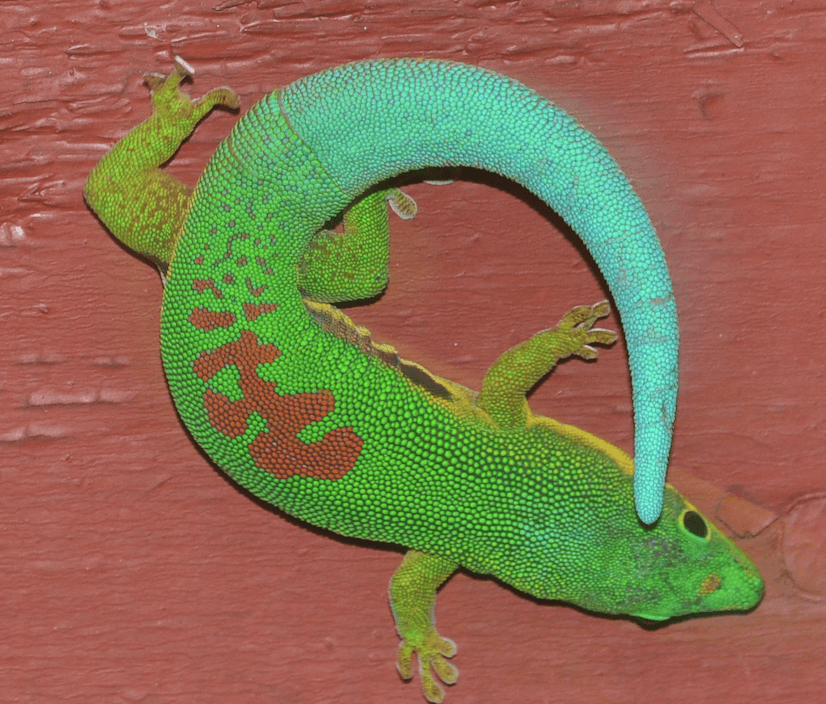
Lined Day Gecko
Madagascar, RéUnion
Humid Subtropical Zones, Mid-Elevated Sites, Low-Elevated Sites
- Commonly Measures 4–6 Inches In Total Length .
- Males Are More Colorful Than Females.
- Males Have A Medium-Green Base Color.
- Males Have Red Splotches On the Lower Back and Head.
- Males Have A Brown To Black Lateral Band On Each Side.
- the Tail May Be Blue.
- the Underside Is Pale.
Diurnal
Some Unknown Subspecies May Be Threatened.
About Phelsuma lineata
Phelsuma lineata: The Lined Day Gecko
Phelsuma lineata, commonly recognized as the lined day gecko, is a species of diurnal gecko belonging to the Gekkonidae family. This species is a native inhabitant of Madagascar and has also been introduced to the island of Réunion.
Description and Characteristics
The lined day gecko typically measures between 4 to 6 inches (10 to 15 cm) in total length, including its tail. Males of the species are noted for their vibrant coloration, often displaying a medium-green base color adorned with red splotches on their lower back and head. A distinctive brown to black lateral band runs along each side of their body, and their tails may exhibit a blue hue. The underside of the gecko is generally pale.
Distribution and Habitat
This gecko thrives in humid subtropical climatic zones. Its natural range is along the northern and eastern parts of Madagascar, where it can be found in both mid-elevated and low-elevated areas along the island's east coast.
Reproduction
Phelsuma lineata is oviparous, meaning it reproduces by laying eggs. Specific details regarding clutch size or incubation periods are not extensively documented in available records.
Taxonomy and Conservation
It is noted that the species as currently described may represent a conglomeration of several distinct forms. While three subspecies are formally recognized (ssp. lineata, ssp. bombetokensis, and ssp. punctulata), further research may lead to the elevation of other forms to species status. Phelsuma lineata itself is not considered threatened, though the conservation status of some of its less-understood subspecies remains uncertain.
Source: Wikipedia ↗
Frequently Asked Questions
What is the common name for Phelsuma lineata?
Phelsuma lineata is commonly known as the lined day gecko. This name reflects its distinctive markings and diurnal activity pattern.
Where is the lined day gecko found?
The lined day gecko is primarily found in Madagascar, specifically in the humid subtropical climatic zones along the northern and eastern parts of the island. It has also been introduced to Réunion.
What is the typical size of a lined day gecko?
The lined day gecko commonly measures between 4 to 6 inches (10 to 15 cm) in total length, including its tail.
How do male and female lined day geckos differ in appearance?
Males are generally more colorful than females. They typically exhibit a medium-green base color with red splotches on the lower back and head, and a brown to black lateral band on each side. Their tails may also be blue.
What type of habitat does Phelsuma lineata prefer?
Phelsuma lineata prefers to reside in humid subtropical climatic zones. They are found in both mid-elevated and low-elevated sites along the east coast of Madagascar.
How does the lined day gecko reproduce?
Phelsuma lineata is oviparous, which means it reproduces by laying eggs.
Related Lizards

Lacerta andreanskyi
The Atlas dwarf lizard (Atlantolacerta andreanskyi), also known as Andreansky's lizard, is a species indigenous to the High Atlas mountain range in north-western Africa. It is characterized by its adaptability to alpine meadows, scree, and rocky areas, often remaining well-hidden within vegetation. This species is notable for its long hibernation periods and its reproductive strategy of laying multiple small clutches of eggs annually.

Podarcis vaucheri
Podarcis vaucheri, commonly known as the Andalusian wall lizard, is a reptile species native to northern Africa and southern Spain. It inhabits a wide range of environments, from temperate forests and shrublands to urban areas, and is characterized by its oviparous reproductive method.
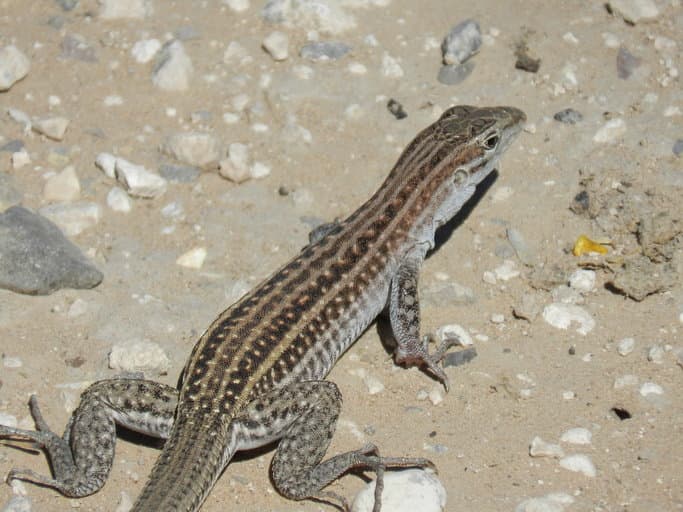
Aspidoscelis exsanguis
The Chihuahuan spotted whiptail (Aspidoscelis exsanguis) is a parthenogenetic lizard native to arid regions of the southwestern United States and northern Mexico. It is characterized by its reddish-brown coloration, six lighter stripes running the length of its body with spotting in between, and a slender build with a long tail. This diurnal and insectivorous species inhabits various dry environments, including deserts and woodlands.