
Smith's bent-toed gecko
Smith's bent-toed gecko is a small lizard endemic to India, found primarily in shrubland and forest habitats in the Punjab region. It is characterized by a maximum snout-to-vent length of 5.4 cm and a distinctive series of femoral pores on its thighs.
Key Facts
- ›Endemic to northern India, specifically the Punjab state.
- ›Found in shrubland and forest environments.
- ›Maximum snout-to-vent length is 5.4 cm.
- ›Possesses 10–14 femoral pores on each thigh.
- ›Reproduces by laying eggs (oviparous).
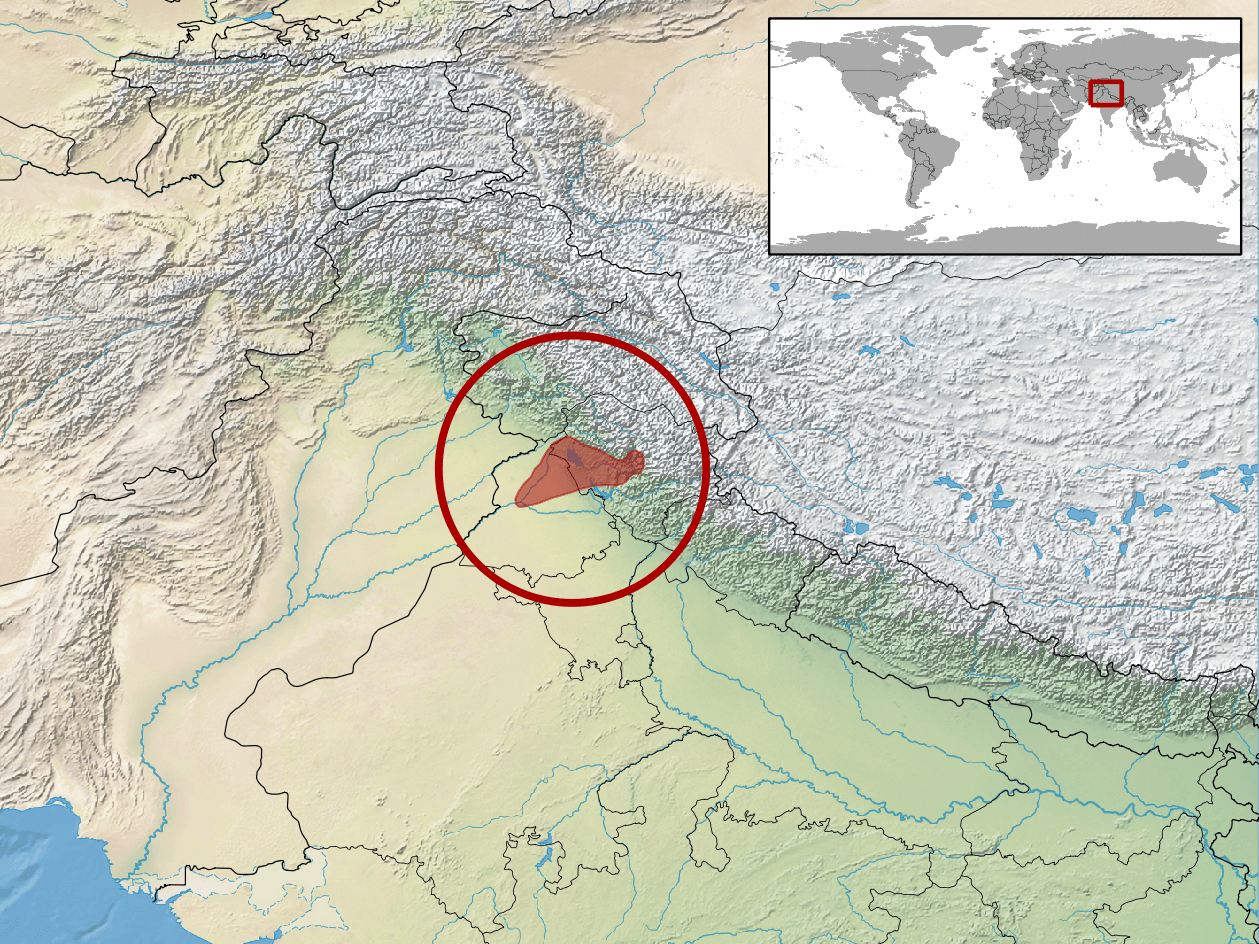
Malcolm's Bow-Fingered Gecko
India
- Small Species For Its Genus.
- Maximum Recorded Snout-To-Vent Length of 5.4 cm .
- Has A Series of 10–14 Femoral Pores On the Ventral Surface of Each Thigh.
- the Two Series of Femoral Pores Are Separated By Two Poreless Scales.
About Smith's bent-toed gecko
Smith's bent-toed gecko, scientifically designated as Hemidactylus malcolmsmithi, is a species of lizard native to India. This gecko, also recognized by the common name Malcolm's bow-fingered gecko, belongs to the Gekkonidae family. Its known range is confined to northern India, with specific documentation placing it in the Indian state of Punjab, particularly within the Beas River basin.
Habitat and Description
The preferred natural habitats for Smith's bent-toed gecko are shrubland and forest environments. It is considered a small species within its genus. The maximum recorded snout-to-vent length for this gecko is 5.4 cm (2.1 inches). A distinctive morphological feature is the presence of a series of 10 to 14 femoral pores on the ventral surface of each thigh, with these series separated by two scales that lack pores.
Taxonomy and Reproduction
Historically, Hemidactylus malcolmsmithi was first described in the genus Gymnodactylus and has, at times, been placed in the genus Cyrtodactylus. The specific epithet, malcolmsmithi, honors the British herpetologist Malcolm Arthur Smith. In terms of reproduction, Smith's bent-toed gecko is oviparous, meaning it reproduces by laying eggs.
Source: Wikipedia ↗
Frequently Asked Questions
What is Smith's bent-toed gecko?
Smith's bent-toed gecko, scientifically known as Hemidactylus malcolmsmithi, is a species of lizard belonging to the Gekkonidae family. It is native to India.
Where can Smith's bent-toed gecko be found?
This gecko is found in northern India, primarily in the Indian state of Punjab. Its preferred natural habitats include shrubland and forest areas, with the Beas River basin in Punjab noted as the type locality.
What are the physical characteristics of Smith's bent-toed gecko?
Smith's bent-toed gecko is a small species, with a maximum recorded snout-to-vent length of 5.4 cm. A notable feature is the series of 10–14 femoral pores present on the ventral surface of each thigh.
How does Smith's bent-toed gecko reproduce?
Smith's bent-toed gecko is oviparous, meaning it reproduces by laying eggs.
What are the common names for Hemidactylus malcolmsmithi?
Besides Smith's bent-toed gecko, this species is also commonly known as Malcolm's bow-fingered gecko.
Related Lizards

Anolis leachii
Anolis leachii, also known as the Antigua Bank tree anole or Leach's anole, is a lizard species endemic to the Caribbean, specifically Antigua and Barbuda. This arboreal species is characterized by its bright green coloration that fades to greyish-brown on its tail, and a grey to brown head with yellowish-orange dewlaps. It inhabits various environments, from forests and shrublands to human-disturbed areas like pastures and farms, provided vertical perching surfaces are available.
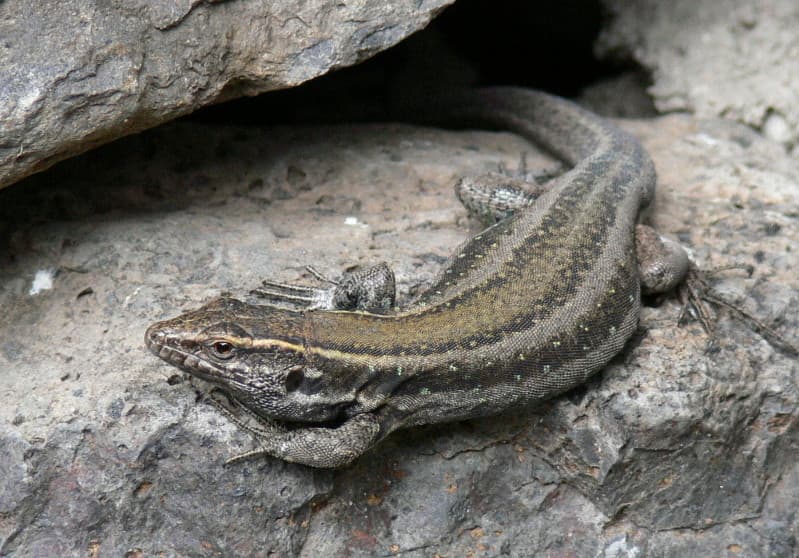
Boettger's lizard
Boettger's lizard (Gallotia caesaris) is a species of wall lizard endemic to the western Canary Islands, specifically El Hierro and La Gomera. This oviparous reptile inhabits rocky areas, shrubland, and forests, and is known for its capacity to lay multiple clutches of eggs per year. It is closely related to the Gallotia galloti species found on neighboring islands.
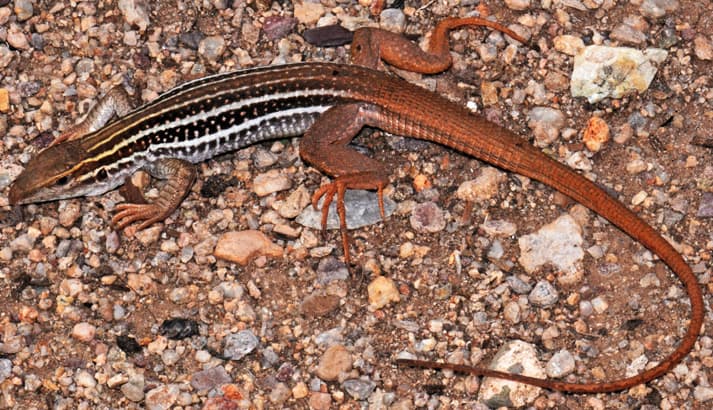
Canyon Spotted Whiptail
The Canyon Spotted Whiptail, also known as el huico manchado de cañón, is a lizard species found in northwestern Mexico and the southwestern United States. It inhabits forests, shrublands, and rocky areas, and is oviparous, laying eggs as its primary method of reproduction.