
Adamantinia
Adamantinia
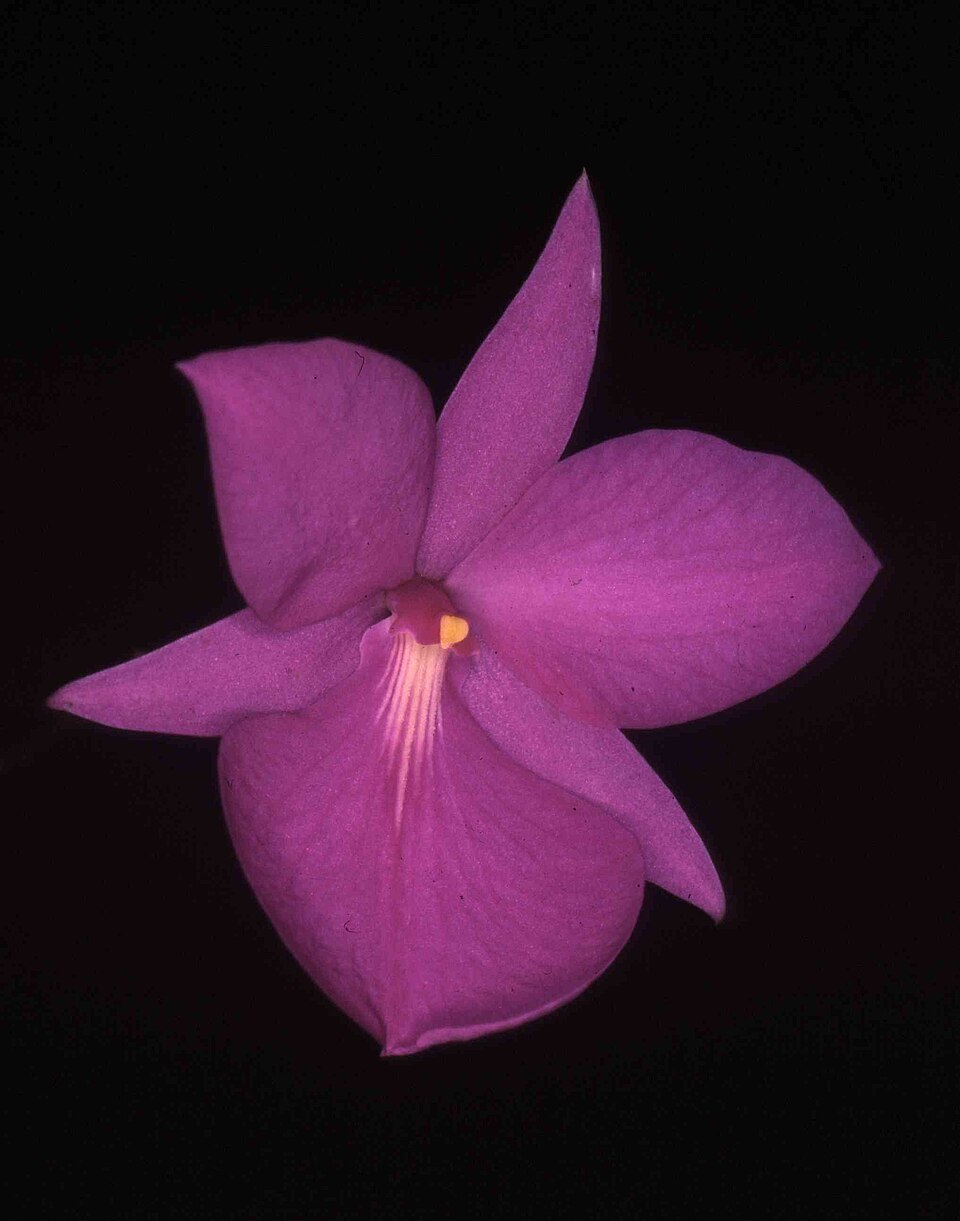
Adamantinia is a monotypic genus of orchids native to the Serra do Sincorá range in Brazil. Its name is derived from the Chapada Diamantina region where it originates. This species is distinctive for its showy pink flowers with a dark pink lip, and it grows as an epiphyte in sunny locations at high altitudes.
Key Facts
- ›It is the sole species in the monotypic genus Adamantinia.
- ›The genus name is a tribute to the Chapada Diamantina region of Brazil.
- ›Adamantinia miltonioides is found in the Serra do Sincorá mountain range in Bahia, Brazil.
- ›It grows epiphytically in sunny exposures at approximately 900 meters elevation.
- ›The orchid features showy pink flowers with a distinct dark pink lip and very small side lobes.
- ›DNA data suggests a relationship with the genera Leptotes and Isabelia.
Brazil, Bahia, South America
Epiphyte
Pink, Dark Pink
About Adamantinia
Adamantinia is a genus of orchids, distinguished by its monotypic nature, containing only a single species. Established in 2004 by botanists Cássio van den Berg and Cezar Neubert Gonçalves, the genus name is a direct reference to the Chapada Diamantina region in Brazil, the geographical origin of this orchid.
Taxonomy and Origin
The sole species within this genus is Adamantinia miltonioides. It is naturally found in the Serra do Sincorá mountain range, situated in the state of Bahia, Brazil. This region is part of the broader South American continent.
Growth and Morphology
Adamantinia miltonioides exhibits an epiphytic growth habit, meaning it grows on other plants, typically trees, rather than in soil. It prefers sunny exposures and is found at altitudes of approximately 900 meters. The plants typically develop clustered pseudobulbs which are unifoliate, though occasionally bifoliate. Its leaves are coriaceous and dark olive in color. The species is characterized by long inflorescences that produce flowers successively over time.
Floral Characteristics
The flowers of Adamantinia miltonioides are notably showy. Their primary coloration is pink, with both the petals and sepals sharing a similar pink hue. A distinctive feature is the lip, which is a dark pink and markedly showy, contrasting with the sepals and petals. The side lobes of the lip are very small, and the column is short with a broad stigma.
Evolutionary Relationships
Genetic analysis, specifically using DNA data from trnL-F plastid sequences, has indicated that Adamantinia shares evolutionary relationships with other orchid genera, namely Leptotes and Isabelia.
Source: Wikipedia ↗
Frequently Asked Questions
What is Adamantinia?
Adamantinia is a genus of orchids, notable for being monotypic, meaning it contains only one species. It was described in 2004 and is named in honor of the Chapada Diamantina region in Brazil.
Where does Adamantinia miltonioides come from?
Adamantinia miltonioides is native to the Serra do Sincorá mountain range, located within the state of Bahia in Brazil, South America.
What are the growing conditions for Adamantinia?
This orchid species grows as an epiphyte, meaning it attaches to and grows on other plants, typically trees. It thrives in sunny positions at an altitude of around 900 meters.
What do Adamantinia flowers look like?
The flowers of Adamantinia miltonioides are described as showy and pink. They feature sepals and petals of a similar pink hue, with a striking dark pink lip that has very small side lobes. The column is short and equipped with a broad stigma.
What is the taxonomic relationship of Adamantinia?
Based on DNA data from trnL-F plastid sequences, Adamantinia is believed to have relationships with the orchid genera Leptotes and Isabelia.
Related Orchid species

Leptotes
Leptotes is a genus of nine small orchid species native to the dry jungles of south and southeast Brazil, Paraguay, and Argentina. These epiphytic plants are characterized by their thin, terete leaves and delicate, often showy flowers, some of which are used as a vanilla substitute. While some species are widely cultivated, many remain rare and recently described.
Koellensteinia
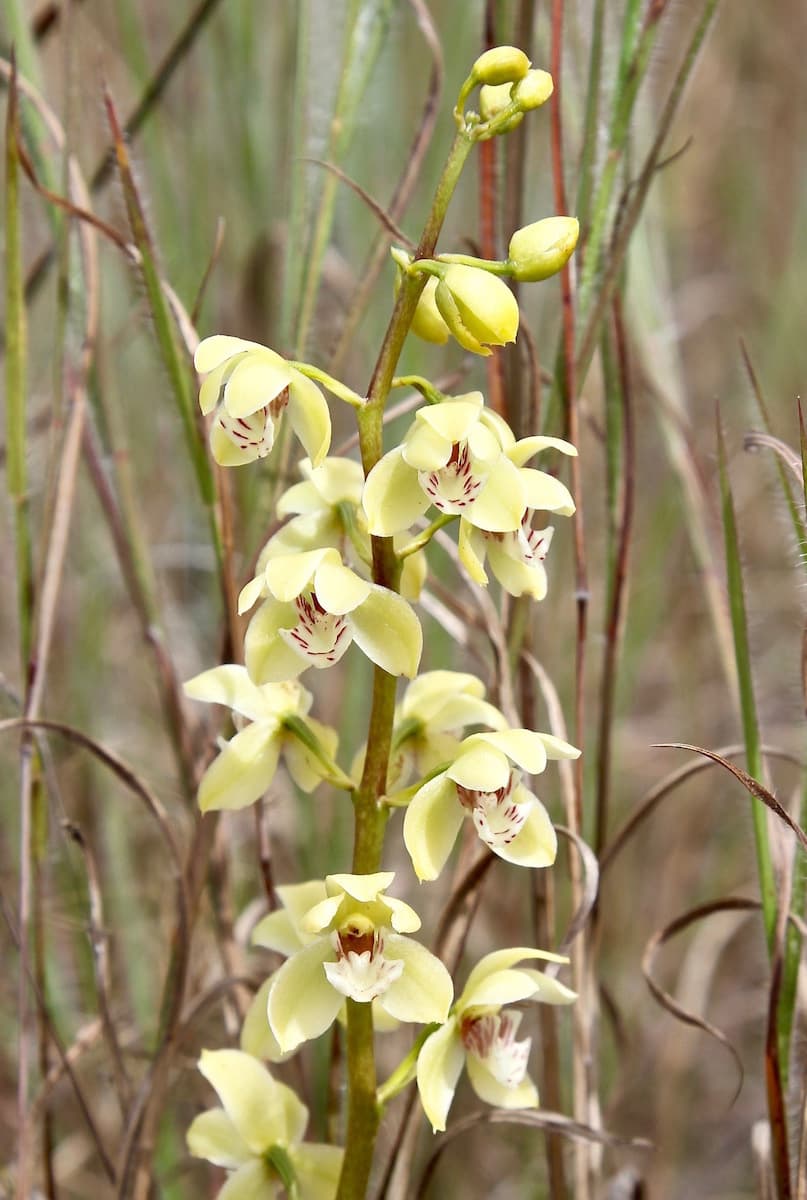
Koellensteinia is a genus of approximately 19 orchid species native to South America, Belize, Trinidad, and Puerto Rico. These plants are characterized by their short, leafy stems, often forming pseudobulbs, and produce small to medium-sized, fragrant flowers that are typically yellow or white, often with magenta or violet barring. They are found in low to mid-elevation forests and are cultivated under intermediate conditions with moderate shade and high humidity.
Aerides
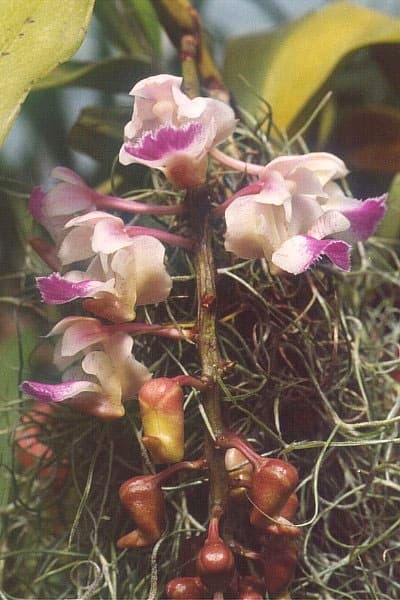
Aerides, commonly known as cat's-tail orchids and fox brush orchids, is a genus of tropical epiphytic orchids native to Asia. These orchids are highly valued in horticulture for their showy, fragrant, and long-lasting flowers, which typically appear in racemes and are often white with colorful edges.