
Santa Marta screech owl
The Santa Marta screech owl is a medium-sized owl species endemic to the Sierra Nevada de Santa Marta in Colombia. Distinctive for its reddish to grayish-brown plumage and pale barred belly, this owl inhabits humid forests at high altitudes. It is currently classified as Vulnerable due to its restricted range and habitat loss.
Key Facts
- ›Found exclusively in the Sierra Nevada de Santa Marta of Colombia.
- ›Inhabits humid forests between 1,800 and 2,500 meters in elevation.
- ›Plumage is reddish to grayish-brown on the upperparts and pale with barring on the belly.
- ›Considered a medium-sized member of the genus Megascops.
- ›Classified as Vulnerable by the IUCN due to a restricted range and declining habitat.
- ›Population is estimated to be between 2,300 and 7,500 mature individuals.
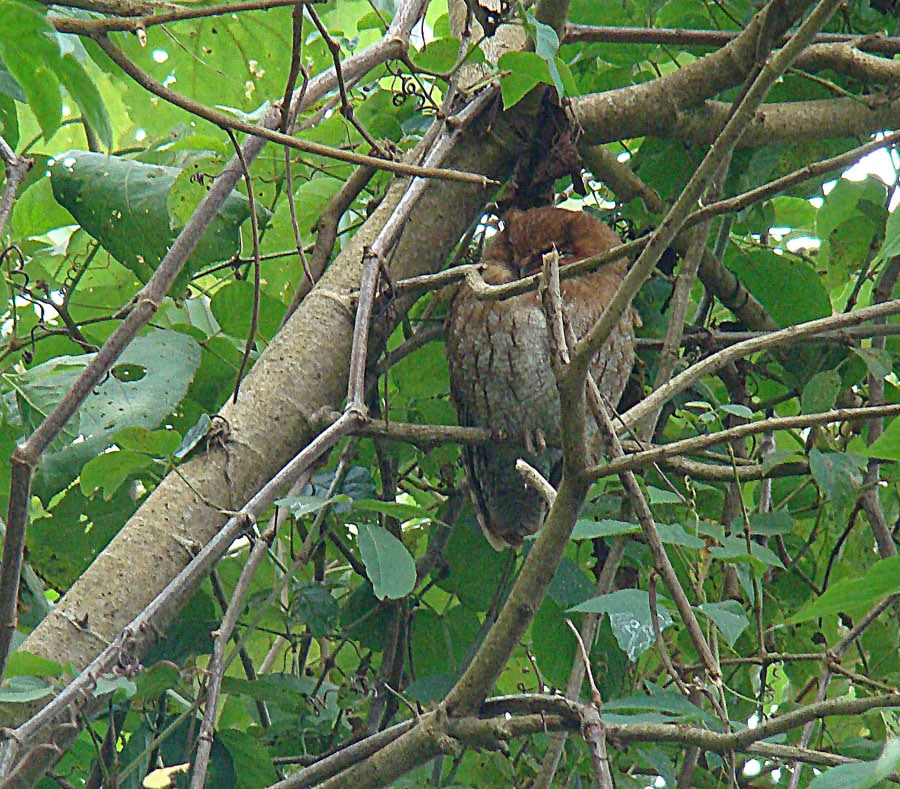
Santa Marta Screech Owl
Humid Forest
Colombia
Unknown
About Santa Marta screech owl
The Santa Marta screech owl (Megascops gilesi) is a distinctive owl species found exclusively within the Sierra Nevada de Santa Marta mountain range in northern Colombia. Formally described in 2017, this medium-sized owl belongs to the genus Megascops and is thought to be closely related to several other screech owl species, including the West Peruvian, tawny-bellied, and black-capped screech owls.
Description and Habitat
Physically, the Santa Marta screech owl displays plumage that is typically reddish to grayish-brown on its head, back, chest, and wings, with a pale belly marked by barring. Its crown and back are barred, the chest features darker brown streaks, and the belly is adorned with pale brown barring. The legs are covered in golden-buff feathers. This species is believed to inhabit humid forests situated at elevations between 1,800 and 2,500 meters (5,900 to 8,200 feet), though it may potentially be found at higher altitudes.
Distribution and Conservation
The owl's known range is highly restricted, with almost all records originating from the San Lorenzo ridge and adjacent areas within the Sierra Nevada de Santa Marta. A smaller number of sightings have been reported from the central part of the mountain range. Unfortunately, the Santa Marta screech owl is classified as Vulnerable by the IUCN. This status reflects the significant threats posed by its limited geographic distribution and the ongoing degradation of its native forest habitat, which has been increasingly replaced by pine and eucalyptus plantations and livestock pastures. The estimated population consists of 2,300 to 7,500 mature individuals, and both its suitable habitat and population are believed to be in decline.
Behavior and Ecology
Much about the Santa Marta screech owl's behavior and ecology remains unknown. There is currently no documented information regarding its diet or foraging habits. The only available data related to its breeding cycle comes from the type specimen, which was collected in March 1919 and was noted to be in breeding condition at that time.
Source: Wikipedia ↗
Frequently Asked Questions
Where is the Santa Marta screech owl found?
The Santa Marta screech owl is found only in the Sierra Nevada de Santa Marta region of northern Colombia. Most records come from the San Lorenzo ridge and surrounding areas.
What is the habitat of the Santa Marta screech owl?
This owl is believed to inhabit humid forests at elevations ranging from 1,800 to 2,500 meters (5,900 to 8,200 feet), with potential to range even higher.
What does the Santa Marta screech owl look like?
It has plumage similar to other owls in its genus, featuring a reddish to grayish-brown head, back, chest, and wings, and a pale belly. The crown and back are barred, the chest has darker streaks, and the belly shows pale brown barring. Its legs are covered in golden-buff feathers.
What is the conservation status of the Santa Marta screech owl?
The Santa Marta screech owl is classified as Vulnerable by the IUCN. This status is due to its limited geographic range and the ongoing loss of its native forest habitat.
What does the Santa Marta screech owl eat?
Little is currently known about the specific diet and foraging behavior of the Santa Marta screech owl. Further research is needed to determine its primary food sources.
Related Owl species

Christmas boobook
The Christmas boobook (Ninox natalis), also known as the Christmas Island hawk owl, is a small, rufous-brown owl endemic to Christmas Island in the Indian Ocean. It is characterized by its barred breast, dark chestnut facial mask, and a distinctive double-noted hoot. This species faces threats from habitat destruction and introduced species, leading to its vulnerable conservation status.
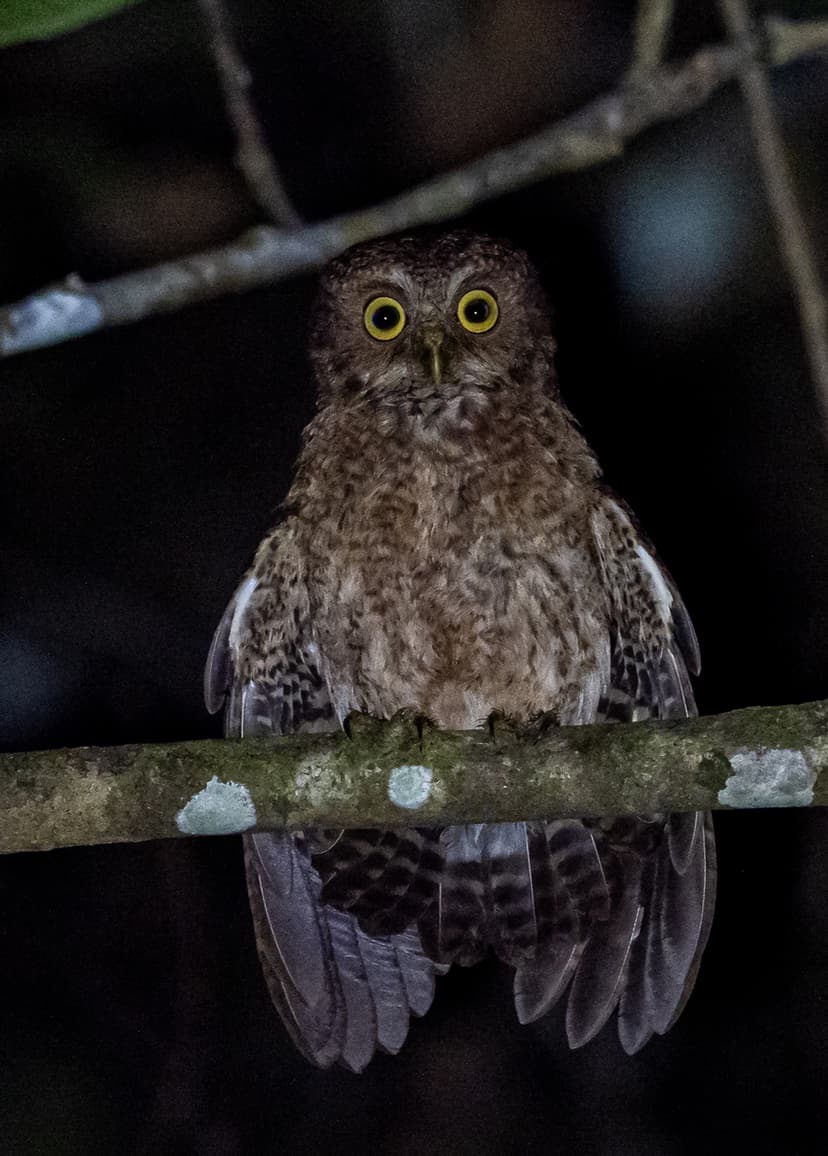
Mindoro boobook
The Mindoro boobook (Ninox mindorensis) is a species of owl endemic to the Philippines, belonging to the Strigidae family. It is distinguished among Philippine hawk-owls by its darker plumage and fine barring on its head and belly. This medium-sized, earless owl inhabits tropical lowland forests and faces a conservation status of vulnerable due to significant habitat loss.

Pemba scops owl
The Pemba scops owl is a small owl species endemic to Pemba Island, off the coast of Tanzania. It is distinguished by its two color morphs, brown and rufous, and its distinctive "hoo" call. This owl is primarily nocturnal and feeds on insects, inhabiting various wooded areas including native forests and plantations.