
Black-winged parrot
The black-winged parrot, scientifically known as Hapalopsittaca melanotis, is a species of parrot found in Bolivia and Peru. This predominantly green bird is distinguished by its black ear coverts (in the nominate subspecies) and largely black wings with blue primaries. It inhabits humid montane forests and can be found in flocks searching for berries.
Key Facts
- ›The black-winged parrot is approximately 24 cm (9.4 inches) in length.
- ›Adults are primarily green with yellowish underparts, a blue-gray crown, and blue lores.
- ›It inhabits humid montane evergreen forests, cloudforests, and elfin forests at elevations between 1,740 and 3,450 meters.
- ›Their diet consists mainly of berries, with Gaiadendron mistletoe berries being a favored food source.
- ›Flocks of up to 50 individuals have been observed foraging for fruit.
- ›The species is assessed as Least Concern by the IUCN, with a stable population despite a limited range.

Black-Eared Parrot
Bolivia, Peru
Humid Montane Evergreen Forest, Cloudforest, Elfin Forest
Black Ear Coverts, Buff Ear Coverts, Largely Black Wings With Blue Primaries, Blue-Gray Collar, Narrower Blue-Gray Collar
Berries, Gaiadendron Mistletoe Berries
- Flight call: Series of 1-3 short, mellow notes, sometimes followed by a higher-pitched piercing note
- Perched calls: Variety of short, mellow calls
- Take-off calls: Faster and longer series of notes
About Black-winged parrot
The black-winged parrot, scientifically designated as Hapalopsittaca melanotis and also known as the black-eared parrot, is a species of parrot belonging to the subfamily Arinae within the family Psittacidae. This bird is native to the Andean regions of Bolivia and Peru.
Description and Identification
Adult black-winged parrots typically measure around 24 cm (9.4 inches) in length. Their plumage is predominantly green, with the underparts often displaying a more yellowish hue. A distinctive blue-gray tinge colors their crown, while their lores are blue, and pinkish feathers encircle the eyes. The nominate subspecies, H. m. melanotis, is characterized by black ear coverts, whereas the subspecies H. m. peruviana has buff ear coverts. Both subspecies share largely black wings, marked by mostly blue primaries, and have green tails tipped with blackish blue. The nominate subspecies also features a wide blue-gray collar, which is narrower in H. m. peruviana.
Distribution and Habitat
The black-winged parrot occupies disjunct ranges within South America. The nominate subspecies is found in central-west Bolivia, specifically in the departments of La Paz and Santa Cruz. H. m. peruviana is distributed across central and southern Peru, from Huánuco to Junín and Cuzco. The species thrives in humid montane evergreen forests, cloudforests, and elfin forests, even when these habitats are fragmented. They inhabit elevations ranging from 1,740 to 3,450 meters (5,700 to 11,300 feet).
Behavior and Diet
Information regarding the movement patterns of the black-winged parrot is not fully defined, though it is suggested they may inhabit higher elevations seasonally and appear to be nomadic in their search for food. Their diet primarily consists of berries, with a notable preference for those of the Gaiadendron mistletoe. Flocks of up to 50 individuals have been observed congregating and moving between forest patches in pursuit of fruit.
Vocalizations
The vocalizations of the black-winged parrot include a distinctive flight call described as a series of one to three short, mellow-sounding notes, sometimes followed by a higher-pitched, piercing note. When perched, they emit a broader spectrum of short, mellow calls. Upon taking flight, they may produce a faster and longer sequence of notes.
Conservation Status
The International Union for Conservation of Nature (IUCN) has assessed the black-winged parrot as Least Concern. Although its range is somewhat limited and its exact population size is unknown, the population appears to be stable. No immediate threats have been identified. The species is locally common and can sometimes be found in fairly large flocks, though it is reportedly scarcer in Peru than in Bolivia.
Source: Wikipedia ↗
Frequently Asked Questions
What are the different subspecies of the black-winged parrot?
The black-winged parrot has two recognized subspecies: the nominate H. m. melanotis and H. m. peruviana. There have been suggestions that H. m. peruviana might warrant classification as a full species.
What is the typical size of a black-winged parrot?
Adult black-winged parrots measure about 24 cm (9.4 inches) in length from head to tail.
What is the natural habitat of the black-winged parrot?
These parrots inhabit humid montane evergreen forests, cloudforests, and elfin forests. They can be found in these environments even when they exist in fragmented patches.
What do black-winged parrots eat?
The primary food source for the black-winged parrot is berries. They show a particular preference for the berries of Gaiadendron mistletoe.
What sounds do black-winged parrots make?
Their flight call is described as a series of short, mellow notes, sometimes followed by a higher-pitched piercing note. When perched, they produce a variety of short, mellow calls, and may emit a longer series of notes when taking off.
Related Parrot species
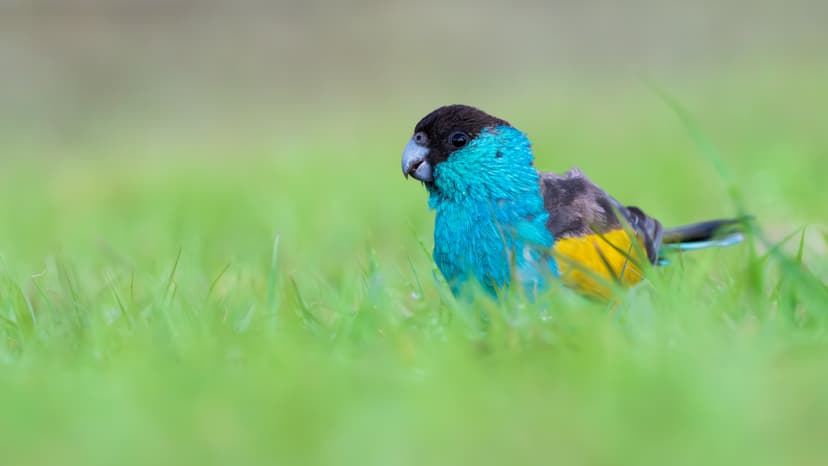
Hooded parrot
The hooded parrot is a species native to the Northern Territory in Australia, inhabiting savannah and open woodland. It is distinctive for being one of the few parrots that breed in termite mounds, and males are recognized by their black head and yellow wing patches. While once more widespread, it remains common in protected areas.
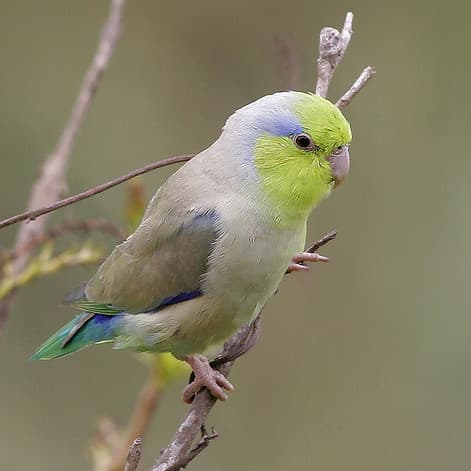
Pacific parrotlet
The Pacific parrotlet, scientifically known as Forpus coelestis, is a small parrot originating from South America, specifically western Ecuador and northwestern Peru. These birds are distinguished by their small size, often referred to as "pocket parrots," and their often feisty and curious personalities, despite their diminutive stature.
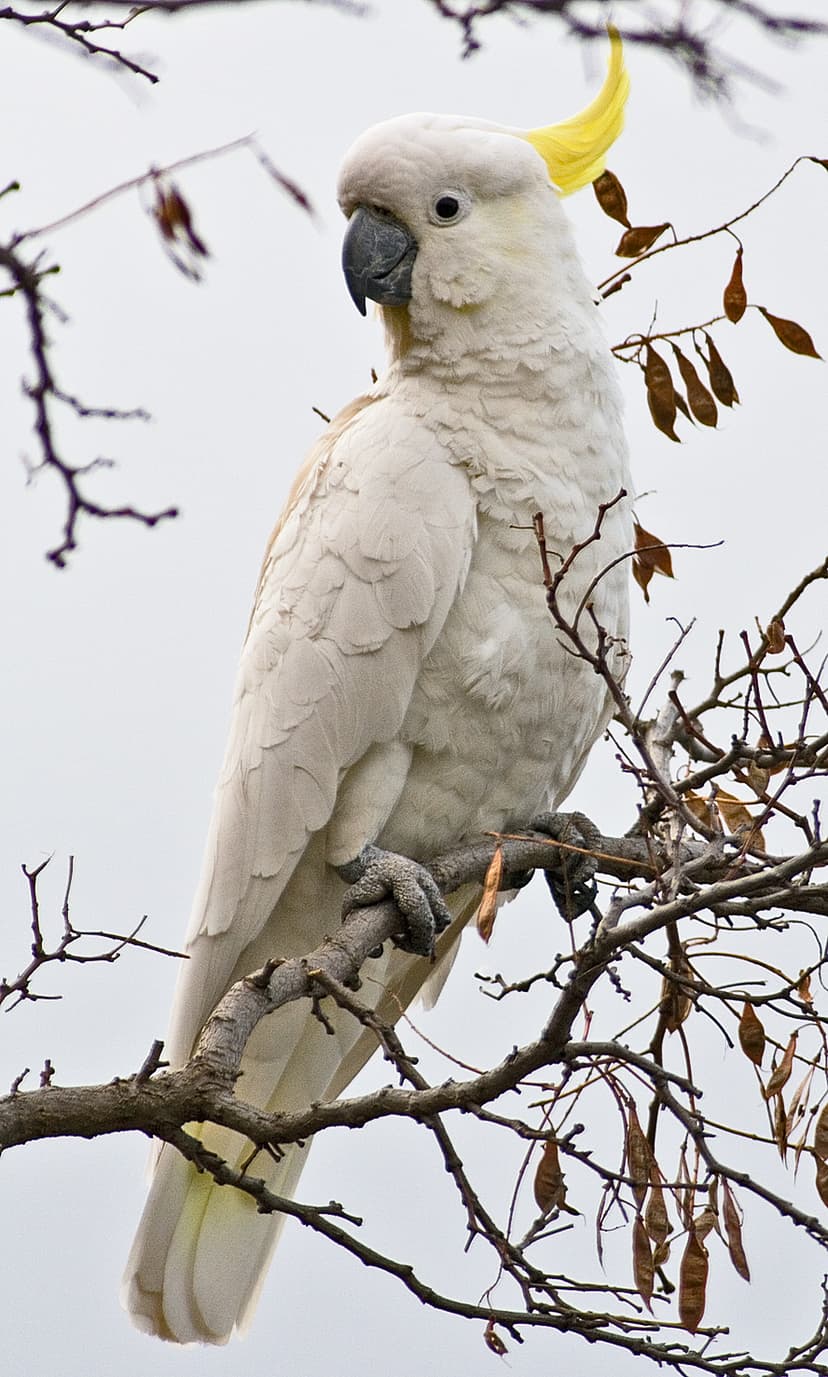
Cacatuidae
Cacatuidae, commonly known as cockatoos, are a family of parrots native to Australasia, characterized by their distinctive erectile crests and curved bills. While generally less colorful than other parrots, often displaying white, grey, or black plumage with colorful accents, they are typically larger and possess a striking appearance. Cockatoos are known for their social nature, monogamous breeding habits, and preference for nesting in tree hollows, feeding on a diet of seeds, tubers, fruits, and insects.