
Maroon shining parrot
Prosopeia tabuensis·Psittaculidae·May to October·Two or three eggs
The Maroon shining parrot, also known as the red shining-parrot, is a species of parrot native to the islands of Vanua Levu and Taveuni in Fiji, with a prehistoric introduction to southern Tonga. Its distinctive plumage features dark maroon underparts and green upperparts, with a variable blue collar. This parrot inhabits lowland and mangrove forests, feeding on seeds, fruits, and occasionally insect larvae.
Key Facts
- ›Native to Fiji (Vanua Levu, Taveuni) and introduced to Tonga.
- ›Plumage includes dark maroon underparts, green upperparts, and a dark blue collar.
- ›Inhabits subtropical/tropical moist lowland and mangrove forests.
- ›Feeds on seeds, fruits, and occasionally insect larvae.
- ›Breeds from may to October, laying 2-3 eggs in tree cavities.
- ›Known for its vocalizations, particularly nea-nea and arr sounds, often calling at night.
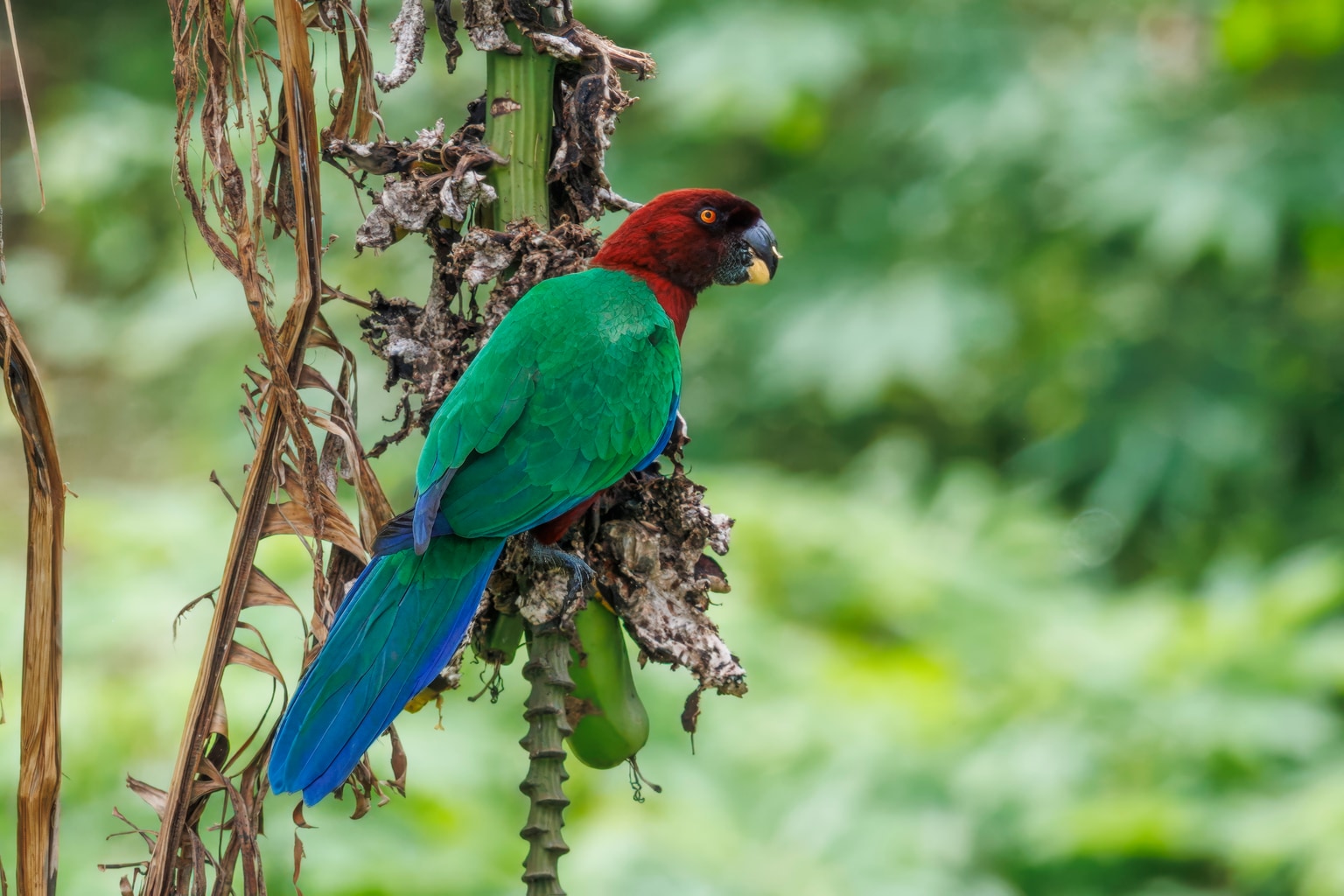
Red Shining-Parrot, Tabuan Parrot, Koki
Fiji, Tonga
Subtropical Or Tropical Moist Lowland Forests, Subtropical Or Tropical Mangrove Forests, Mature Forests, Secondary Growth Forests, Forested Valleys, Coconut Plantations, Village Gardens, Farmlands, Scrub
Red/Black Face, Dark Maroon Underparts, Dark Blue Collar Across Upper Mantle, Green Upperparts and Tail
Seeds, Fruits, Insect Larvae, Corn and Other Crops
Quiet During the Day, Vocal Towards the Evening, Enjoy Self-Bathing
- Mix of high-pitched nea-nea and arr sounds
- Repeated in bursts
- Variety of other squawks and hoots
- Most commonly calls at night or when returning to its nest
- Can learn to talk
Nests Lined With Rotten Wood, Cavities of Dead Trees, Stumps of Palm Trees
About Maroon shining parrot
The Maroon shining parrot, scientifically known as Prosopeia tabuensis and sometimes referred to as the red shining-parrot, is a striking avian species native to the islands of Fiji, specifically Vanua Levu and Taveuni. It was also introduced to the islands of southern Tonga in prehistoric times. This parrot belongs to the family Psittaculidae and is characterized by its vibrant plumage.
Description and Appearance
Adult Maroon shining parrots display a notable array of colors. They possess a red and black face, with the remainder of the head varying from brown to red, darkening on the hindcheeks. The underparts are a deep, dark maroon, contrasting with the green upperparts and tail. A distinctive feature is a dark blue collar that crosses the upper mantle, which can be more or less apparent depending on the individual bird. The bill is grey or black, and they have a dark grey eye ring surrounding orange or yellow eyes.
Distribution and Habitat
The natural range of the Maroon shining parrot encompasses subtropical or tropical moist lowland forests and mangrove forests. They are adaptable and can also be found in mature and secondary growth forests, forested valleys, coconut plantations, village gardens, farmlands, and scrubland. While they are often seen alone or in pairs, they can also gather in flocks of up to 40 individuals.
Diet and Behavior
Their diet primarily consists of seeds and fruits from various forest trees, including mango, guava, banana, and papaya. Occasionally, they supplement their diet with insect larvae or raid cornfields for crops. The strong bill of the Maroon shining parrot is instrumental in its feeding habits, allowing it to grasp branches, bite into wood to access insects, and hold food securely in its feet.
Breeding and Reproduction
Breeding typically occurs during the cooler, dry season, specifically from May to October. Nests are constructed within cavities of dead trees or the stumps of palm trees, lined with rotten wood. A clutch usually consists of two or three eggs. The chicks develop over approximately 25 to 34 days, receiving food three times a day. They are ready to leave the nest between 7 and 9 weeks of age.
Vocalizations and Captivity
The Maroon shining parrot is known for its distinct vocalizations, which include a mix of high-pitched 'nea-nea' and 'arr' sounds, often repeated in bursts, alongside various squawks and hoots. They tend to be most vocal at night or when returning to their nesting sites. While they can learn to mimic speech, they are rarely kept in captivity, with instances usually limited to breeding programs. These parrots are accustomed to warm climates and require temperatures above 23°C (73°F) to thrive.
Source: Wikipedia ↗
Frequently Asked Questions
What are the main regions where the Maroon shining parrot is found?
The Maroon shining parrot is native to the islands of Vanua Levu and Taveuni in Fiji. It was also introduced to the islands of southern Tonga in prehistoric times.
What is the typical appearance of a Maroon shining parrot?
Adults have a red and black face, with the rest of the head being brown or red, becoming darker on the hindcheeks. Their underparts are dark maroon, and their upperparts and tail are green, sometimes with maroon edging on the rump feathers. A dark blue collar is often present on the upper mantle.
What kind of environments does the Maroon shining parrot inhabit?
Their natural habitats include subtropical or tropical moist lowland forests and subtropical or tropical mangrove forests. They can also be found in mature and secondary growth forests, forested valleys, coconut plantations, village gardens, farmlands, and scrub.
What does the Maroon shining parrot eat?
The primary diet consists of seeds and fruits from various forest trees, including mango, guava, banana, and papaya. They may also consume insect larvae or raid cornfields for crops.
When does the Maroon shining parrot breed and what are its nesting habits?
Breeding occurs during the cool and dry season, specifically from May to October. They nest in cavities of dead trees or palm tree stumps, lining them with rotten wood. They typically lay two or three eggs.
What are the vocalizations of the Maroon shining parrot?
Their call is a combination of high-pitched 'nea-nea' and 'arr' sounds, repeated in bursts, along with other squawks and hoots. They are most vocal at night or when returning to their nest.
Is the Maroon shining parrot commonly kept as a pet?
Maroon shining parrots are rarely raised in captivity and are typically only kept for breeding programs. They are accustomed to warm climates and require temperatures above 23 °C (73 °F).
Related Parrot species

Blaze-winged parakeet
The blaze-winged parakeet is a species of parrot found in parts of Brazil, Bolivia, Paraguay, and potentially Argentina. It is characterized by its mostly green plumage with distinctive red and yellow markings on its wings and a maroon belly. This species inhabits the Pantanal and Chaco regions, primarily in deciduous and gallery forests, and is known for its noisy, chattering vocalizations, especially in flight.
Maroon-tailed parakeet
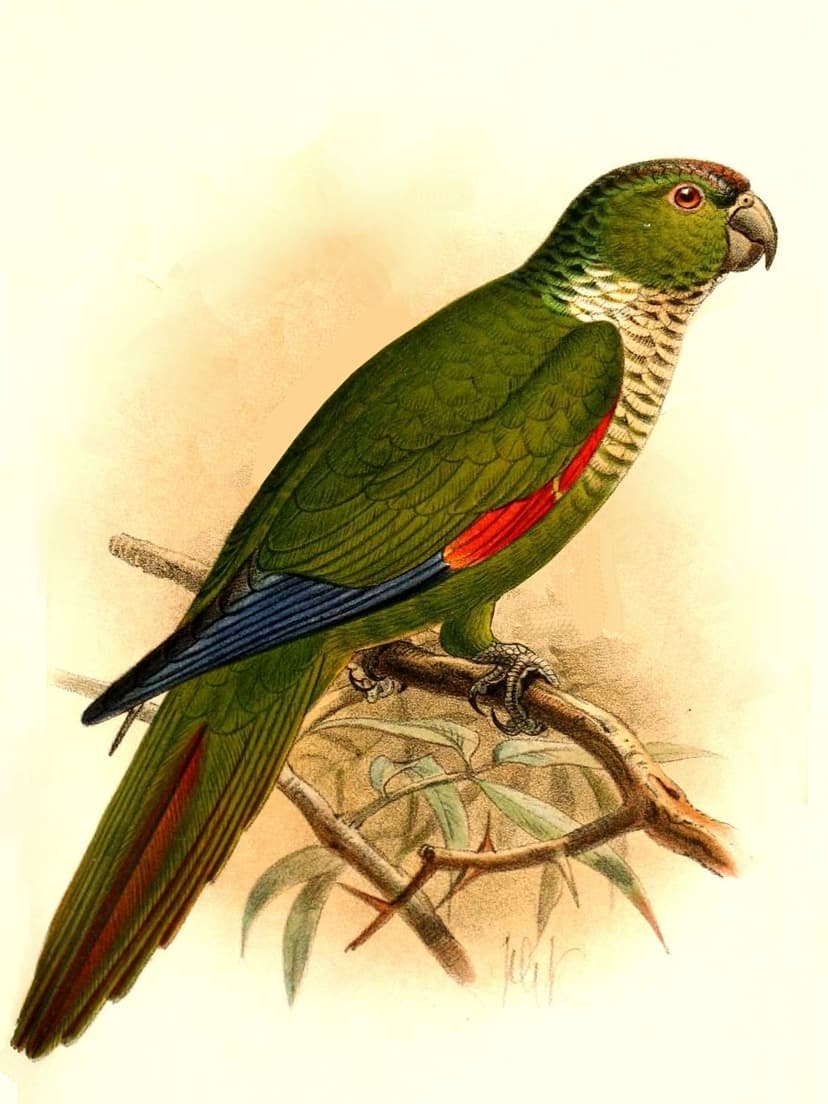
The maroon-tailed parakeet is a species of bird found in South America, primarily in countries like Brazil, Colombia, Ecuador, Peru, and Venezuela. It is characterized by its predominantly green plumage with a distinctive maroon tail, and adults have a scaly appearance on their throat and breast. This species inhabits various forest types and edges, typically at mid-elevations.
Pfrimer's parakeet
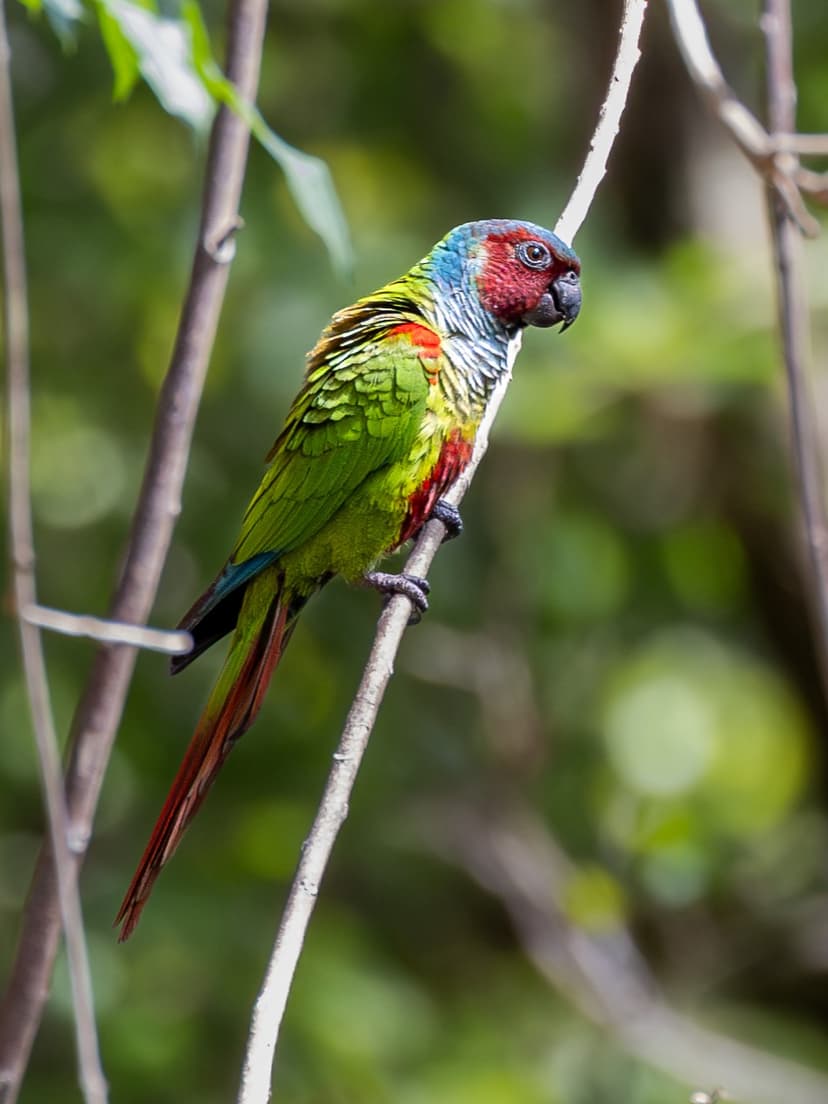
Pfrimer's parakeet, also known as Pfrimer's conure or maroon-faced conure, is a non-migratory parrot species endemic to the Caatinga forest of Brazil's Goiás and Tocantins regions. It is distinguished by its brown and red face, blue crown, and maroon tail, and is currently classified as endangered due to significant habitat loss from deforestation for agriculture.