
Maroon-tailed parakeet
The maroon-tailed parakeet is a species of bird found in South America, primarily in countries like Brazil, Colombia, Ecuador, Peru, and Venezuela. It is characterized by its predominantly green plumage with a distinctive maroon tail, and adults have a scaly appearance on their throat and breast. This species inhabits various forest types and edges, typically at mid-elevations.
Key Facts
- ›Length ranges from 23 to 25 cm (9.1 to 9.8 inches) with a weight of approximately 83 g (2.9 oz).
- ›Found in Brazil, Colombia, Ecuador, Peru, and Venezuela.
- ›Inhabits wet lowland premontane forest, cloudforest, Várzea, and terra firme ecosystems.
- ›Diet includes fruits from forest trees and palms, as well as cultivated fruits.
- ›Vocalizations include loud, harsh notes and noisy, harsh chattering, especially when in flocks.
- ›Conservation status varies by subspecies, with one subspecies listed as Vulnerable.
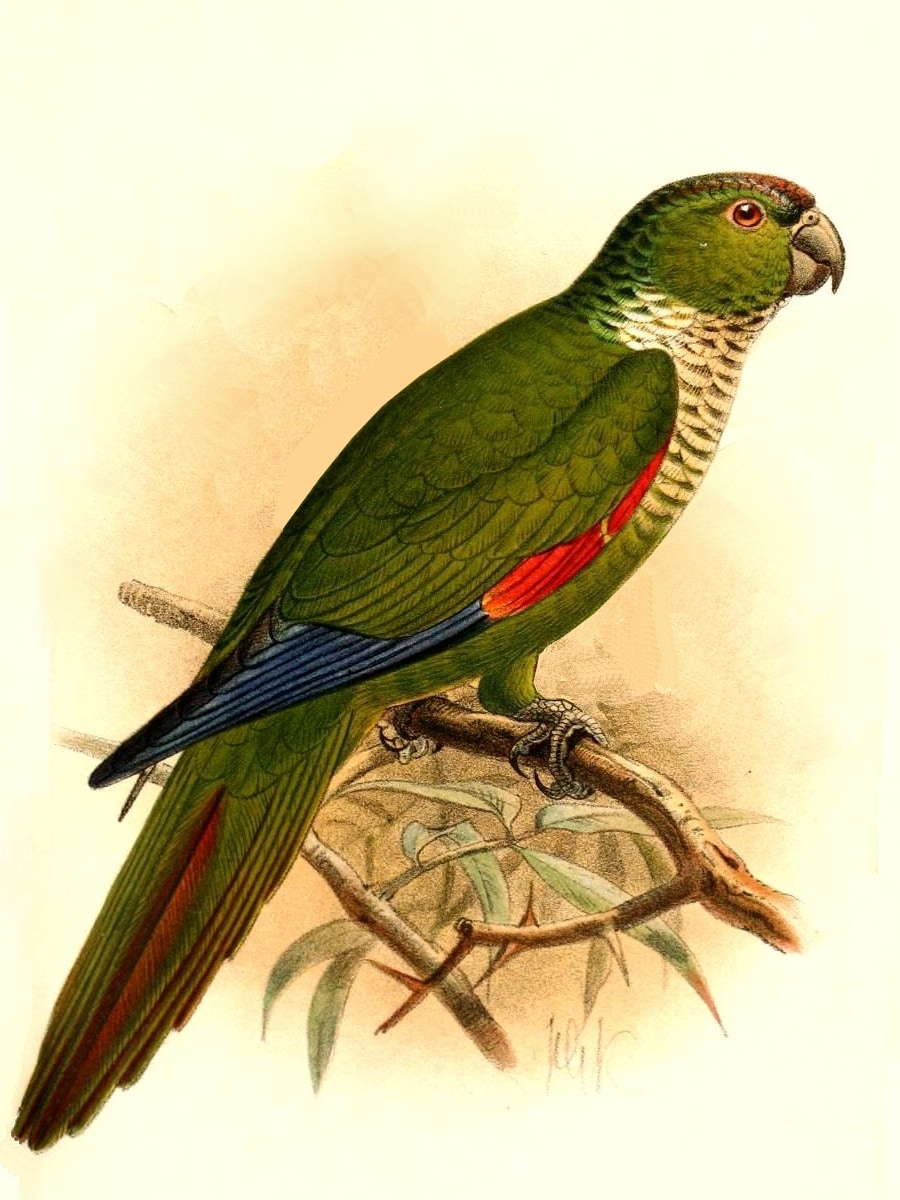
Maroon-Tailed Conure
South America
Wet Lowland Premontane Forest, Cloudforest, VáRzea, Terra Firme, Forest Edges, Partially Cleared Areas
- Maroon upper tail surface
- Scaly appearance on throat and breast due to feather edges
Fruit From Forest Trees, Fruit From Palms, Cultivated Fruits
Not Specified In Text
Loud, Harsh Notes, Noisy, Harsh Chattering, Calls From Perch and In Flight
Not Specified In Text
About Maroon-tailed parakeet
The maroon-tailed parakeet (Pyrrhura melanura) is a species of bird belonging to the Arinae subfamily within the Psittacidae family, commonly known as African and New World parrots. This species is found across several South American countries, including Brazil, Colombia, Ecuador, Peru, and Venezuela.
Description and Identification
Adults of the nominate subspecies (P. m. melanura) typically measure between 23 to 25 cm (9.1 to 9.8 inches) in length and weigh around 83 grams (2.9 ounces). They exhibit predominantly green plumage, with a brown crown and nape. Notable features include a scaly appearance on their throat and breast, caused by buffy whitish feather edges, and a distinctive maroon upper tail surface. Their wings are primarily green, accented with red and yellowish-orange primary coverts and blue primaries. The sexes are visually indistinguishable. Immature birds are similar to adults but possess less red on their primary coverts.
Distribution and Habitat
The maroon-tailed parakeet inhabits a variety of forest ecosystems, including wet lowland premontane forest, cloudforest, várzea, and terra firme. They are also found in forest edges and partially cleared areas. Their altitudinal range varies by subspecies, generally occurring between 500 and 1,700 meters (1,600 to 5,600 feet), with some subspecies extending to higher elevations up to 3,200 meters (10,500 feet).
Behavior and Diet
These parakeets are generally considered sedentary, though some subspecies may undertake seasonal elevational movements. They typically forage in flocks of six to twelve individuals. Their diet is known to include fruits from forest trees and palms, as well as cultivated fruits like mangoes and guavas.
Vocalizations
The maroon-tailed parakeet's calls are often described as loud and harsh. When perched, they may emit a series of notes like "screeet," and in flight, similar calls are heard. Members of a flock frequently vocalize simultaneously, creating a noisy, harsh chattering.
Breeding and Conservation
The breeding season for the maroon-tailed parakeet varies geographically. In captivity, clutches typically consist of four eggs, with an incubation period of about 25 days and a fledging period of seven to eight weeks. The conservation status of the species is assessed differently for its various subspecies. The 'Upper Magdalena' parakeet (P. m. chapmani) is classified as Vulnerable due to habitat loss and past impacts from the pet trade. Other subspecies, including the maroon-tailed parakeet sensu stricto, are assessed as Least Concern, although they also face pressures from deforestation and hunting.
Source: Wikipedia ↗
Frequently Asked Questions
What is the typical size and weight of a maroon-tailed parakeet?
The maroon-tailed parakeet typically measures between 23 and 25 cm (9.1 to 9.8 inches) in length. Its weight is approximately 83 grams (2.9 ounces).
What are the main geographic regions where the maroon-tailed parakeet is found?
This species is distributed across several South American countries, including Brazil, Colombia, Ecuador, Peru, and Venezuela. The specific subspecies inhabit different slopes and valleys within these regions.
What is the natural habitat of the maroon-tailed parakeet?
The maroon-tailed parakeet inhabits the canopy and edges of diverse forest environments. These include wet lowland premontane forests, cloud forests, várzea, terra firme, and areas that have been partially cleared.
What do maroon-tailed parakeets eat in the wild?
Their diet primarily consists of fruits sourced from forest trees and palms. They are also known to consume cultivated fruits such as mangoes and guavas.
What are the characteristic sounds of the maroon-tailed parakeet?
The most common call is a series of loud, harsh notes, often described as 'screeet'. When in flocks, they produce a noisy, harsh chattering, especially when calling frequently and simultaneously.
Are there any conservation concerns for the maroon-tailed parakeet?
Conservation status varies among its subspecies. One subspecies, the 'Upper Magdalena' parakeet, is listed as Vulnerable due to its limited range and habitat loss from deforestation and hunting. Other subspecies are considered Least Concern.
Related Parrot species

Blaze-winged parakeet
The blaze-winged parakeet is a species of parrot found in parts of Brazil, Bolivia, Paraguay, and potentially Argentina. It is characterized by its mostly green plumage with distinctive red and yellow markings on its wings and a maroon belly. This species inhabits the Pantanal and Chaco regions, primarily in deciduous and gallery forests, and is known for its noisy, chattering vocalizations, especially in flight.
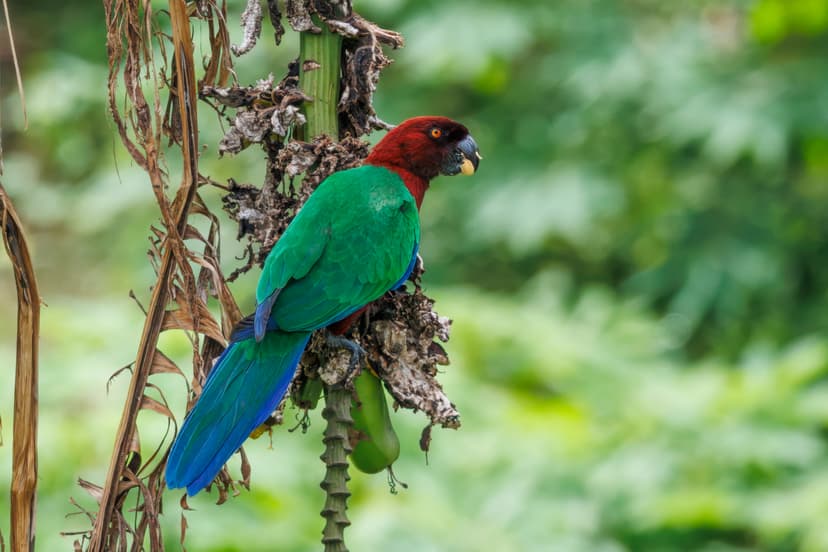
Maroon shining parrot
The Maroon shining parrot, also known as the red shining-parrot, is a species of parrot native to the islands of Vanua Levu and Taveuni in Fiji, with a prehistoric introduction to southern Tonga. Its distinctive plumage features dark maroon underparts and green upperparts, with a variable blue collar. This parrot inhabits lowland and mangrove forests, feeding on seeds, fruits, and occasionally insect larvae.
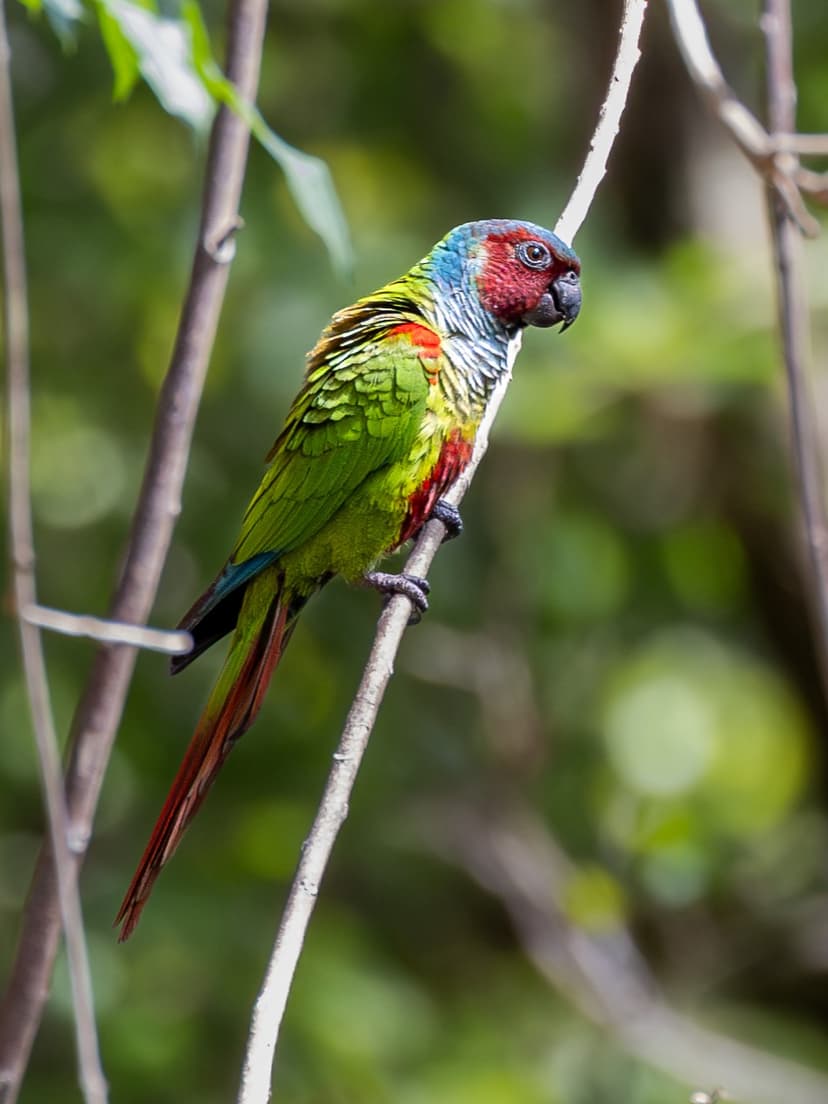
Pfrimer's parakeet
Pfrimer's parakeet, also known as Pfrimer's conure or maroon-faced conure, is a non-migratory parrot species endemic to the Caatinga forest of Brazil's Goiás and Tocantins regions. It is distinguished by its brown and red face, blue crown, and maroon tail, and is currently classified as endangered due to significant habitat loss from deforestation for agriculture.