
Pygmy lorikeet
The pygmy lorikeet is a small parrot species found in the montane forests of New Guinea. It is distinguished by its diminutive size, with males featuring a purple rump, streaked yellow breast, and red underwing stripes, while females have a green rump. This species is the sole member of its genus, Charminetta, and is known for its high-pitched flight calls.
Key Facts
- ›The smallest of all lorikeets, averaging 13 cm in length.
- ›Males have a distinctive streaked yellow breast and red stripes under their wings.
- ›Females are identifiable by their green rump, in contrast to the male's purple rump.
- ›Inhabits subtropical or tropical moist montane forests at altitudes of 1000–2200m.
- ›Its population is estimated to be less than 50,000 individuals, with a stable trend.

Pygmy Lorikeet
New Guinea
Subtropical Moist Montane Forests, Tropical Moist Montane Forests
- Smallest of the Lorikeets
- Male: Dark Purple Rump, Streaked Yellow Breast, Red Underwing Stripes
- Female: Green Rump, Lacks Red Underwing Stripe
- Orange Eyes and Beak
High Pitched Flight Calls, Coarse Flight Calls, Relatively Weak Flight Calls, Quiet Contact Calls Between Pairs
About Pygmy lorikeet
The pygmy lorikeet, scientifically known as Charminetta wilhelminae, is the sole species within its genus, Charminetta, and belongs to the Psittaculidae family of parrots. This diminutive bird is native to the highland regions of New Guinea, where it inhabits subtropical and tropical moist montane forests at elevations between 1000 and 2200 meters.
Description and Identification
Distinguished as the smallest of all lorikeets, the pygmy lorikeet averages approximately 13 cm (5.1 inches) in length and weighs around 20 grams (0.71 ounces). Sexual dimorphism is evident in their plumage. Adult males exhibit a dark purple rump, a streaked yellow breast, and notable red stripes on the underside of their wings. Their tails are green with yellow tips, and both their eyes and beaks are orange. Females, conversely, have a green rump and lack the red underwing stripes seen in males. Immature birds resemble adults but have less distinct yellow streaking on their breasts and possess brown bills and eyes.
Behavior and Habitat
Pygmy lorikeets are characterized by their high-pitched, coarse, and relatively weak flight calls. Pairs also engage in quiet contact calls. The species' natural habitat is confined to the montane forests of New Guinea, where they are found at significant altitudes. The global population is estimated to be under 50,000 individuals but is considered stable.
Source: Wikipedia ↗
Frequently Asked Questions
What is the pygmy lorikeet's scientific name and genus?
The scientific name for the pygmy lorikeet is Charminetta wilhelminae. It is the only species placed in the genus Charminetta, having been moved from the genus Charmosyna in 2020.
What are the physical characteristics of the male pygmy lorikeet?
Male pygmy lorikeets have a dark purple rump and a streaked yellow breast. They also possess red stripes under their wings, a green tail tipped with yellow, and orange eyes and beak.
How does the female pygmy lorikeet differ from the male?
The female pygmy lorikeet can be distinguished from the male by her green rump, whereas the male has a purple rump. Additionally, the female lacks the red underwing stripe found on the male.
What is the natural habitat of the pygmy lorikeet?
The pygmy lorikeet is found in the highlands of New Guinea, specifically within subtropical or tropical moist montane forests. They typically reside at altitudes ranging from 1000 to 2200 meters.
What kind of sounds do pygmy lorikeets make?
Pygmy lorikeets are known for their high pitched, coarse, and relatively weak flight calls. Pairs also communicate using quiet contact calls.
Related Parrot species

Duchess lorikeet
The Duchess lorikeet (Vini margarethae) is a species of parrot native to the Solomon Islands archipelago. This vibrantly colored bird, primarily bright red with distinctive yellow and purple markings, inhabits lowland and montane forests, as well as plantations. It is currently listed as Least Concern but faces threats from habitat loss and potential large-scale pet trade.
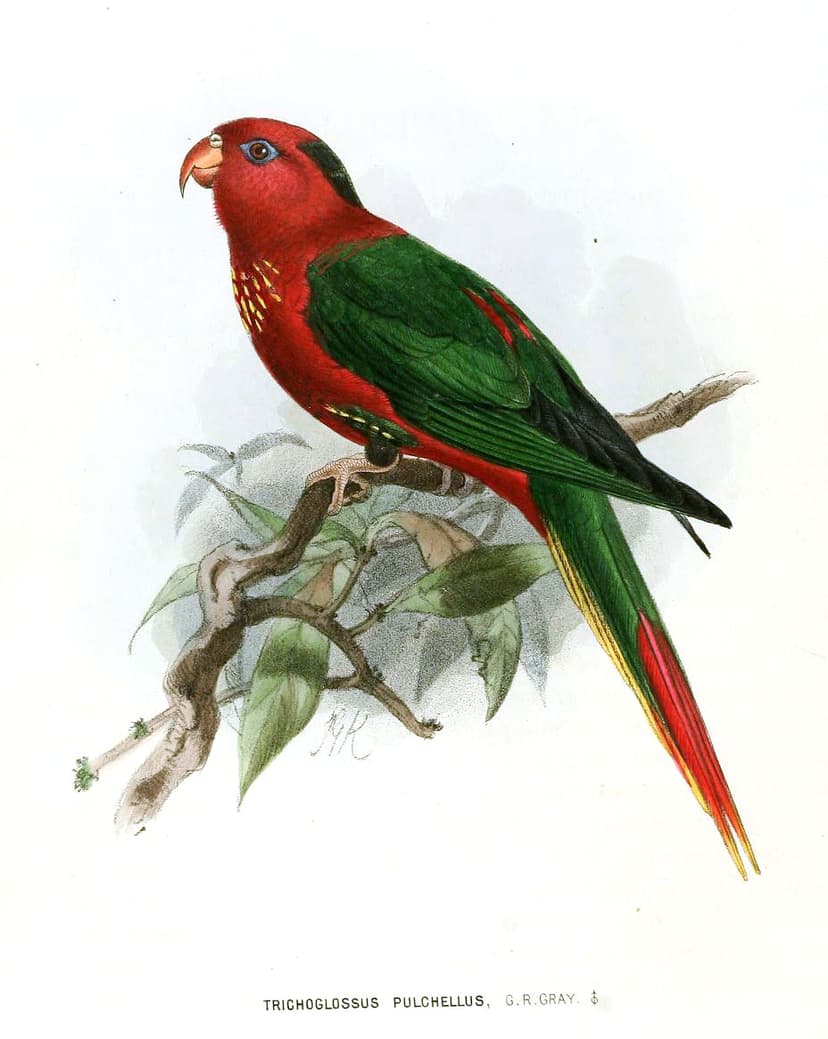
Fairy lorikeet
The fairy lorikeet (Charmosynopsis pulchella) is a small, vibrantly colored parrot native to New Guinea. Primarily red with green wings and yellow accents, it inhabits moist lowland and montane forests. Distinctive subspecies exist, differing in the extent of yellow and green markings, particularly on the breast and rump.

Goldie's lorikeet
Goldie's lorikeet is a distinctive parrot species native to the highlands of New Guinea. It is recognized for its vibrant, multi-colored head plumage, which includes red, blue, and purple, contrasting with its predominantly green body and yellowish-streaked chest. This species is known for its quiet and non-aggressive temperament, making it a well-regarded pet.