
Red lory
Trichoglossus borneus·Psittaculidae·31·30-300
The Red lory, also known by the binomial name *Trichoglossus borneus*, is a species of parrot belonging to the family Psittaculidae. It is predominantly red with blue and black markings on its back and wings, and is the second most commonly kept lory in captivity. Native to the Moluccas and surrounding Indonesian islands, its natural habitats include tropical lowland and mangrove forests.
Key Facts
- ›The Red lory is approximately 31 cm (12 inches) long and weighs between 30-300 grams.
- ›Its plumage is primarily red, with red, blue, and black marks on the back and wings, and a reddish-brown tail.
- ›It possesses a brush tongue with papillae, adapted for feeding on nectar and pollen.
- ›The species is endemic to the Moluccas and surrounding islands in Indonesia, inhabiting tropical moist lowland and mangrove forests.
- ›Red lories are known for their intelligent, playful, and sometimes pugnacious personalities.
- ›In captivity, they require significant attention, toys, and frequent bathing.
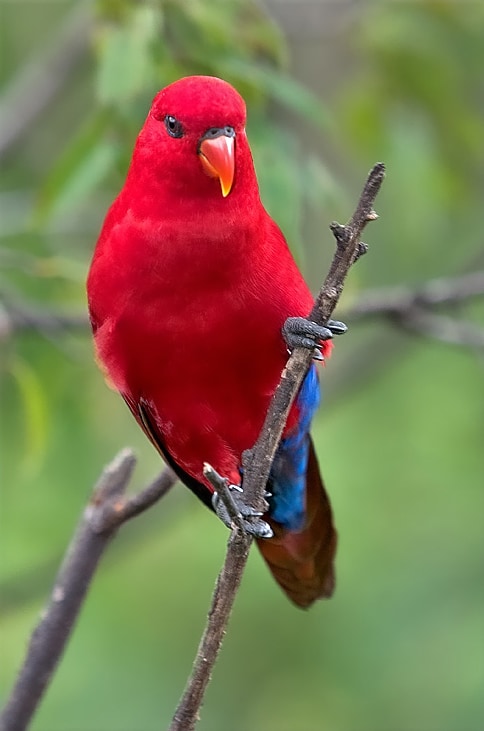
Long-Tailed Scarlet Lory
Indonesia
Tropical Moist Lowland Forests, Tropical Mangrove Forests
Brush Tongue With Papillae, Orange Beak, Grey Legs
Nectar, Pollen, Fruits, Insects
Intelligent, Playful, Flamboyant, Theatrical, Pugnacious, Trainable, Affectionate, Curious
About Red lory
The Red lory, scientifically known as Trichoglossus borneus (though historically also referred to as Psittacus borneus), is a vibrant species of parrot belonging to the Psittaculidae family. It is distinguished by its predominantly red plumage, accented with blue and black markings on its back and wings, and a reddish-brown tail. This species is notable for being the second most commonly kept lory in captivity, after the rainbow lorikeet, owing to its appealing temperament and colorful appearance.
Distribution and Habitat
The Red lory is endemic to the Moluccas and surrounding islands within Indonesia. Its natural environment consists of tropical moist lowland forests and tropical mangrove forests. The species has also been introduced to Taiwan.
Physical Characteristics
Adult Red lories measure approximately 31 cm (12 inches) in length and typically weigh between 30 and 300 grams. Their beaks are orange, and their legs are grey. A unique characteristic of the Red lory, shared with other lories, is their brush-like tongue, which is equipped with papillae at the tip. This adaptation is crucial for their diet, enabling them to efficiently feed on nectar and pollen. The irises are typically red, though some subspecies may exhibit brown irises. Both males and females share identical external appearances, though juveniles are noticeably duller and possess brown irises and a brownish beak. Their bills are comparatively narrower and less powerful than those of other parrot species, and their gizzards are generally thin-walled and weak.
Diet
In their natural habitat, Red lories feed on nectar, pollen, fruits, and occasionally insects. In captivity, a balanced diet is recommended, which can include commercial formulated diets, fresh nectar, and a variety of fruits and vegetables such as apples, pomegranates, papaya, grapes, cantaloupe, pineapple, figs, kiwi, and corn-on-the-cob. Fresh, clean water must be provided daily.
Behavior and Aviculture
Red lories are recognized for their intelligence, playful nature, and a personality that can be described as flamboyant, theatrical, and sometimes pugnacious. They are trainable, affectionate, and curious. In aviculture, these birds require significant attention, enrichment through toys, chewing items, and branches, and frequent bathing. While they can be housed alone or with others, close monitoring for aggression is advised, as mated pairs are known to defend their territories forcefully. Young birds require socialization to new people and experiences to ensure well-adjusted behavior. Outdoor housing is preferred, but if caged, the enclosures must be spacious and kept clean. A moderate clipping of their feathers may be necessary to prevent uncontrolled flight.
Source: Wikipedia ↗
Frequently Asked Questions
What are the different subspecies of the Red lory?
Two subspecies of the Red lory are recognized: *T. b. cyanonothus* found in Buru (central Maluku Islands), and *T. b. borneus* from the south Maluku Islands and Kai Islands. Other subspecies mentioned include Rothschild's red lory and Bernstein's red lory.
What is the natural habitat of the Red lory?
The natural habitats of the Red lory are tropical moist lowland forests and tropical mangrove forests. They are endemic to the Moluccas and surrounding islands in Indonesia.
What do Red lories eat in the wild and in captivity?
In the wild, their diet consists of nectar, pollen, fruits, and occasionally insects. As pets, they can be fed formulated diets, fresh nectar, fruits, and vegetables.
How long is a Red lory?
The Red lory is about 31 cm (12 inches) long from head to tail.
Are male and female Red lories visually different?
No, the male and female Red lories have identical external appearances. Juveniles are duller than adults and have brown irises and a brownish beak.
What makes the Red lory's tongue unique?
A defining characteristic of lories, including the Red lory, is their brush tongue. This tongue has papillae at the tips, which aid them in feeding on pollen and nectar.
Related Parrot species
Pearly parakeet
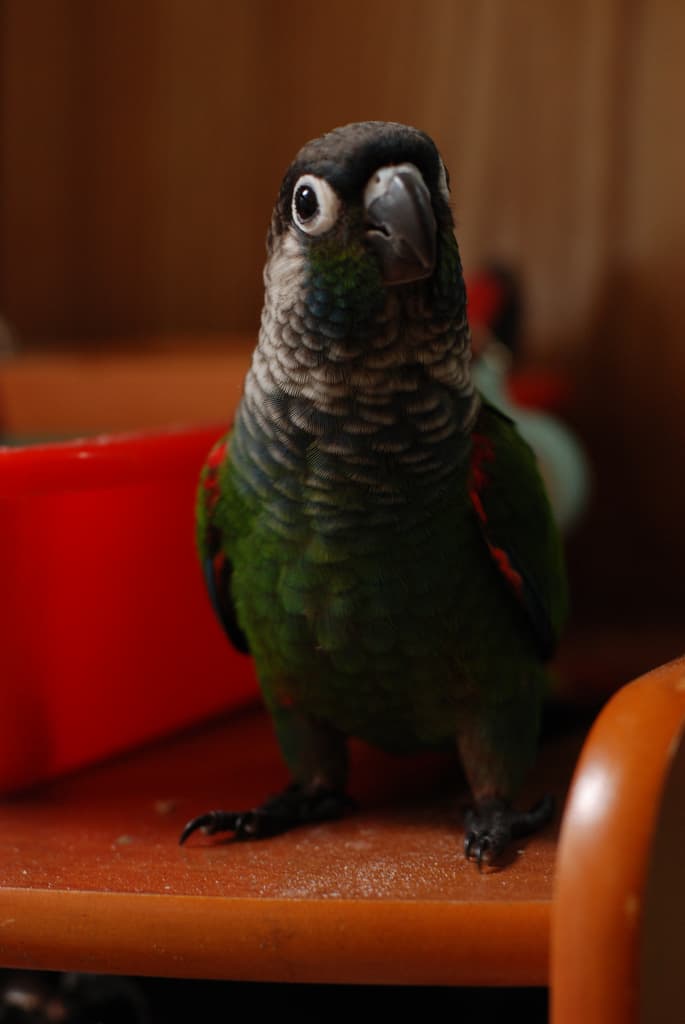
The pearly parakeet (Pyrrhura lepida), also known as the pearly conure in aviculture, is a Vulnerable species endemic to Brazil. Its plumage features a striking combination of greens, blues, and reddish-browns, with scaling on its breast giving it a pearly appearance. The species inhabits humid forests and is threatened primarily by habitat loss due to deforestation.
Brown-hooded parrot
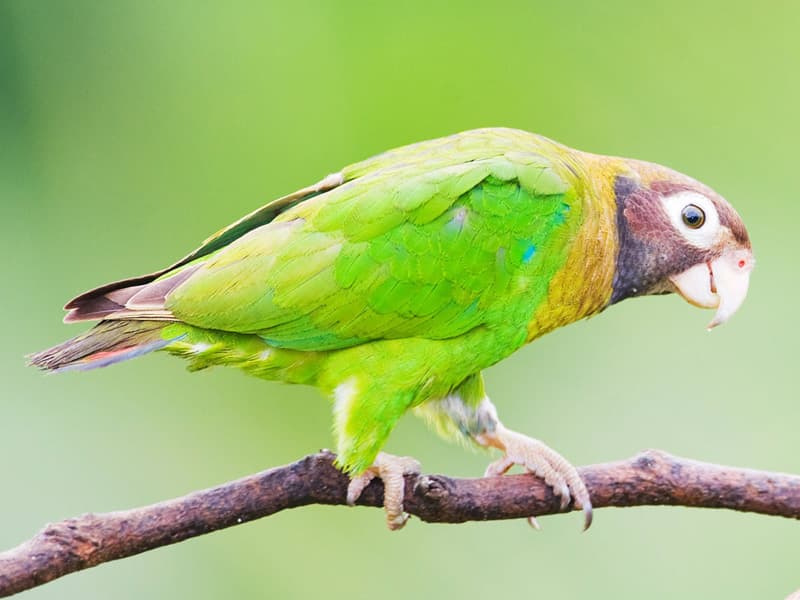
The brown-hooded parrot is a species of parrot found from Mexico to Colombia, belonging to the family Psittacidae. It is distinguished by its vibrant plumage, featuring a reddish-brown crown and throat, olive-yellow breast, and green body with blue accents on the wings and tail.

Painted parakeet
The painted parakeet, also known as the painted conure in aviculture, is a species of parrot native to northeastern South America. This medium-sized parrot is distinguished by its vibrant plumage, featuring a mix of green, blue, and maroon, with distinctive scalloped markings on its breast. It inhabits various forest types and is known to forage in flocks.