
Aneides ferreus
Least Concern·Oviparous (eggs develop internally, bypassing free-living larval stage)
The clouded salamander (Aneides ferreus) is a species of salamander found in the Pacific Northwest of North America. It is characterized by its long, slim body, prehensile tail, and distinctive pale grey coloration blotched with gold, olive green, or dull red. This species primarily inhabits temperate forests, often seeking shelter under logs, rocks, and loose bark.
Key Facts
- ›Found in the Cascadian bioregion of North America, from the Columbia River south to northern California.
- ›Adults reach approximately 5 inches (130 MM) in total length with a long, slim body and prehensile tail.
- ›Feeds on small invertebrates including woodlice, ants, beetles, and spiders.
- ›Breeds in June and July, with females laying clutches of 9-17 eggs in rotting logs.
- ›Larvae develop within the eggs, emerging as juveniles after about two months, bypassing a free-living larval stage.
- ›Listed as Least Concern by the IUCN Red List, but threatened by habitat loss due to changes in forestry practices.

Clouded Salamander
- Temperate Forests
- Moist Areas
- Under Logs
- Under Rocks
- Under Loose Bark
- Rotting Logs
- Crevices In Rock and Scree
- Rotting Douglas-Fir Logs
- Newly Cleared Areas With Tree Stumps and Debris
Pacific Northwest, Cascadian Bioregion, Oregon, Northern California
- Long and Slim Body
- Relatively Long Legs
- Square Ends To Toes
- Prehensile Tail
- Two Naso-Labial Grooves Joining Nostrils To Mouth
- Sixteen Costal Grooves Down Flank
- Upper Side Is Pale Grey Variously Blotched With Gold, Olive Green Or Dull Red
- Juveniles Have A Brass-Colored Streak Down the Center of Their Back
Small Invertebrates, Woodlice, Ants, Beetles, Flies, Termites, Mites, Centipedes, Millipedes, Spiders, Pseudoscorpions
Hides Under Logs and Rocks, Hides Under Loose Bark, Hides In Rotting Logs, Hides In Crevices In Rock and Scree, May Nest In Trees, Parental Care For Eggs Is Possible, Larval Development Occurs Within Eggs
Habitat Loss, Changes In Forestry Practices
About Aneides ferreus
The Clouded Salamander
The clouded salamander, scientifically known as Aneides ferreus, is a species of salamander native to the Pacific Northwest of North America. It belongs to the Plethodontidae family and is characterized by its distinctive pale grey coloration, which is often blotched with shades of gold, olive green, or dull red. Juveniles typically display a brass-colored streak down the center of their backs.
Distribution and Habitat
This species is found in the Cascadian bioregion, inhabiting temperate forests at elevations up to 1,700 meters (5,600 ft). Its range extends from the Columbia River southward through the Cascade Mountains and along the Oregon coast into the northernmost part of California. Clouded salamanders prefer moist forest areas and are often found concealed beneath logs, rocks, loose bark, and within rotting wood or rock crevices. They are particularly drawn to decaying Douglas-fir logs and can also be common in areas recently cleared, provided tree stumps and debris remain.
Biology and Reproduction
Adult clouded salamanders are long and slim, measuring up to approximately 5 inches (130 mm) in total length, and possess relatively long legs and a prehensile tail. Their diet consists mainly of small invertebrates, including woodlice, ants, and beetles, though they will also consume other small arthropods. Breeding occurs during June and July, with females laying clutches of nine to seventeen eggs, often in hollowed-out chambers within rotting logs. A notable aspect of their reproduction is that the larvae develop entirely within the eggs, emerging as fully formed juveniles after about two months, thus bypassing a free-living larval stage. Parental care for the eggs may be provided by one or both adults.
Conservation Status
While the clouded salamander is currently listed as Least Concern by the IUCN Red List of Threatened Species, it faces threats primarily from habitat loss. Changes in forestry practices, which often result in the removal of tree stumps and decaying woody debris, diminish the preferred microhabitats essential for their survival and reproduction. Conservation efforts aimed at protecting other species, such as the spotted owl and marbled murrelet, may indirectly benefit the clouded salamander by preserving these critical forest elements.
Source: Wikipedia ↗
Frequently Asked Questions
What is the average size of a clouded salamander?
The clouded salamander can grow to about 5 inches (130 mm) in total length. They are described as having a long and slim body with relatively long legs.
Where can clouded salamanders be found?
Their range extends from the Columbia River southwards through the Cascade Mountains, along the Oregon coast to the northern tip of California. They inhabit temperate forests in the Pacific Northwest.
What do clouded salamanders eat?
They feed on small invertebrates, primarily woodlice, ants, and beetles. Their diet also includes other insects and arachnids like flies, termites, mites, centipedes, millipedes, spiders, and pseudoscorpions.
How do clouded salamanders reproduce?
Breeding occurs in June and July, with females laying clutches of nine to seventeen eggs, typically in chambers within rotting logs. The young develop inside the eggs and emerge as juveniles about two months later.
What is the conservation status of the clouded salamander?
The clouded salamander is listed as Least Concern on the IUCN Red List of Threatened Species. However, changes in forestry practices that affect their preferred microhabitats pose a threat.
Related Salamander and Newt species

Aneides lugubris
The arboreal salamander (Aneides lugubris) is a species of climbing salamander native to California and Baja California. It is distinguished by its prehensile tail, sharp teeth, and unique arboreal adaptations, including gliding behavior when falling from trees. This lungless salamander is primarily nocturnal and insectivorous, inhabiting oak and sycamore woodlands and chaparral.
Arboreal salamander
The arboreal salamander (Aneides lugubris) is a lungless salamander species native to California and Baja California, known for its climbing ability and distinctive prehensile tail. It inhabits oak and sycamore woodlands and chaparral, spending daylight hours in tree cavities and exhibiting unique gliding behaviors when falling.
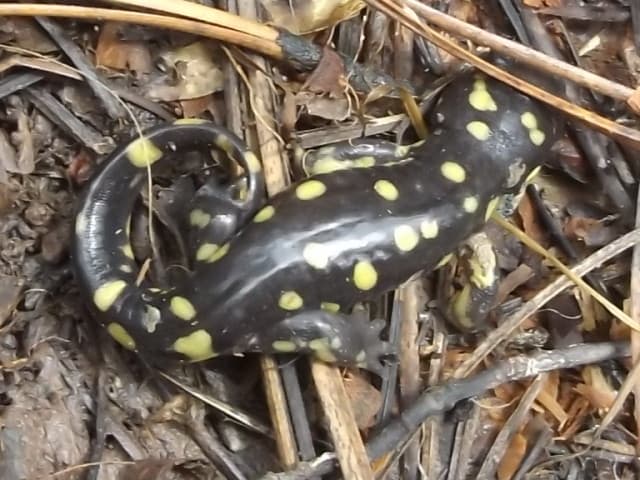
Ambystoma rosaceum
The Tarahumara salamander (Ambystoma rosaceum) is a freshwater mole salamander species endemic to Mexico, found in temperate and montane forests, grasslands, and various aquatic habitats. It is distinguished by its medium size, variable coloration of yellow spots or streaks on a dark background in adults, and the potential for paedomorphosis, where individuals retain larval features. While generally considered Least Concern, it faces threats from habitat loss and introduced species.