
Aneides vagrans
The wandering salamander (Aneides vagrans) is a species of climbing salamander found in disjunct populations in northern California and Vancouver Island. It is distinguished by its arboreal lifestyle, ability to glide from trees using specialized physical adaptations, and a prehensile tail that aids in controlled descent. Its exact distribution is a subject of ongoing speculation, with theories ranging from natural dispersal to human introduction.
Key Facts
- ›Found in northern California and Vancouver Island, with a disjunct distribution.
- ›Known for its arboreal lifestyle, often inhabiting the crowns of coast redwood trees.
- ›Possesses adaptations for climbing and gliding, including long legs, toes with expanded pads, and a prehensile tail.
- ›Can leap from trees and control its descent, reducing impact speed.
- ›Feeds on small invertebrates, with ants, beetles, and springtails forming a significant portion of its diet.
- ›Breeds in spring and early summer, laying eggs in concealed terrestrial or arboreal locations.

Wandering Salamander
Forest Canopy, Rotting Logs, Bark Crevices, Stumps, Under Rocks, Tree Crowns, Epiphytic Fern Mats
Northern California, Vancouver Island
- Long and Slender
- Snout-Vent Length Up To 80 Mm
- Total Length Up To 130 Mm
- Base Color From Brown To Light Grey
- Lighter Bronze-Grey Mottling On Dorsal Surface
- Juveniles Have A Coppery-Bronze Stripe Down the Spine
- 14-16 Costal Grooves
- Broader and More Triangular Head In Males
- Naso-Labial Grooves For Chemoreception
- Relatively Long Legs and Toes With Expanded Terminal Pads
- Prehensile, Round Tail
Ants, Mites, Adult Beetles and Their Larvae, Snails, Springtails, Woodlice
- Arboreal
- Can Leap From Trees and Glide
- Control Descent With Physical Adaptations
- Climbing
- Less Territorial Compared To Other Plethodontids
- Investigate Environment With Nose
- May Scent-Mark By Rubbing Nose Or Underbelly On the Ground
- Habitat Loss
- Land Clearing For Agriculture and Residential Development
- Intensive, Short-Rotation Logging Practices
- Climate Change
- Batrachochytrium Salamandrivorans Fungus
About Aneides vagrans
The Wandering Salamander (Aneides vagrans)
The wandering salamander, scientifically known as Aneides vagrans, is a remarkable species of climbing salamander belonging to the Plethodontidae family. It is distinguished by its unique, disjunct distribution, with populations found in northern California and on Vancouver Island. The exact origin of this separation is uncertain, with theories suggesting either natural dispersal or unintentional human introduction.
Physical Characteristics and Adaptations
This species is characterized by its long, slender body, reaching a snout-vent length of approximately 80 millimeters and a total length of up to 130 millimeters. Its coloration ranges from brown to light grey, often adorned with lighter bronze-grey mottling. Juveniles possess a distinctive coppery-bronze stripe along their spine. The wandering salamander exhibits adaptations crucial for its arboreal lifestyle, including relatively long legs and toes equipped with expanded terminal pads that enhance grip on vertical surfaces. Its tail is prehensile, aiding in balance and providing control during aerial descents.
Habitat and Behavior
Wandering salamanders are primarily arboreal, frequently inhabiting the forest canopy, particularly the crowns of coast redwood trees. They can also be found in moist terrestrial environments such as rotting logs, bark crevices, and beneath rocks. A notable behavior is their ability to leap from trees when disturbed, employing physical adaptations to glide and control their descent, often returning to the same tree. They are generalist feeders, preying on small invertebrates like ants, beetles, and springtails.
Reproduction and Life Cycle
Breeding occurs in the spring and early summer, with females depositing clutches of 6-9 eggs in secluded locations, which can be terrestrial or elevated on tree branches. Adult salamanders have been observed guarding their developing eggs. Unlike many amphibians, wandering salamanders exhibit direct development, hatching directly into their adult form without an aquatic larval stage.
Distribution and Conservation
The disjunct distribution of Aneides vagrans has led to various hypotheses regarding its origins, including theories of natural log-rafting via ocean currents or historical introductions related to the tanning industry. While the species is currently listed as Least Concern by the IUCN, its populations are experiencing declines. Major threats include habitat loss due to logging and land development, as well as potential impacts from climate change and emerging fungal diseases. Despite these challenges, logging in some regions does not appear to significantly affect populations, and the species can persist in regenerating forests.
Source: Wikipedia ↗
Frequently Asked Questions
Where do wandering salamanders live?
Wandering salamanders have a disjunct distribution, with populations found in northern California and on Vancouver Island. They are often found in forest canopies, particularly in the crowns of coast redwood trees, but also inhabit moist terrestrial environments like rotting logs and under rocks.
How do wandering salamanders glide?
When disturbed, wandering salamanders can leap from trees and control their descent. They use adaptations like spread legs, splayed feet, and a tail angled upwards to maintain an upright, stable posture that reduces their speed. Parasagittal undulations of their tail and torso further aid in controlled gliding, allowing them to land on tree trunks or branches.
What do wandering salamanders eat?
Wandering salamanders are generalist feeders, consuming a variety of small invertebrates. Their diet primarily consists of ants, beetles, and springtails, but they also eat mites, snails, and woodlice.
What are the conservation concerns for wandering salamanders?
The wandering salamander is listed as Least Concern by the IUCN, but its populations are declining. Habitat loss due to logging practices and land development are the primary threats. Climate change and the potential spread of the Batrachochytrium salamandrivorans fungus are also potential concerns.
Are wandering salamanders territorial?
Wandering salamanders on Vancouver Island appear to be less territorial than other plethodontid species. They do not typically avoid cover objects used by other individuals, except for rough-skinned newts. Aggressive encounters are also less frequent, though combat between males can occur.
Do wandering salamanders have a larval stage?
No, wandering salamanders hatch directly into their adult form. They do not have an aquatic larval stage, meaning the eggs develop into miniature versions of the adult salamander.
Related Salamander and Newt species
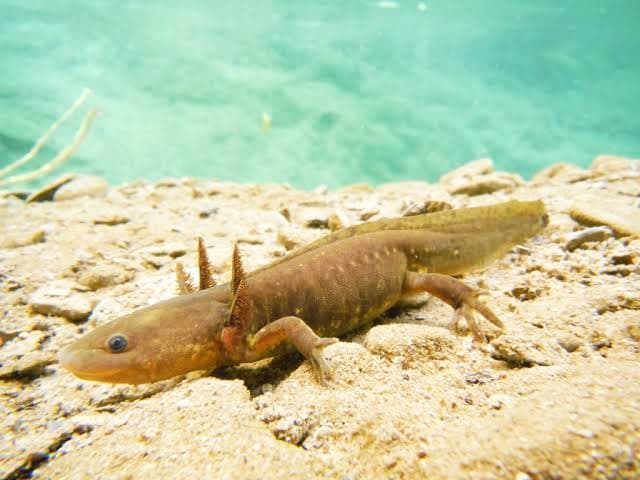
Ambystoma velasci
The plateau tiger salamander (Ambystoma velasci) is a mole salamander species found in Mexico, with a possible range extending into the United States. It is distinctive for its ability to exhibit facultative paedomorphosis, meaning adults can retain larval features or undergo metamorphosis again in response to environmental changes. Adults are characterized by olive-green backs with dark spots and a cream underside.

Ambystoma macrodactylum
The long-toed salamander (Ambystoma macrodactylum) is a mole salamander native to the Pacific Northwest of North America. It is distinguished by its mottled black, brown, and yellow coloration and a notably long outer fourth toe on its hind limbs. This species occupies a wide range of habitats, from temperate rainforests to alpine meadows, and is known for its subterranean adult lifestyle and aquatic breeding phase.
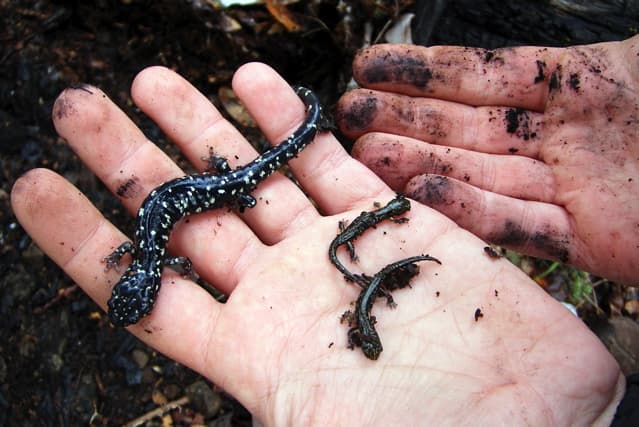
Aneides flavipunctatus
The speckled black salamander (Aneides flavipunctatus) is a species of salamander native to California, found in temperate forests and grasslands. It is distinguished by its variable coloration, ranging from black with white or yellow spots to a grayish or greenish sheen, and its prehensile tail. The species is primarily terrestrial and nocturnal, feeding on small invertebrates.