
Ctenizidae
Ambush predator using a trapdoor.
Ctenizidae is a small family of mygalomorph spiders known for constructing burrows with a distinctive cork-like trapdoor made of soil, vegetation, and silk. These "trapdoor spiders" are found in Europe and Turkey, primarily in France and Italy. Their name derives from the Greek word for "combing or cleaning," referring to their continuous burrow maintenance.
Key Facts
- ›Constructs burrows with a unique cork-like trapdoor.
- ›Belongs to the mygalomorph infraorder of spiders.
- ›Found in Europe and Turkey, with localized distributions.
- ›The family name "Ctenizidae" refers to their continuous cleaning behavior.
- ›Includes two extant genera: Cteniza and Cyrtocarenum.

Trapdoor Spiders
Italy, France, Turkey, Greece
- Cork-Like Trapdoor Constructed From Soil, Vegetation, and Silk.
Construct Burrows With Trapdoors, Continuously Clean Their Burrows, Exhibit Localized Distributions
About Ctenizidae
Ctenizidae: The Trapdoor Spiders
Ctenizidae is a small family of mygalomorph spiders distinguished by their remarkable construction of burrows sealed with a unique trapdoor. This door, crafted from a mixture of soil, vegetation, and silk, serves as an effective ambush point for unsuspecting prey. The family name itself, Ctenizidae, originates from the Greek word 'ktenizein,' meaning "combing" or "cleaning," a direct reference to the spiders' diligent and continuous maintenance of their subterranean homes.
Geographic Distribution and Habitat
The extant members of the Ctenizidae family are found in Europe and Turkey, with notable populations in France and Italy. These spiders often exhibit highly localized distributions, leading to dense clusters of burrows in specific areas. This pattern can result in a concentration of spiders surrounding a larger, maternal burrow.
Taxonomy and Classification
First described by Thorell in 1887, the Ctenizidae family has undergone significant taxonomic revisions, particularly with the advent of molecular phylogenetics. Historically, it encompassed a larger number of genera, but several have since been reclassified into new families, such as Halonoproctidae and Stasimopidae. As of October 2025, the family officially includes two genera: Cteniza (found in Italy and France) and Cyrtocarenum (found in Turkey and Greece). Extinct genera, such as Baltocteniza and Electrocteniza, have also been identified from Baltic amber deposits.
Hunting and Behavior
Ctenizidae spiders are primarily ambush predators. They lie in wait beneath their expertly constructed trapdoors, with only the slightest vibration signaling the approach of prey. Their diet consists of insects and other small invertebrates that wander too close to their concealed burrows. The continuous cleaning and maintenance of their burrows are defining behavioral traits of this family.
Source: Wikipedia ↗
Frequently Asked Questions
What are Ctenizidae spiders known for?
Ctenizidae spiders are primarily known for their remarkable ability to construct burrows that are sealed with a distinctive trapdoor. This trapdoor, made from a combination of soil, vegetation, and silk, is used to ambush unsuspecting prey.
Where are Ctenizidae spiders found?
The extant species of Ctenizidae are naturally found in Europe and Turkey. Their distribution is often localized, meaning populations can be found in concentrated clusters.
What does the name Ctenizidae mean?
The scientific name Ctenizidae is derived from the Greek word 'ktenizein,' which translates to "combing" or "cleaning." This name refers to the spiders' characteristic behavior of continuously maintaining their burrows and trapdoors.
How many genera are in the Ctenizidae family?
As of October 2025, the Ctenizidae family includes two extant genera. These are Cteniza, found in Italy and France, and Cyrtocarenum, found in Turkey and Greece.
Are Ctenizidae spiders the only trapdoor spiders?
No, the term "trapdoor spiders" is also used for similar species in other families, including Liphistiidae, Barychelidae, Cyrtaucheniidae, Idiopidae, and Nemesiidae. Ctenizidae are distinguished by their specific trapdoor construction and behaviors.
Related Spider species
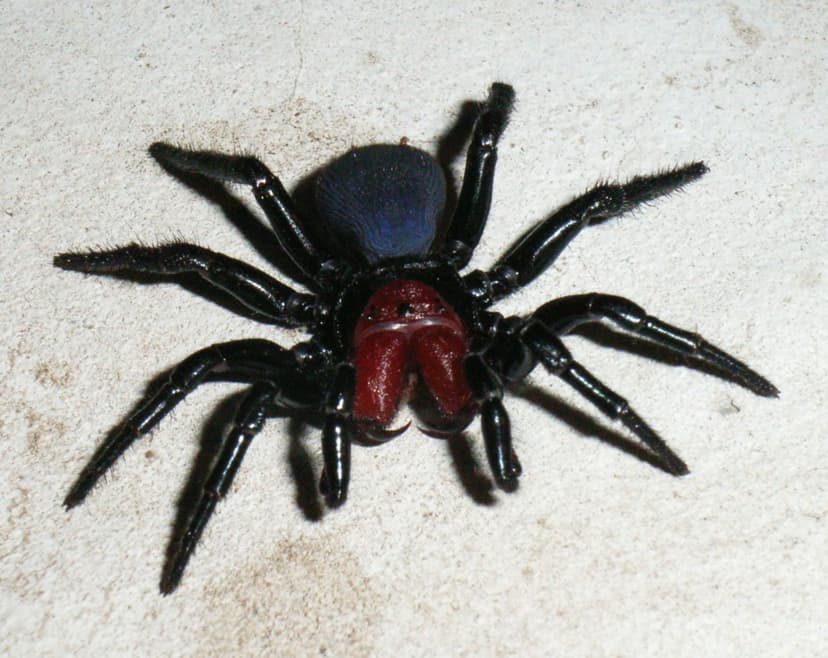
Actinopodidae
Actinopodidae is a family of mygalomorph spiders native to mainland Australia and South America, typically inhabiting open forests. This family includes the mouse spiders (Missulena species), which are notable for their medically significant and potentially dangerous bites.

Agelenidae
The Agelenidae, commonly known as funnel weavers, are a large family of spiders found globally. They are distinguished by their fast running speeds and the construction of flat sheet webs with a funnel-shaped retreat. While most species are solitary, some African species exhibit parasocial behavior, living in communal webs.
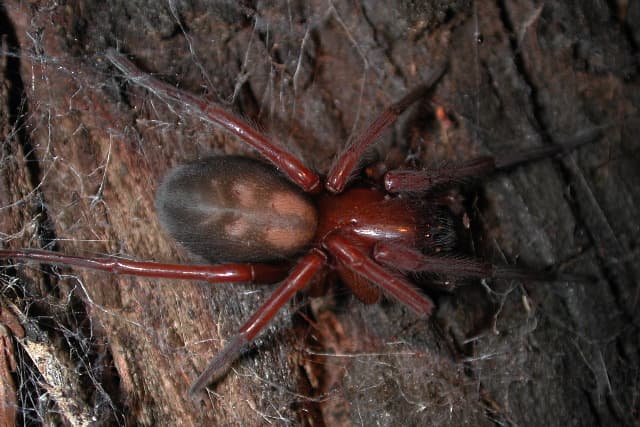
Amaurobiidae
Amaurobiidae is a family of spiders characterized by their three-clawed feet and the presence of either a cribellum or its absence. These spiders are typically found in crevices, hollows, or under stones, where they construct retreats and are often captured in pitfall traps. While widespread, they can be challenging to distinguish from closely related spider families.