
Lycosidae
Ambush predator and active hunter, pouncing on prey or chasing it over short distances; some wait near burrows.
Wolf spiders, belonging to the family Lycosidae, are robust and agile hunters known for their excellent eyesight and solitary nature. These spiders are found globally in diverse habitats, from shrublands to suburban gardens, and are distinctive for carrying their egg sacs attached to their spinnerets. They play a crucial role in natural pest control by preying on various insects and other small invertebrates.
Key Facts
- ›Wolf spiders are recognized for their strong hunting skills and superior vision among arachnids.
- ›They carry their egg sacs attached to their spinnerets, a unique characteristic within spider families.
- ›Their excellent eyesight is aided by a tapetum lucidum, which causes eyeshine when light is shone on them.
- ›Wolf spiders are solitary hunters and typically do not spin webs to catch prey.
- ›They are important natural predators, helping to control insect populations in gardens and farms.
- ›Their coloration generally matches their preferred habitat for camouflage.
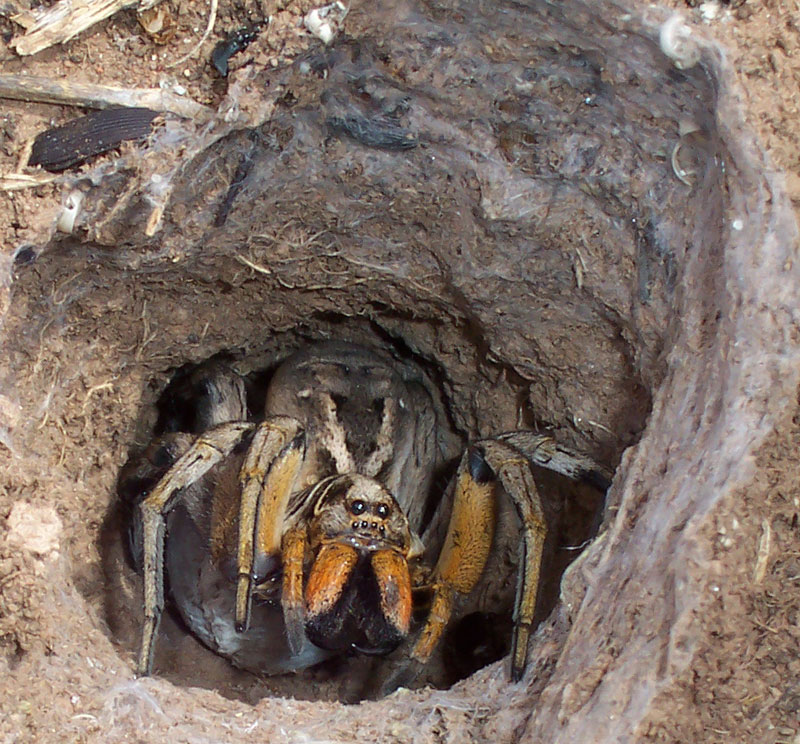
Wolf Spider
Globally
- Two Large, Prominent Eyes In the Middle Row of Their Eight Eyes.
- Ability To Carry Egg Sacs Attached To Spinnerets.
- Spiderlings Carried On the Mother's Abdomen.
- Solitary Hunters
- Wanderers Without Permanent Homes
- Complex Courtship Behaviors In Many Species
- Males May Be Found Indoors Searching For Females In Autumn
About Lycosidae
Wolf Spiders (Family Lycosidae)
Wolf spiders, members of the family Lycosidae, are named for their exceptional hunting prowess and keen vision. These arachnids are characterized by their robust build and agile movements, making them effective predators. They primarily live solitary lives, hunting alone and generally not constructing webs for prey capture. Instead, they often act as opportunistic hunters, ambushing prey or pursuing it over short distances, while some species wait patiently near their burrows.
Description and Distinguishing Features
Wolf spiders possess eight eyes arranged in three rows. The most distinctive feature is the arrangement of the middle row, which contains two very large eyes, setting them apart from the similar-looking nursery web spiders (family Pisauridae). This excellent vision is further enhanced by a tapetum lucidum, a reflective tissue in four of their secondary eyes that causes eyeshine when illuminated. Their body size varies, with some species reaching over 2.5 cm (1 inch) in body length. Their coloration typically camouflages them within their preferred habitats.
A unique aspect of wolf spider reproduction is their method of carrying egg sacs. Unlike many other spiders, wolf spiders attach their round, silken egg sacs to their spinnerets, enabling them to carry their young with them. This requires them to hold their abdomen in a raised position. Furthermore, newly hatched spiderlings crawl onto their mother's abdomen and are carried for several weeks, a unique form of maternal care.
Habitat and Distribution
Wolf spiders are found across a broad spectrum of terrestrial environments worldwide. Their habitats include shrublands, woodlands, coastal regions, alpine meadows, and even human-altered environments like suburban gardens and homes. The aerial dispersal of their spiderlings contributes to their widespread distribution. While some species have specialized microhabitat needs, many are nomadic, and some construct burrows for shelter, which may be enhanced with trap doors or turrets in arid regions.
Diet and Hunting Strategy
As active hunters, wolf spiders feed on a variety of small creatures. Their diet primarily consists of insects such as crickets, ants, and cockroaches. They are considered beneficial organisms due to their role in controlling pest populations in agricultural and domestic settings. Their hunting strategy involves either actively pursuing prey or ambushing it when it comes within range of their lairs.
Venom and Relationship with Humans
Wolf spiders are venomous and will bite if provoked, but their venom is not considered dangerous to humans. Bites typically result in localized symptoms like mild pain, swelling, and redness. While necrotic bites have been historically attributed to some wolf spider species, further research suggests these incidents may have been caused by other factors or different spider families. They generally only bite defensively when handled or threatened.
Courtship and Reproduction
Many wolf spider species exhibit complex courtship rituals, often involving secondary sexual characteristics in males, such as specialized leg bristles or colorations. Courtship can include seismic signaling, like drumming forelegs on the ground, and visual cues such as waving their front legs. Mating dynamics can be influenced by population density and the mating history of both males and females, with females sometimes preying on males, especially if they have mated previously.
Source: Wikipedia ↗
Frequently Asked Questions
What distinguishes wolf spiders from other spiders?
Wolf spiders are distinguished by their excellent eyesight, with two large, prominent eyes among their eight. Uniquely, they carry their egg sacs attached to their spinnerets, and their spiderlings crawl onto the mother's back for transport.
Where do wolf spiders live?
Wolf spiders inhabit a wide variety of environments, including shrublands, woodlands, coastal areas, alpine meadows, suburban gardens, and even homes. They are found globally due to aerial dispersal of spiderlings.
Are wolf spider bites dangerous to humans?
Wolf spider bites are generally not dangerous to humans. While they can inject venom if provoked, symptoms are typically limited to mild pain, swelling, and redness. Bites only require medical attention if there's a risk of infection due to poor wound hygiene.
How do wolf spiders hunt?
Wolf spiders are active hunters. Some are opportunistic, pouncing on prey as they find it or chasing it over short distances, while others wait near their burrows for unsuspecting prey to pass by.
What do wolf spiders eat?
Wolf spiders primarily prey on insects such as crickets, ants, and cockroaches. In some cases, they may also consume small lizards and frogs.
How do wolf spiders care for their young?
After spiderlings hatch from the egg sac, they climb onto their mother's abdomen. The mother wolf spider carries her young for several weeks until they are large enough to disperse and survive independently.
Related Spider species
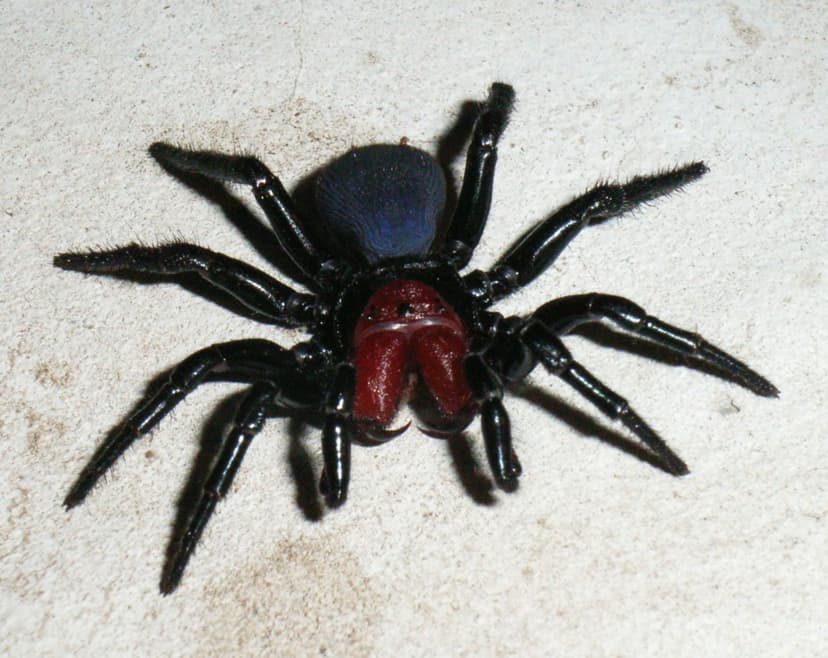
Actinopodidae
Actinopodidae is a family of mygalomorph spiders native to mainland Australia and South America, typically inhabiting open forests. This family includes the mouse spiders (Missulena species), which are notable for their medically significant and potentially dangerous bites.

Agelenidae
The Agelenidae, commonly known as funnel weavers, are a large family of spiders found globally. They are distinguished by their fast running speeds and the construction of flat sheet webs with a funnel-shaped retreat. While most species are solitary, some African species exhibit parasocial behavior, living in communal webs.
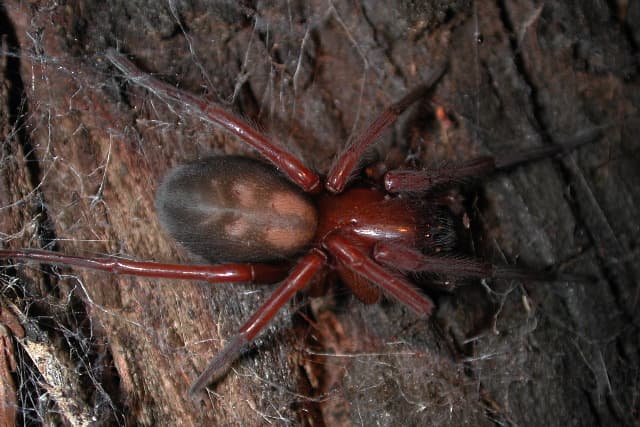
Amaurobiidae
Amaurobiidae is a family of spiders characterized by their three-clawed feet and the presence of either a cribellum or its absence. These spiders are typically found in crevices, hollows, or under stones, where they construct retreats and are often captured in pitfall traps. While widespread, they can be challenging to distinguish from closely related spider families.