
Pisauridae
Roaming hunters that do not use webs for catching prey.
Pisauridae, commonly known as nursery web spiders, are a widespread family of araneomorph spiders distinguished by the females' practice of building specialized nursery webs for their egg sacs. While they are roaming hunters like wolf spiders and do not use webs for prey capture, their distinct eye arrangement and egg sac carrying method set them apart.
Key Facts
- ›Females build nursery webs to protect egg sacs and guard them.
- ›They are roaming hunters, not web-builders for catching prey.
- ›Resemble wolf spiders but have a different eye arrangement.
- ›Females carry egg sacs with their chelicerae, not spinnerets.
- ›Found worldwide, avoiding extreme dry or cold environments.
- ›Males may present gifts to females to reduce predation risk after mating.

Nursery Web Spiders
Worldwide
- Posterior Lateral Eyes Are Closer To the Posterior Median Eyes.
- Females Carry Egg Sacs With Chelicerae.
- Females Build Nursery Webs For Egg Sacs.
- Males May Present Gifts To Females During Mating To Avoid Predation.
- Can Walk On Water and Briefly Dive Below the Surface.
- Can Jump Distances of 5 To 6 Inches .
- Have Difficulty Climbing Very Smooth Surfaces Like Glass.
About Pisauridae
Nursery Web Spiders (Pisauridae)
Nursery web spiders, belonging to the family Pisauridae, are a diverse group of araneomorph spiders found across the globe. They are characterized by a unique maternal behavior where females construct specialized "nursery webs." These tent-like structures are built to house and protect the egg sacs until the spiderlings hatch, with the mother spider often remaining nearby to guard her young.
Distribution and Habitat
Species within the Pisauridae family occur throughout the world, with the exception of extremely arid or frigid environments. They are common in a wide variety of habitats and are notable for their ability to walk on the surface of still bodies of water, and even to temporarily dive beneath the surface to evade predators. Their jumping ability allows them to cover distances of 5 to 6 inches, though they struggle with exceptionally smooth surfaces like glass.
Description and Behavior
Nursery web spiders bear a resemblance to wolf spiders (Lycosidae), but key differences exist. Their posterior lateral eyes are positioned closer to the posterior median eyes, distinguishing them from wolf spiders. A significant behavioral difference is that female nursery web spiders carry their egg sacs with their mouthparts (chelicerae) rather than attaching them to their spinnerets, as wolf spiders do. Like wolf spiders, nursery web spiders are active hunters that roam their environment rather than relying on webs to capture prey.
During mating, males often engage in a courtship ritual involving the presentation of a gift, typically an insect, to the female. This act is intended to appease her and reduce the risk of her consuming him after copulation. In some instances, males may offer a "fake" gift, wrapping a non-edible item in silk, a deception that can be detected by the female, potentially leading to the termination of mating.
Source: Wikipedia ↗
Frequently Asked Questions
What is a nursery web spider?
A nursery web spider belongs to the family Pisauridae, known for the female spiders constructing special nursery webs. These webs are used to house and protect the egg sacs until the spiderlings hatch, with the mother often guarding the structure.
How do nursery web spiders differ from wolf spiders?
While resembling wolf spiders, nursery web spiders have a different arrangement of posterior lateral eyes, which are closer to the posterior median eyes. Additionally, female nursery web spiders carry their egg sacs with their chelicerae, unlike wolf spiders which attach them to their spinnerets.
Where are nursery web spiders found?
Nursery web spiders are distributed globally, inhabiting most regions of the world. They are absent only from extremely dry or cold environments, making them a common sight in many habitats.
Do nursery web spiders build webs to catch prey?
No, nursery web spiders are roaming hunters and do not use webs for catching their prey. Their webs are specifically constructed for housing and protecting their eggs and young.
What is the typical size of a nursery web spider?
Adult female nursery web spiders can reach up to 15 mm in body length, not including their legs. Males often have proportionally longer legs compared to their body size than females do.
What is the behavior of male nursery web spiders during mating?
To mitigate the risk of being eaten by the female after mating, males often present a gift, such as a fly, to satisfy her hunger. Sometimes, these gifts are fake and wrapped in silk to deceive the female.
Related Spider species
Actinopodidae
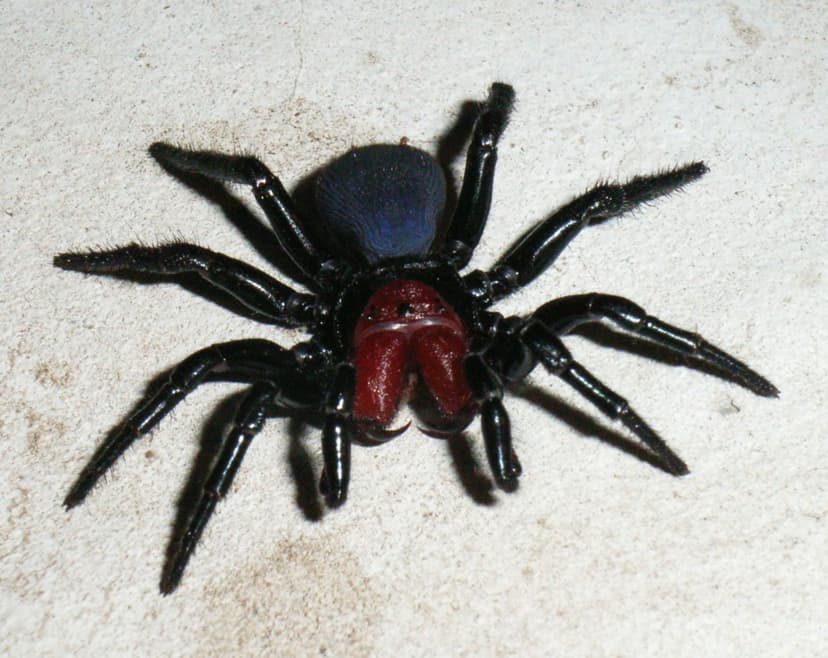
Actinopodidae is a family of mygalomorph spiders native to mainland Australia and South America, typically inhabiting open forests. This family includes the mouse spiders (Missulena species), which are notable for their medically significant and potentially dangerous bites.

Agelenidae
The Agelenidae, commonly known as funnel weavers, are a large family of spiders found globally. They are distinguished by their fast running speeds and the construction of flat sheet webs with a funnel-shaped retreat. While most species are solitary, some African species exhibit parasocial behavior, living in communal webs.
Amaurobiidae
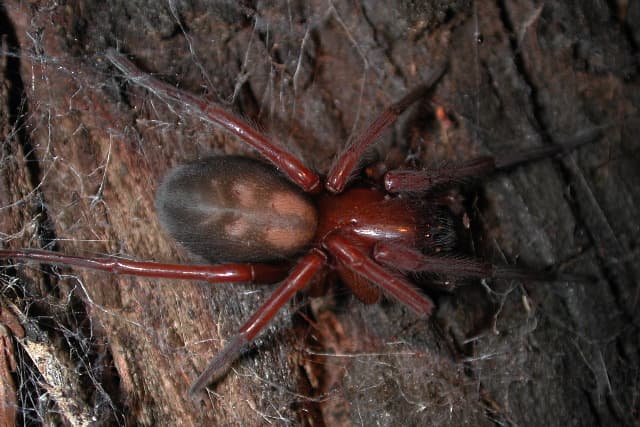
Amaurobiidae is a family of spiders characterized by their three-clawed feet and the presence of either a cribellum or its absence. These spiders are typically found in crevices, hollows, or under stones, where they construct retreats and are often captured in pitfall traps. While widespread, they can be challenging to distinguish from closely related spider families.