
Plectreuridae
They build haphazard webs to catch prey.
Plectreuridae, also known as plectreurid spiders, is a small family of spiders found in the Southwestern United States, Mexico, and the Caribbean. They are characterized by their eight eyes and possess large venom glands relative to their body size, similar to the Filistatidae family. Two living genera, Plectreurys and Kibramoa, are currently recognized.
Key Facts
- ›Plectreurid spiders are found in the Southwestern United States, Mexico, and the Caribbean.
- ›They build haphazard webs typically located under rocks and dead cacti.
- ›Adult males are known to wander at night.
- ›Plectreurid spiders possess eight eyes.
- ›They have the largest venom glands relative to body size among all spiders, shared with the Filistatidae family.
- ›The family currently includes two living genera: Plectreurys and Kibramoa.
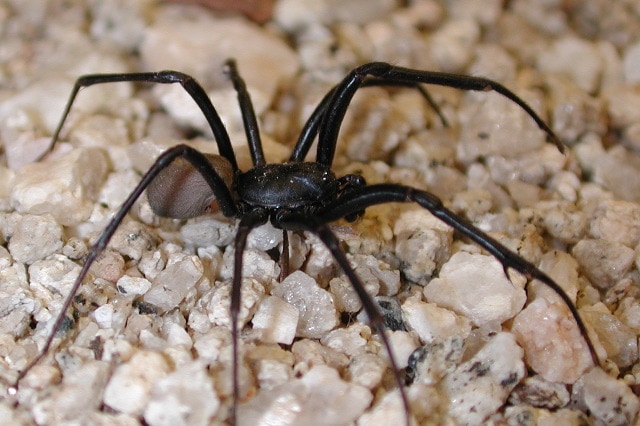
Plectreurid Spiders
Southwestern United States, Mexico, Caribbean
Eight Eyes, Femurs On the First Pair of Legs Are Bowed
Adult Males Wander At Night
About Plectreuridae
Plectreuridae, commonly known as plectreurid spiders, is a small family of spiders with a current distribution primarily confined to the Southwestern United States, Mexico, and the Caribbean. This family is characterized by its ecribellate, haplogyne spiders which construct haphazard webs. These webs are typically found in sheltered locations, such as under rocks and within dead cacti, providing a hunting ground for the spiders.
Historically, the Plectreuridae family was more widespread, with fossil evidence indicating the presence of extinct genera like Eoplectreurys from China during the Jurassic period, Palaeoplectreurys baltica from Baltic amber dating to the Eocene, and Plectreurys pittfieldi from Dominican amber in the Miocene.
Key Characteristics
Plectreurid spiders are distinguished by possessing eight eyes, a feature that sets them apart from some closely related families such as Sicariids, Scytodids, Diguetids, and Segestriids. A notable trait shared with the Filistatidae family is their possession of the largest venom glands relative to their body size among all spiders. While adult males are known to wander at night, relatively little is scientifically documented about the broader biology of these spiders.
Living Genera
As of early 2026, the Plectreuridae family includes two extant genera: the nominate genus Plectreurys and Kibramoa. These genera encompass a total of 32 described species, continuing the legacy of this ancient spider lineage in their current geographic ranges.
Source: Wikipedia ↗
Frequently Asked Questions
Where are plectreurid spiders found?
Plectreurid spiders are naturally found in the Southwestern United States, Mexico, and the Caribbean region. Historically, extinct genera have been documented in China and from amber deposits in the Baltic and Dominican Republics.
What kind of webs do plectreurid spiders build?
These spiders construct haphazard webs. They are typically found in sheltered locations, such as under rocks and within dead cacti.
Are plectreurid spiders venomous?
Yes, plectreurid spiders are venomous. They possess large venom glands relative to their body size, a trait shared with the Filistatidae family.
What makes plectreurid spiders distinctive?
Plectreurid spiders are distinguished by their eight eyes. Females of the genus Plectreurys also have bowed femurs on their first pair of legs, differing from closely related families.
When are male plectreurid spiders active?
Adult male plectreurid spiders are known to be active at night. They have been observed wandering during nighttime hours.
Related Spider species

Agelenidae
The Agelenidae, commonly known as funnel weavers, are a large family of spiders found globally. They are distinguished by their fast running speeds and the construction of flat sheet webs with a funnel-shaped retreat. While most species are solitary, some African species exhibit parasocial behavior, living in communal webs.
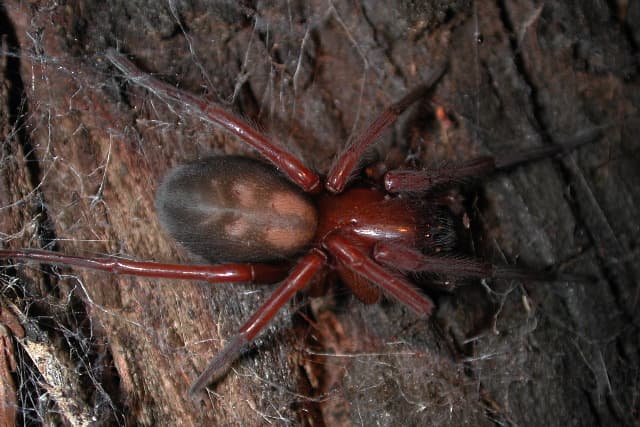
Amaurobiidae
Amaurobiidae is a family of spiders characterized by their three-clawed feet and the presence of either a cribellum or its absence. These spiders are typically found in crevices, hollows, or under stones, where they construct retreats and are often captured in pitfall traps. While widespread, they can be challenging to distinguish from closely related spider families.
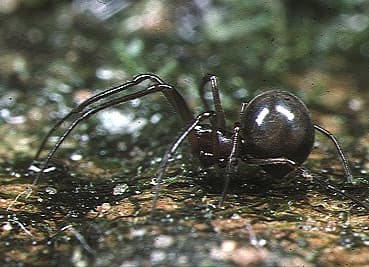
Anapidae
Anapidae is a diverse family of small spiders, with most species measuring less than two millimeters in length. These spiders are found worldwide, inhabiting leaf litter and moss in rainforest environments. A distinctive characteristic of many Anapidae species is their ability to build small orb webs, often less than three centimeters in diameter.