
Prodidomidae
Ground dwellers, with most species being nocturnal and hiding during the day, suggesting an ambush or active hunting strategy at night. Some species may mimic ants.
Prodidomidae, also known as long-spinneret ground spiders, is a family of spiders that were formerly classified as a subfamily of Gnaphosidae but were elevated to family status in 2022. These spiders are characterized by greatly elongated piriform gland spigots, shiny scales or setae on parts of their bodies, and distinctive silvery posterior median eyes.
Key Facts
- ›Easily identified by greatly elongated piriform gland spigots.
- ›Most species are ground dwellers and nocturnal.
- ›Posterior median eyes are flat, silvery, and vary in shape.
- ›Parts of their body are covered with shiny scales or setae.
- ›The family currently comprises 24 genera and 196 species.
- ›One genus, Zimiris, is synanthropic and found throughout the tropics.

Long-Spinneret Ground Spiders
Tropics, Cape of Good Hope, Turkmenistan
- Greatly Elongated Base of the Piriform Gland Spigots
- Shiny Scales Or Setae On Body Parts
- Flat, Silvery Posterior Median Eyes
Ground Dwellers, Nocturnal, Hide During the Day, Some Species Mimic Ants, Synanthropic
About Prodidomidae
Prodidomidae, commonly known as long-spinneret ground spiders, form a distinct family of arachnids. Previously categorized as a subfamily within the Gnaphosidae family, they were reclassified as a separate family in 2022. This classification highlights their unique anatomical and biological characteristics.
Key Characteristics
Spiders belonging to the Prodidomidae family are readily identifiable by a key feature: their greatly elongated piriform gland spigots. Further distinguishing marks include the presence of shiny scales or setae on at least portions of their bodies. Their posterior median eyes are also noteworthy, being flat, silvery, and varying in shape from triangular to egg-shaped or irregularly rectangular.
Habitat and Behavior
These spiders are primarily ground dwellers. The majority of species exhibit nocturnal behavior, seeking refuge during daylight hours. They are often found in leaf litter. However, some genera, such as Myandra, appear to mimic ants and may be active during the day. The genus Zimiris is synanthropic, meaning it lives in association with humans and is distributed throughout tropical regions.
Taxonomy and Distribution
As of early 2026, the Prodidomidae family encompasses 24 genera and 196 known species. While some species are found in tropical areas or regions like the Cape of Good Hope, the precise distribution of all species is continually being refined. Taxonomic studies, including phylogenetic analyses, have been crucial in understanding the relationships within this family and its placement relative to other spider families.
Source: Wikipedia ↗
Frequently Asked Questions
What are Prodidomidae spiders commonly called?
Prodidomidae spiders are sometimes referred to as long-spinneret ground spiders. This name reflects a key characteristic of their anatomy.
What distinguishes Prodidomidae spiders physically?
These spiders are notably identified by their greatly elongated piriform gland spigots. Additionally, they often have shiny scales or setae covering parts of their body, and their posterior median eyes are flat and silvery, with various shapes.
Where do Prodidomidae spiders typically live?
Prodidomidae spiders are ground dwellers, meaning they inhabit the ground level of their environment. Most species are nocturnal and seek shelter during the day.
Are all Prodidomidae spiders nocturnal?
While most species are nocturnal and hide during the day, there are exceptions. For instance, species within the genus Myandra, which may mimic ants, appear to be active during daylight hours.
How many genera and species are in the Prodidomidae family?
As of January 2026, the Prodidomidae family includes 24 genera and a total of 196 species. This number reflects ongoing taxonomic research.
What is the geographic distribution of Prodidomidae spiders?
The genus Zimiris, for example, is synanthropic, meaning it is found throughout the tropics. Other species, like Theuma walteri, have had their described localities debated, with suspicions of misidentification leading to a potential reassignment to the Cape of Good Hope.
Related Spider species
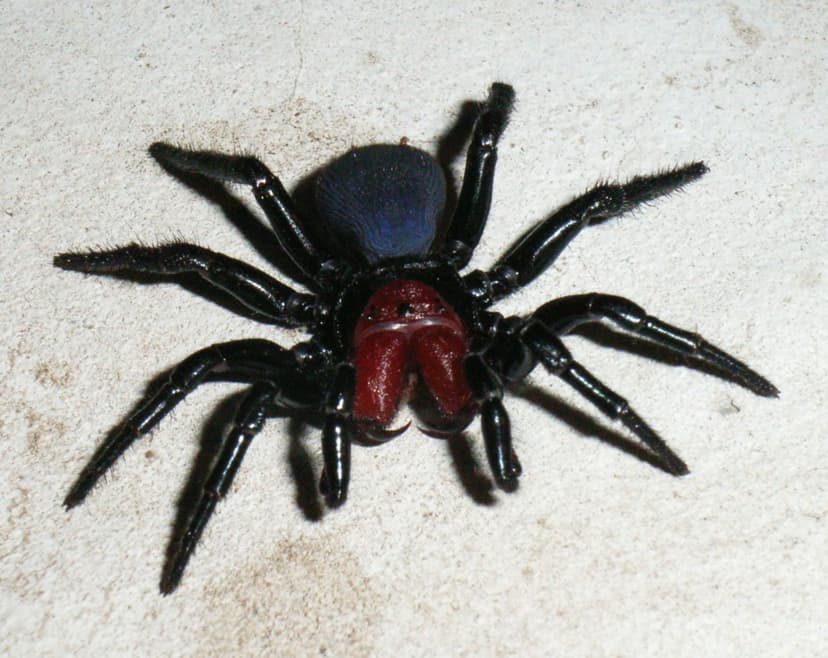
Actinopodidae
Actinopodidae is a family of mygalomorph spiders native to mainland Australia and South America, typically inhabiting open forests. This family includes the mouse spiders (Missulena species), which are notable for their medically significant and potentially dangerous bites.

Araneidae
The Araneidae, commonly known as orb-weaver spiders, are a widespread family of spiders renowned for constructing distinctive spiral wheel-shaped webs. Found globally, these spiders are characterized by their eight eyes, hairy or spiny legs, and the absence of stridulating organs. With nearly 5,000 described species, they represent one of the largest spider families, playing a significant role in controlling insect populations.
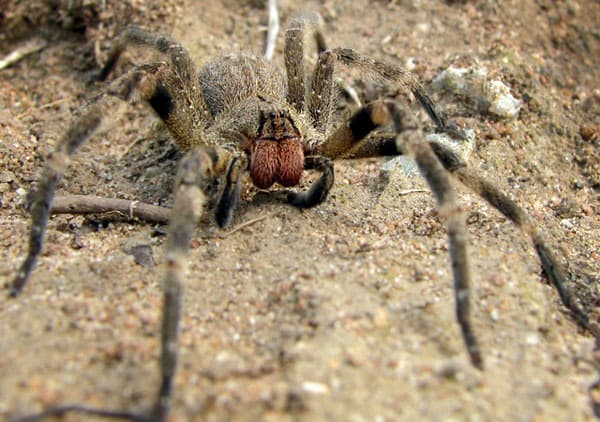
Ctenidae
Ctenidae, commonly known as wandering spiders, are a family of highly defensive and venomous nocturnal hunters. They are characterized by a distinctive longitudinal groove on the top-rear of their oval carapace. While many members are known for their potent venom, only a few species within the genus Phoneutria are confirmed to be hazardous to humans, though caution is advised for all larger ctenids due to poorly understood venoms.