
Zoropsidae
Hunting strategy details are not provided in the text.
Zoropsidae, commonly known as false wolf spiders, is a family of cribellate araneomorph spiders. They are distinguished from true wolf spiders by the arrangement and size of their eyes, with two rows of eyes that are more equal in size. This family, first described in 1882, now encompasses several former families and a significant number of genera and species.
Key Facts
- ›Also known as false wolf spiders due to their resemblance to wolf spiders.
- ›Differ from wolf spiders by having two rows of eyes that are more equal in size.
- ›Belongs to the infraorder Araneomorphae and are cribellate spiders.
- ›The family now includes species previously classified under Tengellidae and Zorocratidae.
- ›As of January 2026, the family comprises 28 genera and 186 species.

False Wolf Spiders
- Two Rows of Eyes That Are More Equal In Size Than Those of Lycosidae.
About Zoropsidae
Zoropsidae, commonly referred to as false wolf spiders, represent a distinct family within the order Araneomorphae. These spiders are characterized by their physical resemblance to true wolf spiders, but can be identified by a key difference in their ocular arrangement: they possess two rows of eyes that are more uniform in size compared to the proportionally different eye sizes found in the Lycosidae family.
Taxonomy and Classification
First formally described by Philipp Bertkau in 1882, the Zoropsidae family has undergone taxonomic revisions. Notably, the families Tengellidae and Zorocratidae have been incorporated into Zoropsidae, expanding its recognized diversity. As of January 2026, this family encompasses a substantial 28 genera and 186 species.
Distinguishing Characteristics
The most cited feature differentiating Zoropsidae from their wolf spider counterparts is their eye structure. While both groups are visually oriented, the more equal-sized eyes in both rows of Zoropsidae provide a consistent visual cue for identification. Beyond this, they are classified as cribellate spiders, meaning they possess a cribellum, a spinning organ used to produce a special type of silk.
Source: Wikipedia ↗
Frequently Asked Questions
What is the main difference between Zoropsidae and wolf spiders?
Zoropsidae can be distinguished from true wolf spiders by their eye arrangement. They possess two rows of eyes that are more equal in size, whereas wolf spiders have a different proportion in their eye sizes.
What does 'false wolf spider' refer to?
The common name 'false wolf spider' is used because these spiders share a physical similarity with true wolf spiders (family Lycosidae). However, subtle differences, particularly in their eyes, set them apart.
How many genera and species are in the Zoropsidae family?
As of January 2026, the Zoropsidae family includes 28 genera and a total of 186 species. This number reflects recent taxonomic inclusions.
Are Tengellidae and Zorocratidae still considered separate families?
No, the families Tengellidae and Zorocratidae are now included within the Zoropsidae family. This taxonomic revision has broadened the scope of Zoropsidae.
Related Spider species
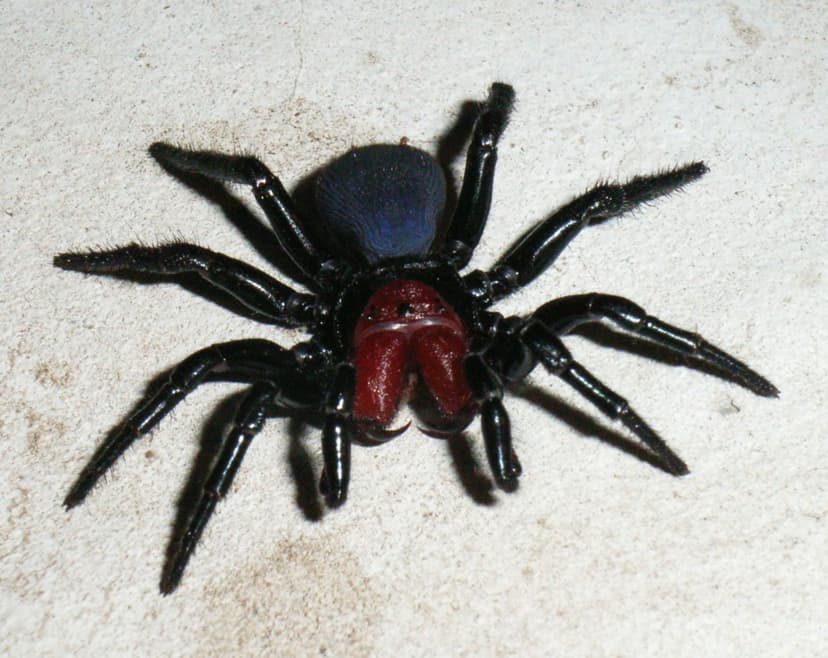
Actinopodidae
Actinopodidae is a family of mygalomorph spiders native to mainland Australia and South America, typically inhabiting open forests. This family includes the mouse spiders (Missulena species), which are notable for their medically significant and potentially dangerous bites.

Agelenidae
The Agelenidae, commonly known as funnel weavers, are a large family of spiders found globally. They are distinguished by their fast running speeds and the construction of flat sheet webs with a funnel-shaped retreat. While most species are solitary, some African species exhibit parasocial behavior, living in communal webs.
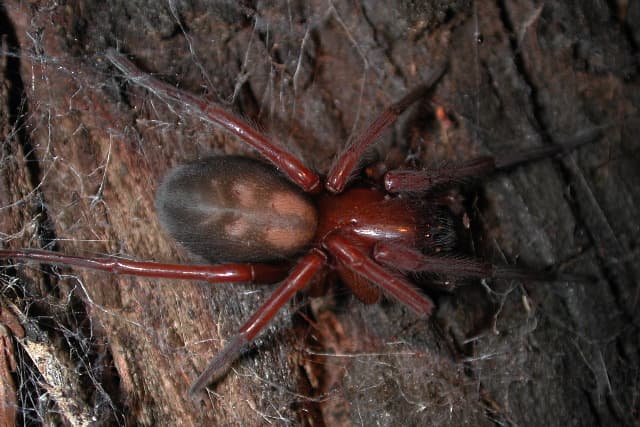
Amaurobiidae
Amaurobiidae is a family of spiders characterized by their three-clawed feet and the presence of either a cribellum or its absence. These spiders are typically found in crevices, hollows, or under stones, where they construct retreats and are often captured in pitfall traps. While widespread, they can be challenging to distinguish from closely related spider families.