
Dolfinarium Harderwijk
Netherlands·Marine Mammal Park·20th century
Dolfinarium Harderwijk, commonly known as the Dolfinarium, is the largest marine mammal park in Europe, located in Harderwijk, the Netherlands. Founded in 1965, it was established with the goal of fostering respect and awe for marine mammals among the Dutch population. The park features various themed areas for different species and offers educational and therapeutic programs.
Key Facts
- ›The Dolfinarium Harderwijk is the largest marine mammal park in Europe.
- ›It was opened to the public in 1965 by Frits den Herder and his brother Coen.
- ›The park features distinct areas such as Bruinvisbaai for harbour porpoises and Dolfijndomijn for dolphin shows.
- ›The Dolfinarium has a significant aquarium holding 15 million liters of water.
- ›It offers therapeutic sessions with dolphins for children with autism or Down syndrome.
- ›The park was involved in the rescue and temporary care of the orca Morgan.

Bruinvisbaai, Dolfijndomijn, Dolfijnendelta, Roggenrif
Gudrun, Morgan
About Dolfinarium Harderwijk
Dolfinarium Harderwijk, widely known as the Dolfinarium, is a prominent marine mammal park situated in Harderwijk, the Netherlands. It holds the distinction of being the largest marine mammal park in Europe. The park's origins trace back to 1955 when businessman Frits den Herder, alongside his brother Coen, began collecting sea mammals and constructing a dolphinarium. The Dolfinarium officially opened its doors to the public in 1965, with Frits den Herder articulating a foundational goal: to cultivate respect and awe for these remarkable sea creatures among the Dutch population.
History and Development
Throughout the 1970s, the Dolfinarium saw significant expansion, increasing its animal collection and constructing additional enclosures. A notable addition in 1976 was the Icelandic orca Gudrun. By the end of that decade, the park began establishing international dependencies, though these ventures did not prove financially successful, leading to the Dolfinarium filing for bankruptcy in 1982. Following this, a new foundation was formed at the insistence of the mayor of Harderwijk to ensure the park's continuation, and in 1984, new ownership acquired the company's shares. The park changed hands again in 1989, with the new owner investing in new attractions, including the construction of a large lagoon in 1997.
In 2001, Compagnie des Alpes acquired the Dolfinarium. The park underwent substantial renovations in 2005 for its fiftieth anniversary and further refurbishments, including the dome, in the winter of 2012–2013. By December 2014, ownership was in the process of transferring from Compagnie des Alpes to Aspro Parks. In 2016, the Dolfinarium announced a reduction in its dolphin population, citing the population having grown too large, and also introduced a new children's playground. The park experienced increased visitor numbers and turned a profit in 2018 after opening a new attraction.
Park Areas and Experiences
The Dolfinarium operates annually from spring to autumn, with winter months dedicated to maintenance. The park is organized into distinct areas catering to various species or groups of animals, with some animals participating in shows. Key areas include:
- Bruinvisbaai: Home to harbour porpoises.
- DolfijndoMijn: The primary show arena for common bottlenose dolphins, located within a characteristic dome with a capacity for 2,000 spectators.
- Dolfijnendelta: Formerly the lagoon, this serves as the living area for common bottlenose dolphins, including newborns. It features an underwater viewing area, the Onderwater Odiezee, with a 60-meter glass wall offering close encounters with the dolphins.
- Krabbenkust: Showcasing crabs, lobsters, sea anemones, and fish.
- Roggenrif: Featuring rays, sharks, European seabass, mullet, and other fish, crabs, lobsters, oysters, and sea anemones.
- Stoere Stellerstek: Dedicated to Steller sea lions.
- Walrussenwal: The habitat for walruses; Igor the walrus resided here until his death in 2013.
- Zeeleeuwenzee: Home to California sea lions.
- Zeehondenzand: Housing harbor seals and grey seals.
- Zotte Zeeleeuwentheather: A show area for California sea lions.
Beyond animal exhibits, the park offers numerous restaurants, shops, playgrounds, and a beach on lake Wolderwijd. Plans for an in-park hotel have also been proposed.
Specialized Programs and Initiatives
The Dolfinarium collaborates with a foundation to provide therapeutic dolphin sessions for children with autism or Down syndrome. For commercial offerings, it runs a "Sleeping with dolphins" program aimed at children aged 8 to 12.
SOS Dolfijn
An independent foundation named SOS Dolfijn was formerly based at the Dolfinarium. Its mission was to rescue stranded porpoises, dolphins, and whales, with porpoises being the most frequent patients. The foundation aimed to rehabilitate these animals for release back into the wild. However, the cooperation between SOS Dolfijn and the Dolfinarium concluded in 2016, prompting SOS Dolfijn to seek a new location.
The Case of Morgan the Orca
The Dolfinarium garnered significant international attention in 2010 when it rescued and provided care for a young, emaciated orca named Morgan, found in the North Sea. During her recovery, opinions diverged on whether she should be returned to the wild or transferred to Loro Parque in Spain for specialized care. The Dolfinarium supported the transfer to Loro Parque. Ultimately, a Dutch judge ruled in favor of the transfer, and Morgan was moved to Loro Parque in November 2011. The rescue, upkeep, and transport of Morgan incurred costs exceeding €1 million for the Dolfinarium.
Television Appearances
The Dolfinarium's dolphins have been featured in television productions. The Dutch broadcaster Nickelodeon aired the children's show Spetter! in 2006, which was centered around a dolphin named Spetter, the first dolphin born at the park through artificial insemination. A subsequent season, Spetter and the Romanov Mystery, aired in 2007. These series contributed to an increase in visitor numbers for the Dolfinarium.
Source: Wikipedia ↗
Frequently Asked Questions
When was the Dolfinarium Harderwijk founded?
The Dolfinarium Harderwijk was founded in 1965. Businessman Frits den Herder and his brother Coen began collecting sea mammals and building the dolphinarium in 1955, with the park opening to the public over a decade later.
What is the main goal of the Dolfinarium?
According to its founder Frits den Herder, the primary goal of the Dolfinarium was to instill respect and awe for sea mammals in the Dutch population. It aims to educate visitors about marine life and conservation.
What are some of the main attractions at the Dolfinarium?
The Dolfinarium is divided into several areas showcasing different marine animals, including the Bruinvisbaai for harbour porpoises and the DolfijndoMijn, a main show area for bottlenose dolphins set within a large dome. The Dolfijnendelta, formerly known as the lagoon, houses bottlenose dolphins and can be viewed from underwater.
Does the Dolfinarium offer any special programs?
Yes, the Dolfinarium offers therapeutic sessions with dolphins for children with autism or Down syndrome in cooperation with a foundation. They also have a commercial program called "Sleeping with dolphins" for children aged 8 to 12.
What is the significance of the orca Morgan's stay at the Dolfinarium?
The Dolfinarium gained international attention when it rescued and housed the young orca Morgan, who was found exhausted in the North Sea. The park played a role in her recovery and subsequent transfer to Loro Parque in Spain, a decision that generated significant debate.
What was the Dolfinarium's involvement with SOS Dolfijn?
SOS Dolfijn was an independent foundation based at the Dolfinarium dedicated to rescuing stranded marine mammals. The Dolfinarium provided facilities for their recovery and rehabilitation efforts. However, this cooperation ended in 2016.
Related Zoos
Burgers' Zoo
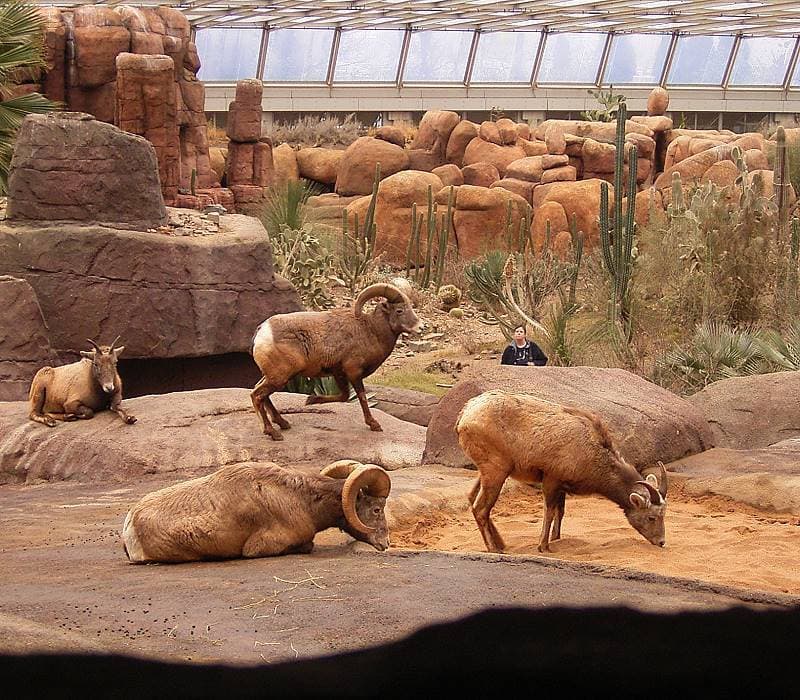
Royal Burgers' Zoo, located in Arnhem, Netherlands, is a prominent 45-hectare zoological park established in 1913. It is distinguished by its "ecodisplays," immersive, themed habitats that replicate diverse ecosystems from tropical rainforests to deserts and oceans, making it a significant destination for visitors and a leader in animal welfare and conservation.

Ouwehands Dierenpark
Ouwehands Dierenpark is a zoo located in Rhenen, in the Dutch province of Utrecht. Originally established as a small farm by Cor Ouwehand, it evolved into a zoo in the 1930s and has since grown into a significant attraction, particularly noted for its introduction of giant pandas.
Artis
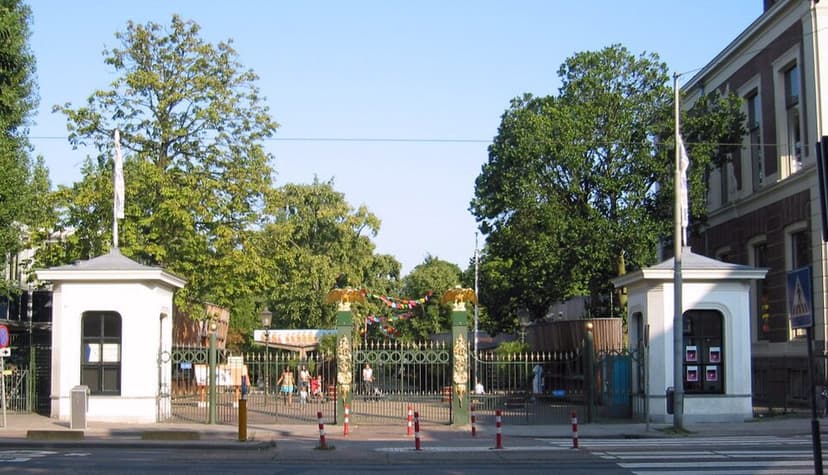
Natura Artis Magistra, commonly known as Artis, is a historic zoo and botanical garden located in Amsterdam, Netherlands. Founded in 1838, it is the oldest zoo in the Netherlands and one of the oldest operating zoos globally. Artis is more than just a zoological collection; it also features an aquarium, planetarium, arboretum, and museums, making it a significant cultural and educational institution in the city.