
Ichthyophis monochrous
Ichthyophis monochrous, also known as the Western Borneo caecilian or black caecilian, is a species of amphibian endemic to northern Borneo. It is a poorly documented species, known from only a few specimens, and is presumed to inhabit tropical moist forests, with adults likely living underground.
Key Facts
- ›Endemic to northern Borneo, found in western Kalimantan (Indonesia) and Sarawak (Malaysia), and potentially Brunei.
- ›A little-known species with limited specimen records.
- ›Presumed to inhabit tropical moist forests.
- ›Adults are believed to be subterranean.
- ›The holotype measured 232 MM in length and 10 MM in width.
- ›Possesses approximately 247 ring-shaped folds (annuli) on its skin.

Tropical Moist Forest, Subterranean
Western Borneo Caecilian, Black Caecilian
About Ichthyophis monochrous
Ichthyophis monochrous: The Western Borneo Caecilian
Ichthyophis monochrous, commonly known as the Western Borneo caecilian or black caecilian, is a species of amphibian belonging to the Ichthyophiidae family. This species is endemic to the island of Borneo, specifically found in the northern regions. Its known distribution includes western Kalimantan in Indonesia and Sarawak in Malaysia, with a likely presence also in Brunei. Despite its scientific classification, Ichthyophis monochrous remains a little-known species, with records based on only a few collected specimens.
Habitat and Lifestyle
Observations and inferences suggest that Ichthyophis monochrous inhabits tropical moist forests. The species is believed to spend its adult life underground, adopting a subterranean lifestyle. This fossorial behavior is typical for many caecilian species, allowing them to avoid predators and maintain a stable environment within the soil.
Physical Characteristics
The physical description of Ichthyophis monochrous is based on limited specimen data. It is characterized as a moderately slender caecilian. The holotype specimen measured 232 mm (9.1 inches) in length and approximately 10 mm (0.39 inches) in width. The head is about 9 mm long and possesses visible eyes. A distinctive feature is its short, yet clearly defined tail, measuring 3.8 mm. The skin is notably glandular and features around 247 ring-shaped folds, known as annuli, that encircle the body. In life, the color of the specimen was recorded as violet-brown.
Source: Wikipedia ↗
Frequently Asked Questions
What are the common names for Ichthyophis monochrous?
Ichthyophis monochrous is commonly referred to as the Western Borneo caecilian or the black caecilian.
Where is Ichthyophis monochrous found?
This species is endemic to northern Borneo, with confirmed occurrences in western Kalimantan, Indonesia, and Sarawak, Malaysia. It is also likely to be present in Brunei.
What is the habitat of Ichthyophis monochrous?
Ichthyophis monochrous is presumed to inhabit tropical moist forests. Adults are thought to be subterranean, living underground.
How large is Ichthyophis monochrous?
The holotype specimen of Ichthyophis monochrous measured 232 mm (9.1 inches) in length and approximately 10 mm (0.39 inches) in width. Its head was 9 mm long and had visible eyes.
Related Caecilian species

Black caecilian
The Black caecilian (Ichthyophis monochrous) is a species of amphibian found in the tropical moist forests of northern Borneo, specifically in western Kalimantan (Indonesia) and Sarawak (Malaysia), and likely Brunei. It is a relatively unknown species, with only a few specimens documented, and is characterized by its moderately slender body, distinct tail, and glandular skin with numerous annuli.
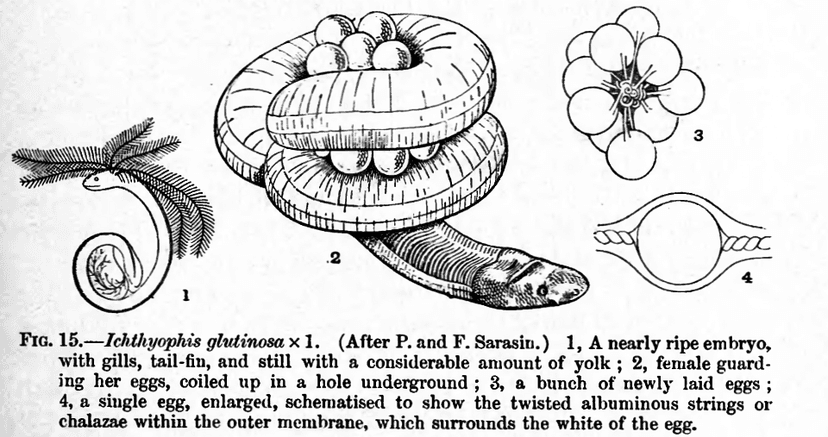
Common yellow-banded caecilian
The Common yellow-banded caecilian, also known as the Ceylon caecilian, is a species of caecilian endemic to Sri Lanka. It is characterized by its earthworm-like appearance, with steely blue and pale yellow coloration and a distinctive yellow band along its sides. This adaptable species inhabits moist tropical and subtropical forests and pastures, where it burrows in damp earth or leaf litter.
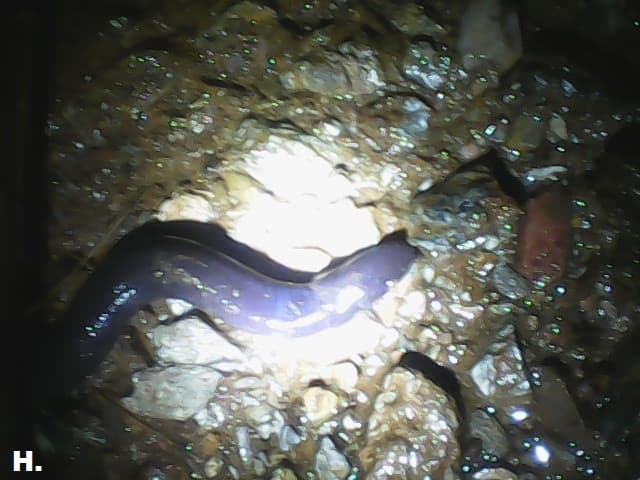
Darjeeling caecilians
The Darjeeling caecilian, scientifically known as Ichthyophis sikkimensis, is a species of amphibian native to the Himalayan foothills of India, Nepal, and potentially Bhutan. This burrowing amphibian is characterized by its elongated, worm-like body and smooth, moist skin, typically found in damp soil and leaf litter.