
Westwater Canyon
Westwater Canyon is a narrow gorge carved by the Colorado River in eastern Utah, notable for its exposed Precambrian basement rocks within the inner gorge. It features challenging Class III and IV rapids, including the significant "Skull" rapid, making it a draw for whitewater enthusiasts. The canyon is managed by the Bureau of Land Management, which oversees a permitting system for river travelers.
Key Facts
- ›Features black Precambrian basement rocks in its inner gorge, including Vishnu Schist and Zoroaster Granite.
- ›Contains Class III and IV whitewater rapids, with "Skull" being the most significant.
- ›The uppermost rock layers are composed of Triassic-Jurassic Wingate Sandstone and Chinle Formation.
- ›It is one of the few places on the Colorado River outside the Grand Canyon where Precambrian rocks are exposed.
- ›The typical whitewater trip spans 17 miles from Westwater Ranger Station to Rose Ranch.
- ›The inner gorge's vertical walls limit rescue operations for swimmers and capsized vessels.
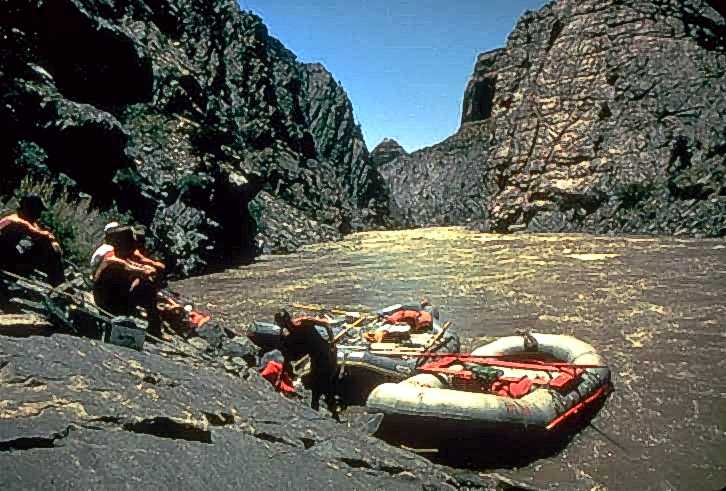
River Erosion
Skull Rapid, Black Precambrian Basement Rocks, Vertical Canyon Walls
About Westwater Canyon
Westwater Canyon is a significant river canyon situated on the Colorado River in eastern Utah, located between the Utah/Colorado state line and Cisco, Utah. The canyon is distinguished by its inner gorge, which is composed of dark, ancient Precambrian rock, making it a geologically unique feature along the Colorado River. This section of the river is renowned for its challenging Class III and IV whitewater rapids, attracting many enthusiasts seeking adventure.
Geology
The geological makeup of Westwater Canyon shares similarities with nearby protected areas like Canyonlands National Park. The upper rock layers consist of Triassic-Jurassic formations, including the prominent, cliff-forming Wingate Sandstone above the slope-forming Chinle Formation, which displays hues from green to purple. A notable geological feature is the unconformity within the inner gorge, where the Chinle Formation rests directly upon the Precambrian basement rocks. These basement rocks are comprised of metamorphic Vishnu Schist, which gives the inner gorge its characteristic black appearance, and the pink Zoroaster Granite. Westwater Canyon, along with Ruby Canyon upstream, is exceptional as it is one of the few locations outside of the Grand Canyon where these ancient Precambrian rocks are exposed.
Whitewater Recreation and Management
Whitewater travel through Westwater Canyon is a popular activity, with trips typically covering a 17-mile (27 km) journey from the Westwater Ranger Station to the Rose Ranch takeout, often spread over one to two days. Many boaters utilize rafts to carry camping equipment for multi-day excursions. The most famous rapid, "Skull," is a significant challenge for those navigating the river. The canyon's inner gorge is characterized by steep, vertical walls, which can complicate rescue efforts for swimmers and recovery of capsized vessels. The Bureau of Land Management (BLM) plays a crucial role in managing this section of the Colorado River by operating a permitting system for whitewater travelers, ensuring that participants adhere to specific rules and regulations designed to protect the environment and ensure safety.
Source: Wikipedia ↗
Frequently Asked Questions
What geological formations are found in Westwater Canyon?
Westwater Canyon's geology is characterized by its exposed Precambrian basement rocks in the inner gorge, primarily Vishnu Schist and Zoroaster Granite. Above these, Triassic-Jurassic layers include the reddish Wingate Sandstone and the Chinle Formation, which varies in color from green to purple.
What makes the rapids in Westwater Canyon significant?
The rapids in Westwater Canyon are significant because they are rated as Class III and IV, offering a challenging experience for whitewater enthusiasts. The "Skull" rapid is particularly noteworthy as the most significant rapid within the canyon.
What is the typical whitewater trip like in Westwater Canyon?
A typical whitewater trip in Westwater Canyon covers a 17-mile stretch from the Westwater Ranger Station to the Rose Ranch takeout, often completed over 1-2 days with camping equipment. The inner gorge presents a challenging environment with vertical walls that can impede rescue efforts.
Who manages access to Westwater Canyon for river travel?
Access for whitewater travelers on this section of the Colorado River is managed by the Bureau of Land Management (BLM). They implement a permitting system with special rules and regulations that boaters must adhere to.
Are Precambrian rocks commonly found along the Colorado River?
No, the exposure of Precambrian rocks, like those found in Westwater Canyon and Ruby Canyon, is rare along the Colorado River. Westwater Canyon is one of only two locations outside of the Grand Canyon where these ancient basement rocks are visible.
Related Canyons

Black Canyon of the Gunnison
The Black Canyon of the Gunnison is a dramatic gorge in western Colorado, carved by the Gunnison River. Its name derives from the fact that its sheer walls receive very little sunlight, often appearing black. The canyon is renowned for its extreme depth, steepness, and narrowness, combining these features into a formidable and awe-inspiring landscape.
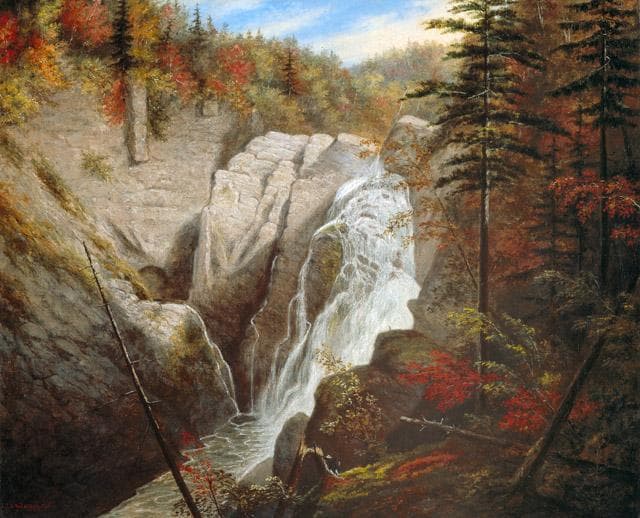
Canyon Sainte-Anne
Canyon Sainte-Anne is a steep-sided gorge located east of Beaupré, Quebec, Canada, carved by the Sainte-Anne-du-Nord River. The canyon features a prominent 74-meter waterfall and is situated within the ancient geological formations of the Canadian Shield. It has been a site of natural and cultural interest, drawing visitors for its scenic beauty and recreational activities.

Cataract Canyon
Cataract Canyon is a significant 74 km stretch of the Colorado River in southern Utah, known for its powerful whitewater rapids. Carved into the Colorado Plateau, its lower half is submerged under Lake Powell, impacting its historical geology and accessibility. The canyon holds historical importance for indigenous peoples and early European explorers, and remains a popular destination for whitewater rafting.