
Anyphaenidae
Wandering predators that hunt actively and build silken retreats for shelter.
Anyphaenidae, also known as anyphaenid sac spiders or ghost spiders, are a widespread family of araneomorph spiders. They are characterized by the unique placement of their abdominal spiracle, located further forward than in most other spiders. These spiders are active hunters that construct silken sacs for shelter.
Key Facts
- ›Distinguished by the abdominal spiracle's anterior placement.
- ›More than 600 species are known worldwide.
- ›They are wandering predators that build silken retreats.
- ›Found in diverse habitats across the globe.
- ›Some species are significant predators in agricultural systems.
- ›Able to detect and feed on insect eggs despite poor eyesight.

Anyphaenid Sac Spiders, Ghost Spiders
Worldwide, New World, Northwestern Europe
- Abdominal Spiracle Placed One Third To One Half of the Way Anterior To the Spinnerets.
- Conical Anterior Spinnerets.
Wandering Predators, Build Silken Retreats
About Anyphaenidae
Anyphaenidae, commonly known as anyphaenid sac spiders or ghost spiders, represent a significant family within the order Araneomorphae. These spiders are globally distributed, with a notable presence in various ecosystems. A key characteristic that distinguishes them from many other spider families is the unique anatomical positioning of their abdominal spiracle, which is situated further forward on the underside of the abdomen compared to the typical placement just anterior to the spinnerets.
Life and Characteristics
Like their relatives in the family Clubionidae, anyphaenids are active, wandering predators rather than web-builders for prey capture. They construct silken sacs, or retreats, which they use for shelter. These retreats are typically found in sheltered locations such as on plant terminals, nestled between leaves, beneath bark, or under rocks. The family is diverse, encompassing over 600 species spread across more than 50 genera worldwide. Prominent genera include Anyphaena, found globally with the exception of tropical Africa and Asia, and Hibana, which is native to the New World.
Ecological Role
Certain species within the Anyphaenidae family play an important role in various agricultural systems, particularly in tree crops. Their predatory habits contribute to the natural control of insect populations. Notably, some species exhibit the remarkable ability to detect and consume insect eggs, a skill shared with some spiders from the Miturgidae family, despite their generally poor eyesight. This specialized feeding behavior can make them valuable allies in pest management within cultivated environments.
Source: Wikipedia ↗
Frequently Asked Questions
What makes Anyphaenidae spiders distinctive?
Anyphaenidae spiders are distinguished by the placement of their abdominal spiracle, which is located one third to one half of the way anterior to the spinnerets. This differs from most other spiders where the spiracle is just anterior to the spinnerets.
What are the common names for Anyphaenidae spiders?
Anyphaenidae spiders are commonly referred to as anyphaenid sac spiders or ghost spiders.
Where are Anyphaenidae spiders found?
The family is widespread globally, with over 600 species found in more than 50 genera. Common genera include Anyphaena, found worldwide except tropical Africa and Asia, and Hibana, found in the New World.
What do Anyphaenidae spiders eat?
As wandering predators, they feed on insects and other small invertebrates. Notably, some species are capable of detecting and consuming insect eggs.
Do Anyphaenidae spiders build webs to catch prey?
While they build silken retreats or sacs for shelter, they are described as wandering predators and not primarily web builders for capturing prey.
Are Anyphaenidae spiders important in agriculture?
Yes, species within the genus Hibana are considered important predators in several agricultural systems, particularly in tree crops, due to their ability to control insect populations.
Related Spider species
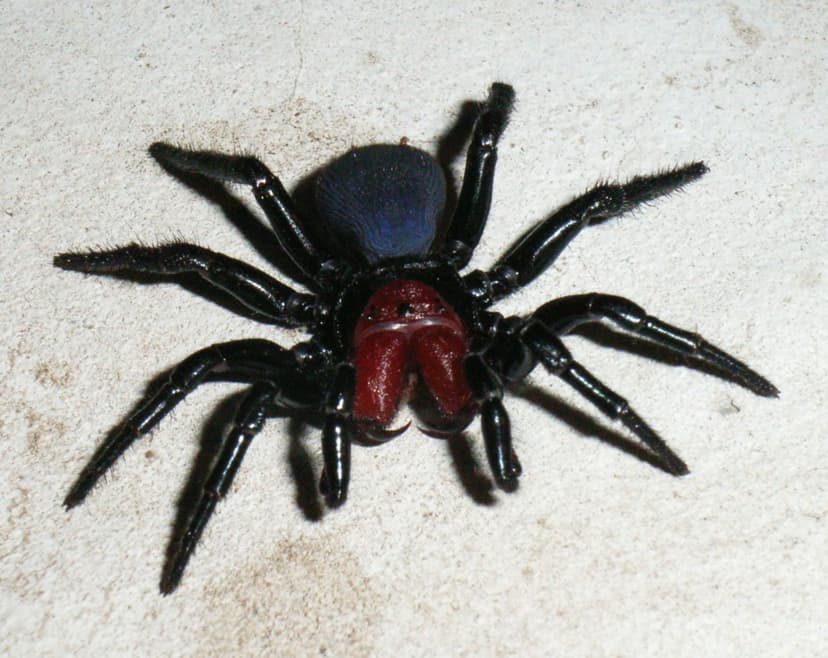
Actinopodidae
Actinopodidae is a family of mygalomorph spiders native to mainland Australia and South America, typically inhabiting open forests. This family includes the mouse spiders (Missulena species), which are notable for their medically significant and potentially dangerous bites.

Agelenidae
The Agelenidae, commonly known as funnel weavers, are a large family of spiders found globally. They are distinguished by their fast running speeds and the construction of flat sheet webs with a funnel-shaped retreat. While most species are solitary, some African species exhibit parasocial behavior, living in communal webs.
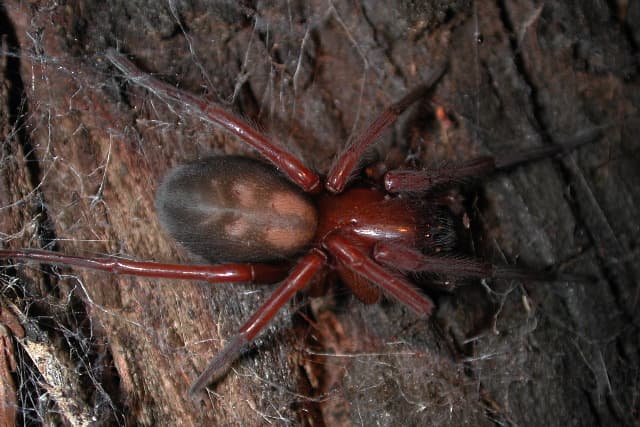
Amaurobiidae
Amaurobiidae is a family of spiders characterized by their three-clawed feet and the presence of either a cribellum or its absence. These spiders are typically found in crevices, hollows, or under stones, where they construct retreats and are often captured in pitfall traps. While widespread, they can be challenging to distinguish from closely related spider families.