
Euctenizidae
Ambush predators, utilizing their burrows and specialized doors to capture unsuspecting prey.
The Euctenizidae are a family of mygalomorph spiders, primarily found in the United States and Mexico. Originally classified as a subfamily, they are now recognized as a distinct family and are considered closely related to the Idiopidae family. Many species within this family are known for constructing wafer-like or cork-like doors to their burrows.
Key Facts
- ›Euctenizidae is a family of mygalomorph spiders.
- ›They are predominantly found in the United States and Mexico.
- ›Many species construct distinctive wafer-like or cork-like doors for their burrows.
- ›The family currently includes eight genera and 79 species.
- ›Their biology is poorly understood for most of the species.
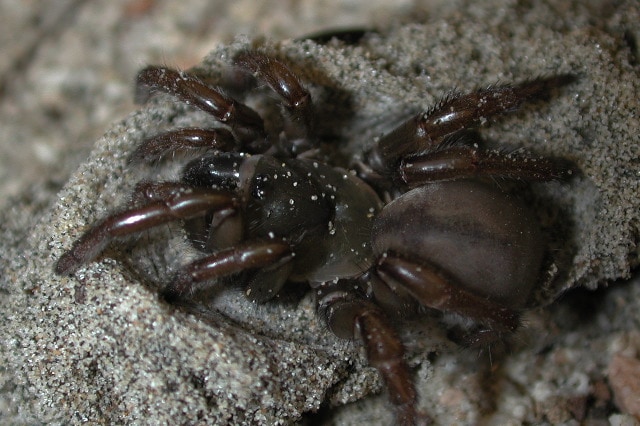
Euctenizid Trapdoor Spiders
United States, Mexico
- Construction of Wafer-Like Or Cork-Like Doors To Their Burrows.
Burrow Construction, Door Building
About Euctenizidae
The Euctenizidae represent a family within the mygalomorph suborder of spiders. Initially classified as a subfamily of Cyrtaucheniidae by Robert Raven in 1985, they were elevated to family status by Bond et al. in 2012. Current phylogenetic studies suggest they are more closely related to the Idiopidae family.
Distribution and Habitat
This family's geographic range is almost entirely confined to the United States and Mexico. Notable genera found within the United States include Myrmekiaphila, Aptostichus, and Promyrmekiaphila. Their habitat typically involves underground burrows, often enhanced with specialized entrances.
Biology and Behavior
A significant characteristic of many Euctenizidae species is their ability to construct elaborate doors for their burrows. These doors can be wafer-like or cork-like, serving as a crucial element in their predatory strategy. Despite this distinctive feature, the detailed biology of nearly all species within the family remains poorly understood, presenting opportunities for future research.
Taxonomy and Species Count
As of January 2026, the Euctenizidae family is recognized to include eight genera, encompassing a total of 79 described species. Ongoing taxonomic research continues to refine our understanding of their evolutionary relationships and species diversity.
Source: Wikipedia ↗
Frequently Asked Questions
Where are Euctenizidae spiders found?
The Euctenizidae family occurs almost exclusively in the United States and Mexico. Common genera in the U.S. include Myrmekiaphila, Aptostichus, and Promyrmekiaphila.
What is distinctive about Euctenizidae burrows?
Many, though not all, Euctenizidae species create wafer-like doors for their burrows. Others build cork-like doors, which are also characteristic of true trapdoor spiders.
How many species are in the Euctenizidae family?
As of January 2026, the Euctenizidae family comprises eight genera and a total of 79 species. New species may be described over time.
Are Euctenizidae spiders well-studied?
The biology of nearly all Euctenizidae species is poorly known. Much of their life cycle, behavior, and ecological role remains a subject of ongoing research.
Related Spider species
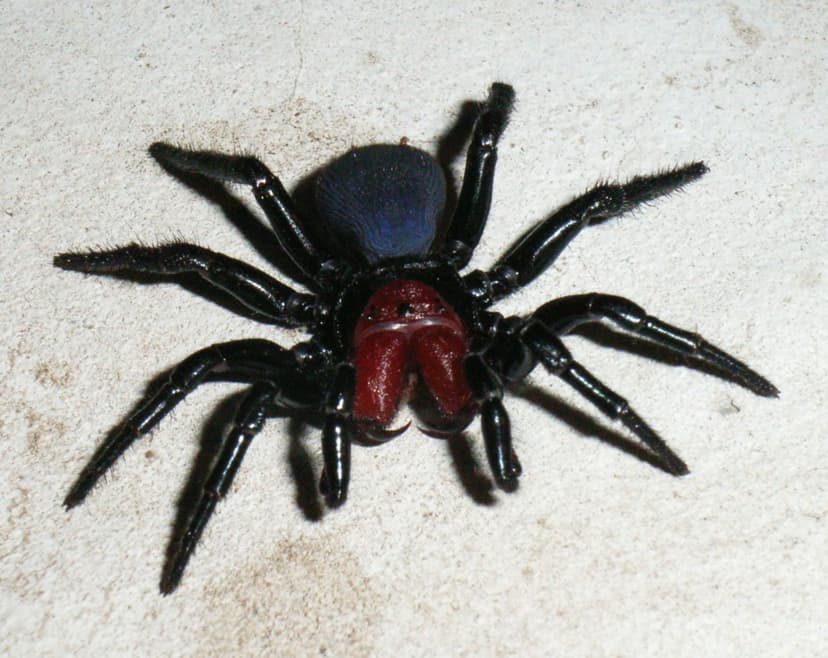
Actinopodidae
Actinopodidae is a family of mygalomorph spiders native to mainland Australia and South America, typically inhabiting open forests. This family includes the mouse spiders (Missulena species), which are notable for their medically significant and potentially dangerous bites.

Agelenidae
The Agelenidae, commonly known as funnel weavers, are a large family of spiders found globally. They are distinguished by their fast running speeds and the construction of flat sheet webs with a funnel-shaped retreat. While most species are solitary, some African species exhibit parasocial behavior, living in communal webs.
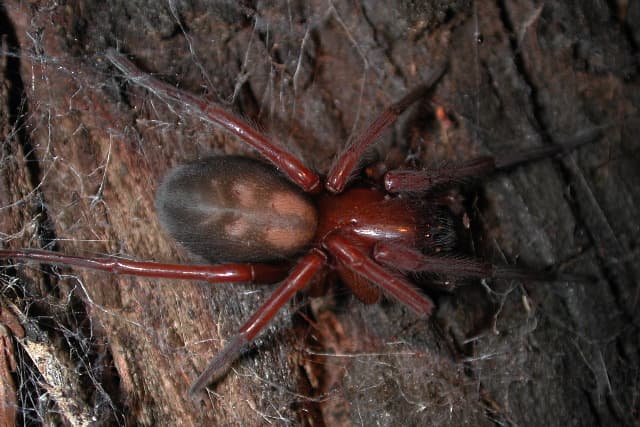
Amaurobiidae
Amaurobiidae is a family of spiders characterized by their three-clawed feet and the presence of either a cribellum or its absence. These spiders are typically found in crevices, hollows, or under stones, where they construct retreats and are often captured in pitfall traps. While widespread, they can be challenging to distinguish from closely related spider families.