
Cyrtaucheniidae
Wafer-lid trapdoor spiders are ambush predators that typically wait near the entrance of their burrows for unsuspecting prey to pass by.
The Cyrtaucheniidae, commonly known as wafer-lid trapdoor spiders, are a widespread family of mygalomorph spiders. These spiders are generally large and exhibit a coloration ranging from light brown to black. A distinctive feature is their eye arrangement, which is either rectangular or with the back row wider apart, and they lack specific spines found on the legs of true trapdoor spiders.
Key Facts
- ›Wafer-LID trapdoor spiders are mygalomorphs, belonging to the family Cyrtaucheniidae.
- ›They are generally large spiders, with colors varying from light brown to black.
- ›Their eye placement is in two rows, either in a rectangular formation or with the rear row spread wider.
- ›Many, though not all, species construct wafer-like doors for their burrows.
- ›The family is well-represented in South America and Africa, with some genera found in Central Asia and the Mediterranean region.
- ›They are distinguished from true trapdoor spiders by the absence of thornlike spines on the tarsi and metatarsi of their first two pairs of legs.

Wafer-Lid Trapdoor Spiders
South America, Africa, Central Asia, Algeria, Italy, Thailand, Western United States
- Wafer-Like Doors To Burrows
- Eyes Placed In Two Rows, Either In A Rectangular Position Or With the Back Row Wider Apart
- Lack of Thornlike Spines On Tarsi and Metatarsi I and Ii
Construct Burrows, Some Build Wafer-Like Doors, Some Build Cork-Like Doors
About Cyrtaucheniidae
Wafer-Lid Trapdoor Spiders (Cyrtaucheniidae)
What are Cyrtaucheniidae?
The family Cyrtaucheniidae, commonly referred to as wafer-lid trapdoor spiders, comprises a widespread group of mygalomorph spiders. These arachnids are characterized by their burrowing behavior and, in many species, the construction of distinctive wafer-like doors to seal their subterranean homes. While not all members of this family build these specific types of doors, it is a notable characteristic for the group.
Description and Characteristics
Wafer-lid trapdoor spiders are generally large in size. Their coloration typically ranges from light brown to black, providing them with camouflage in their natural environments. A key feature for identification is their eye arrangement, which is situated in two rows; these rows can be either rectangular in shape or have the back row wider apart than the front. Morphologically, they can be distinguished from true trapdoor spiders (family Ctenizidae) by the absence of specific thornlike spines on the tarsi and metatarsi of their first two pairs of legs.
Distribution and Habitat
This family exhibits a broad geographic distribution. They are well-represented in South America and Africa. Several genera are found across Central Asia, and the genus Cyrtauchenius extends from Algeria north into Italy, with one species also identified in the USA. Notably, one genus, Angka, is endemic to the cloud forest of Doi Inthanon in Thailand. An undescribed genus in the western United States has been observed at very high altitudes, potentially holding an altitude record for the family.
Classification
The taxonomy of Cyrtaucheniidae has seen revisions. For instance, the former subfamily Euctenizinae, found in the US and Mexico, was promoted to its own family, Euctenizidae, in 2012 due to being considered more closely related to Idiopidae. Further adjustments to the family's circumscription were made in 2020. As of early 2026, the family includes six recognized genera and a total of 109 species. Several genera previously assigned to Cyrtaucheniidae have since been reclassified into other families, including Amblyocarenum (now in Nemesiidae), Angka (now in Microstigmatidae), Homostola (now in Bemmeridae), and Fufius (now in Rhytidicolidae).
Source: Wikipedia ↗
Frequently Asked Questions
What are wafer-lid trapdoor spiders?
Wafer-lid trapdoor spiders, belonging to the family Cyrtaucheniidae, are a group of mygalomorph spiders known for their burrowing habits. Many species construct unique wafer-like doors to seal their underground homes.
Where are Cyrtaucheniidae spiders found?
This family is widely distributed, with significant populations in South America and Africa. Various genera are also found in Central Asia, the Mediterranean region including Algeria and Italy, and one genus is endemic to Thailand.
What do wafer-lid trapdoor spiders look like?
Wafer-lid trapdoor spiders are typically large and can range in color from light brown to black. Their eyes are positioned in two rows, which are either rectangular or have the back row spread wider apart.
How do wafer-lid trapdoor spiders differ from true trapdoor spiders?
A key difference is the absence of thornlike spines on the tarsi and metatarsi of the first two pairs of legs in wafer-lid trapdoor spiders, a feature present in true trapdoor spiders (Ctenizidae).
Do all Cyrtaucheniidae build wafer-like doors?
No, while many species within the Cyrtaucheniidae family are characterized by their wafer-like burrow doors, not all of them construct this type of entrance. Some build cork-like doors similar to those of true trapdoor spiders.
Are there any genera of Cyrtaucheniidae that have been reclassified?
Yes, several genera previously placed within Cyrtaucheniidae have been reclassified into other families. These include Amblyocarenum, Angka, Homostola, and Fufius, which are now part of Nemesiidae, Microstigmatidae, Bemmeridae, and Rhytidicolidae, respectively.
Related Spider species
Actinopodidae
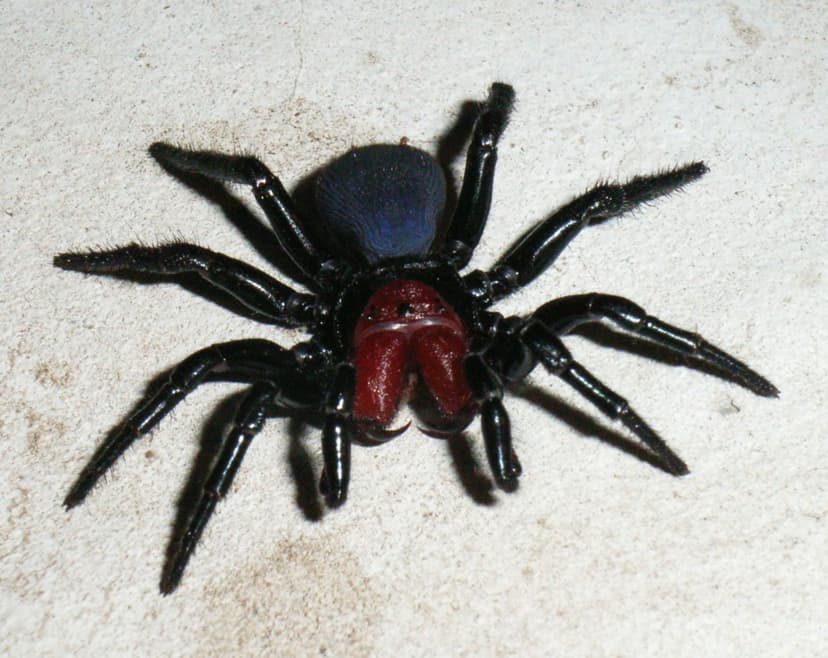
Actinopodidae is a family of mygalomorph spiders native to mainland Australia and South America, typically inhabiting open forests. This family includes the mouse spiders (Missulena species), which are notable for their medically significant and potentially dangerous bites.

Agelenidae
The Agelenidae, commonly known as funnel weavers, are a large family of spiders found globally. They are distinguished by their fast running speeds and the construction of flat sheet webs with a funnel-shaped retreat. While most species are solitary, some African species exhibit parasocial behavior, living in communal webs.
Amaurobiidae
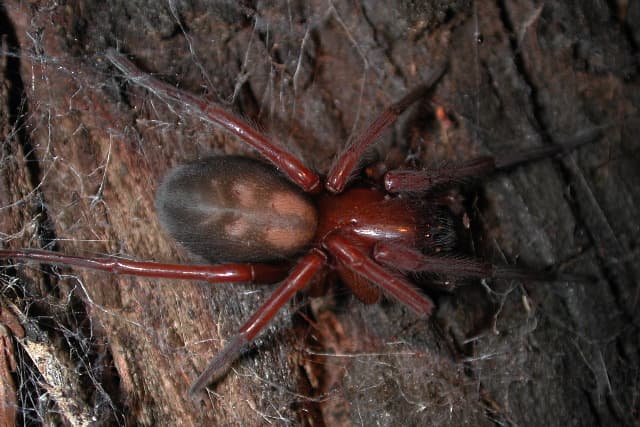
Amaurobiidae is a family of spiders characterized by their three-clawed feet and the presence of either a cribellum or its absence. These spiders are typically found in crevices, hollows, or under stones, where they construct retreats and are often captured in pitfall traps. While widespread, they can be challenging to distinguish from closely related spider families.