
Trachelidae
As members of the RTA clade, they are primarily wandering spiders that do not use webs for hunting, likely employing active hunting or ambush strategies.
Trachelidae, commonly known as ground sac spiders, is a family of araneomorph spiders first described in 1897. These spiders are characterized by their small size, typically 3-10mm, with a red cephalothorax and a yellow or tan abdomen, and are frequently found in indoor environments.
Key Facts
- ›Trachelidae are ground sac spiders, belonging to the RTA clade of wandering spiders.
- ›Adult spiders typically measure between 3 to 10 millimeters in length.
- ›They possess a distinctive coloration of a red cephalothorax and a yellow or tan abdomen.
- ›Spiders in this family are often encountered in indoor habitats.
- ›A key characteristic of Trachelidae is the reduction of leg spines.

Ground Sac Spiders
- Reduction of Leg Spines
- No Scales
- No Epiandrous Spigot
- Only One Major Ampullate Gland In Females
- No Median Apophysis
- Secondary Spermatheca Are the Same Size As the Primary
Wandering Spiders, Frequently Found Indoors
About Trachelidae
Trachelidae: The Ground Sac Spiders
Trachelidae, commonly known as ground sac spiders, constitute a family of araneomorph spiders that are characterized by their specific physical traits and ecological habits. First described by Eugène Simon in 1897, this family has undergone taxonomic revisions, eventually being recognized as a distinct group within the RTA clade of wandering spiders.
Key Characteristics
Spiders belonging to the Trachelidae family are typically small, with adult body lengths ranging from 3 to 10 millimeters. They possess a distinctive coloration, featuring a red cephalothorax and a yellow or tan abdomen. A significant distinguishing feature of this family is the reduction of leg spines, along with other morphological traits such as the absence of scales and an epiandrous spigot, and a single major ampullate gland in females. These spiders are often encountered in indoor environments, indicating a degree of adaptability to human-modified habitats.
Classification and Ecology
As members of the RTA clade, Trachelidae are primarily wandering spiders, meaning they do not construct webs to capture prey. Instead, they likely rely on active hunting or ambush strategies to secure their food. Their diet consists of small invertebrates, predominantly insects. The family is understood to comprise 29 genera and 307 species, reflecting a diverse group within the spider world. Their classification has evolved over time, having been previously placed within the Clubionidae and Corinnidae families before analyses supported their recognition as a separate family.
Identification
Beyond their size and general coloration, specific anatomical features aid in identifying Trachelidae. These include the lack of a median apophysis and the unique characteristic where the secondary spermatheca are the same size as the primary. While generally not considered medically significant to humans, like all spiders, they are venomous and possess the ability to bite if threatened.
Source: Wikipedia ↗
Frequently Asked Questions
What are Trachelidae spiders commonly called?
Trachelidae spiders are commonly known as ground sac spiders. This name reflects their tendency to be found on the ground and their association with sac-like structures, though they are primarily wandering spiders.
What is the typical size of a Trachelidae spider?
These spiders are relatively small, with adult individuals typically measuring between 3 to 10 millimeters in body length. This size makes them easily overlooked in their natural environments.
What is the characteristic coloration of Trachelidae spiders?
Trachelidae spiders are usually recognized by their distinct coloration: a red cephalothorax paired with a yellow or tan abdomen. This color pattern can help in their identification.
Where are Trachelidae spiders commonly found?
Ground sac spiders are frequently encountered in indoor environments, suggesting they are adaptable to human-altered landscapes. They are also found in their natural outdoor habitats as part of the ground-dwelling spider community.
What is unique about the leg spines of Trachelidae spiders?
A significant characteristic, or synapomorphy, of the Trachelidae family is the reduction of spines on their legs. This is one of the features that helps distinguish them within the spider order.
How do Trachelidae spiders fit into spider classification?
Trachelidae are classified as araneomorph spiders and belong to the RTA clade, which includes many wandering spiders. They were historically placed in other families like Clubionidae and Corinnidae before being recognized as a distinct family.
Related Spider species

Orsolobidae
Orsolobidae is a family of six-eyed spiders comprising approximately 200 described species across thirty genera. First described by J. A. L. Cooke in 1965, it was elevated to family status from the "Dysderidae" classification in 1985. While most of its genera are endemic to New Zealand and Australia, some are also found in southern Africa and South America.
Oonopidae
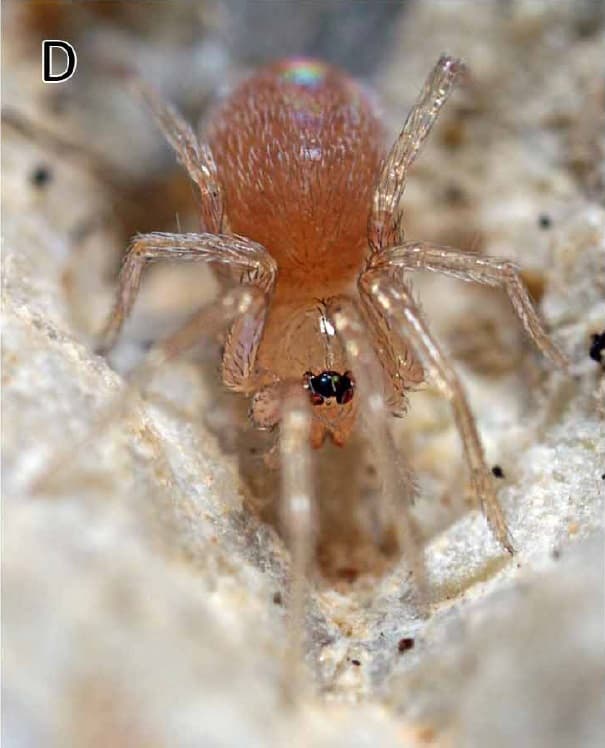
Oonopidae, commonly known as goblin spiders, are a widespread family of tiny spiders, typically measuring between 1 to 3 millimeters. They are characterized by their small size, often six eyes (though variations exist), and a remarkable array of unusual morphological traits, particularly in males. These spiders are frequently found in leaf litter, under rocks, and in tropical rainforest canopies, with some species even inhabiting termite nests.
Philodromidae
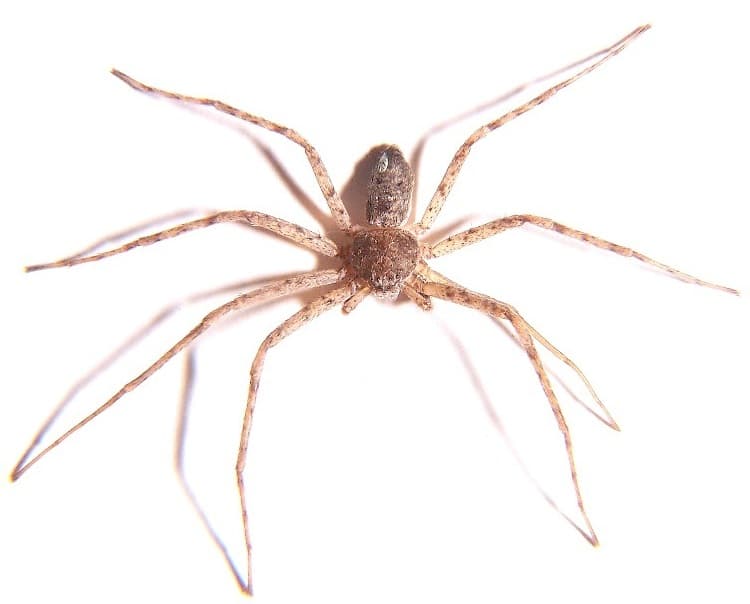
Philodromidae, commonly known as philodromid crab spiders or running crab spiders, is a diverse family of araneomorph spiders that includes over 500 species across approximately thirty genera. These spiders are characterized by their crab-like body shape and active hunting strategy, preying on insects and other small invertebrates by ambush rather than web-building. They are typically found on plants, from deciduous trees to conifers, and are widespread across various habitats.