
Trechaleidae
Trechaleidae·Trechaleidae·Specific size details for Trechaleidae spiders are not provided in the text. However, their common name 'longlegged' suggests that leg length is a notable characteristic.·Coloration details for Trechaleidae spiders are not provided in the text.
Trechaleidae is a family of araneomorph spiders, commonly known as longlegged water spiders or fishing spiders. Described by Eugène Simon in 1890, this family primarily inhabits the New World tropics of Central and South America, with one notable exception found in Japan. They are closely related to the Pisauridae and Lycosidae families.
Key Facts
- ›The family Trechaleidae comprises approximately 140 described species across 18 genera.
- ›Most species are found in Central and South America, with Shinobius orientalis being the only exception, endemic to Japan.
- ›Common names include longlegged water spiders and fishing spiders.
- ›Trechaleidae spiders are taxonomically related to Pisauridae (nursery web spiders) and Lycosidae (wolf spiders).
- ›The family was first described by Eugène Simon in 1890.

Longlegged Water Spiders, Fishing Spiders
Central America, South America, Japan
Long Legs
About Trechaleidae
The family Trechaleidae, first described by Eugène Simon in 1890, is a group of araneomorph spiders. These spiders are commonly known as longlegged water spiders or fishing spiders, though the latter name is also applied to spiders in the genus Dolomedes. The family is characterized by its close taxonomic relationship to the Pisauridae (nursery web spiders) and Lycosidae (wolf spiders), and together they are sometimes referred to as the lycosid group.
Distribution and Genera
Trechaleidae spiders are predominantly found in the New World tropics, with their natural distribution spanning Central and South America. An exception to this geographic pattern is the species Shinobius orientalis, which is endemic to Japan. The family encompasses approximately 140 described species organized into 18 genera, reflecting a considerable diversity within this arachnid group.
Source: Wikipedia ↗
Frequently Asked Questions
What are Trechaleidae spiders commonly called?
Trechaleidae spiders are often referred to as longlegged water spiders or fishing spiders. It is worth noting that members of the genus Dolomedes are also commonly called fishing spiders, which can lead to some overlap in common naming.
Where are Trechaleidae spiders found?
The vast majority of Trechaleidae spiders are found in Central and South America. However, there is one species, Shinobius orientalis, which is endemic to Japan, making it the sole exception to their predominantly New World distribution.
How many species are in the Trechaleidae family?
As of recent records, the Trechaleidae family includes about 140 described species. These species are organized into 18 different genera, showcasing a diverse range within the family.
What other spider families are Trechaleidae related to?
The family Trechaleidae is closely related to the Pisauridae, also known as nursery web spiders, and the Lycosidae, commonly called wolf spiders. These three families are sometimes grouped together and referred to as the lycosid group due to their taxonomic proximity.
When was the Trechaleidae family first described?
The family Trechaleidae was first described by the arachnologist Eugène Simon in the year 1890. His foundational work established this group within the broader classification of araneomorph spiders.
Related Spider species

Orsolobidae
Orsolobidae is a family of six-eyed spiders comprising approximately 200 described species across thirty genera. First described by J. A. L. Cooke in 1965, it was elevated to family status from the "Dysderidae" classification in 1985. While most of its genera are endemic to New Zealand and Australia, some are also found in southern Africa and South America.
Oonopidae
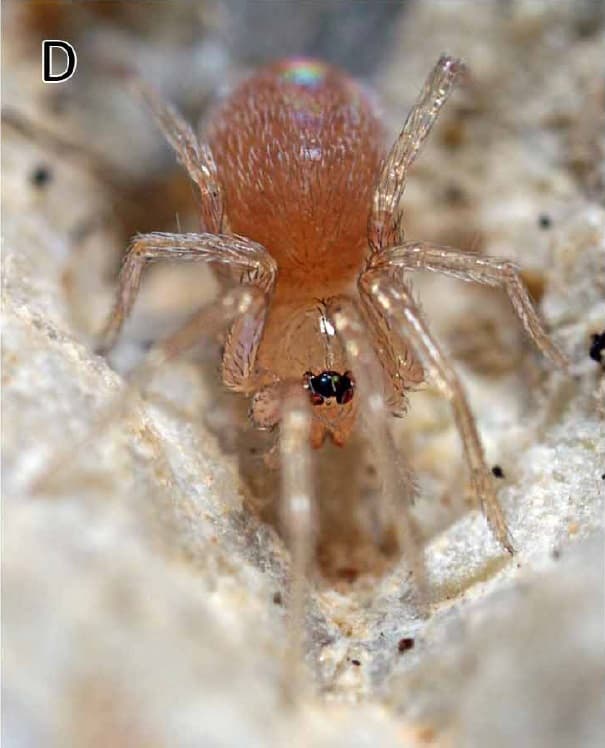
Oonopidae, commonly known as goblin spiders, are a widespread family of tiny spiders, typically measuring between 1 to 3 millimeters. They are characterized by their small size, often six eyes (though variations exist), and a remarkable array of unusual morphological traits, particularly in males. These spiders are frequently found in leaf litter, under rocks, and in tropical rainforest canopies, with some species even inhabiting termite nests.
Philodromidae
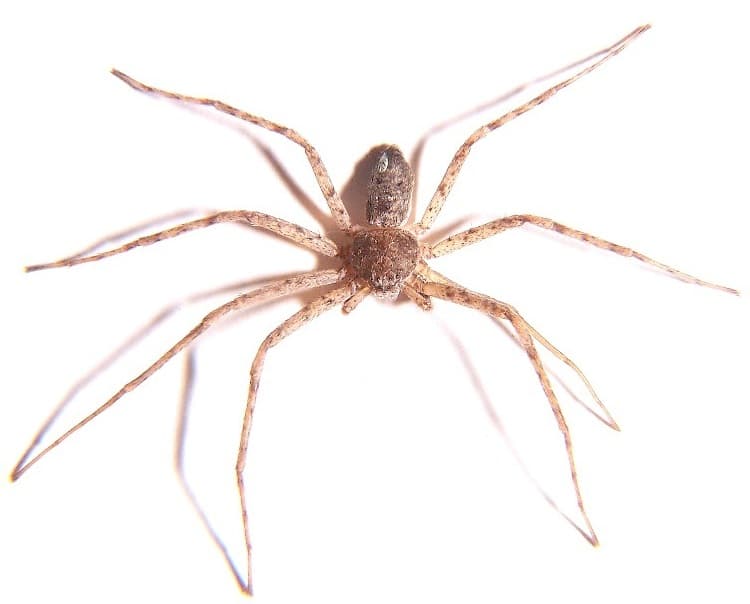
Philodromidae, commonly known as philodromid crab spiders or running crab spiders, is a diverse family of araneomorph spiders that includes over 500 species across approximately thirty genera. These spiders are characterized by their crab-like body shape and active hunting strategy, preying on insects and other small invertebrates by ambush rather than web-building. They are typically found on plants, from deciduous trees to conifers, and are widespread across various habitats.